



One of the most successful and controversial books of 2012 was Quiet: The Power of Introverts in a World That Can’t Stop Talking, written by Susan Cain, who holds degrees in literature from Princeton and law from Harvard. Cain’s book explores how Western culture misunderstands and underestimates the character traits of introverts. It led her to work as a corporate lawyer before she devoted herself entirely to this subject. Her book includes historical examples ranging from Leonardo da Vinci and Albert Einstein to Steven Spielberg and J.K. Rowling. A starting point for scholars would be to reconstruct a counter-snapshot of how introversion has shaped the development of Western music.
When we met Joshua Redman in 2023 for his Blue Note debut Where Are We?, he immediately confessed to his shy nature, as he does in every interview, so that his reserve would not be mistaken for rudeness. Since then, he has been touring with his second album for Don Was, Words Fall Short, which was the cover story of our July issue. Never has a title been clearer. Playing piano on that album is Paul Cornish, whom Redman has mentored for some time. Needless to say, his pianist friend from Houston, thrown into the media whirlwind of promoting his solo album, must have a similar temperament – an inevitable nuance of “great minds think alike.”
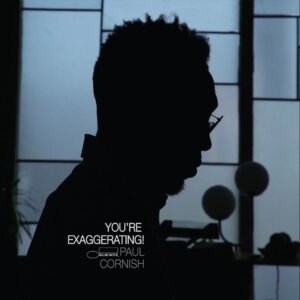
They performed together in dazzling interplay at the Casa del Jazz for Summertime in Rome on August 3, the quartet’s only Italian date (with a surprise appearance by Gregory Hutchinson, a longtime Roman by adoption, for an unforgettable rendition of Irving Berlin’s Remember in Hank Mobley’s version). MJ’s conversation with Cornish about his Blue Note debut, the recent You’re Exaggerating!, is a wonderful opportunity to get to know an artist acclaimed from the West Coast to the East Coast as the new undisputed talent of jazz – whatever that may mean. He prefers notes to words, using both with the careful attention of a craftsman, and feels most at ease telling fantastic and abstract stories in his musical universe. This universe is made up of tradition – including Debussy and Skrjabin – and presses forward into the future.
Born in Houston, Texas, a melting pot of innovation and conservation, Paul first became a drummer and percussionist after an early infatuation with the piano at age five. This is immediately apparent when listening to the texture of tempos and overlapping rhythms in his music, which is tempered by a delightfully démodé religiosity. Like many jazz masters, he started out playing at his local church, building his musical identity there. Eventually, he played three times a week. His Instagram features Psalm 103 of David: “Let everything I do be for the Lord; with all my heart, I will pray to His holy name.” When he can, he returns home to play gospel music – though less and less often, judging by his current tour schedule.
It would be wrong, however, to pigeonhole him as just a good guy with a good heart. Not because he isn’t one, but because Paul has transformed spirituality into self-discipline and redirected his talent toward another dimension. This dimension runs throughout the history of jazz, from Charles Lloyd to John Coltrane, and is defined by devotion to excellence. Selected from USC’s Thornton School of Music to join the Herbie Hancock Institute of Jazz on scholarship – following in the footsteps of Ambrose Akinmusire and Lionel Loueke – Cornish had the opportunity to meet Wayne Shorter, artist-in-residence, and Hancock himself. The 85-year-old Chicagoan, this year’s Polar Prize winner, taught Paul humility and the value of being a good person. “Music is what you do, not who you are,” Paul recalls of his teachings. This aura of elevation gives his language remarkable complexity. Yet abstraction or departure from tonality in the classical sense is never an ego-driven pirouette; it serves ambitious and successful musical projects such as You’re Exaggerating! It’s not easy to draw him out of his shell, but it’s well worth the effort.

Welcome to Musica Jazz, Paul. You’ve started a long tour of America and Europe for your album, which will take you to sacred places like Ronnie Scott’s in London. Are you happy with how the group is working, or do you feel you still need to refine something for your live performances?
Thank you! The tour began a few days ago at the Stanford Jazz Festival and will continue for a few months. I should mention that we’ve been rehearsing and performing with this trio lineup for over a year to achieve a good result. I feel really comfortable on stage with them. It’s the right place at the right time.
I have to ask you about the title. Who is exaggerating?
I think it’s all of us – starting with me. As the title suggests, it’s about looking in the mirror and understanding who you really are. I hope everyone can answer that question for themselves.
When I looked at the recommended listening and similar artists on the Blue Note website, I came across big names like Joshua Redman, Robert Glasper, and Jason Moran. They are all your mentors in some way. How important was your experience as a sideman in developing your solo project?
It was necessary and fundamental. I would even say it was everything. It’s a way of continuing the tradition of this music. Think of the many greats – people like Herbie Hancock, for example, or those before him. They all started out in other bandleaders’ groups and learned through touring and direct contact. Of course, it’s an honor to have played with Joshua Redman and all the others I’ve met. That’s when you really start “school” and understand that it’s an endless learning process.
Joshua and you also share the fact that you’re both rather shy. How important is it to remain humble in order to play jazz?
It’s very important. You have to be aware that no one owes you anything and that nothing can be taken for granted. Therefore, humility is the only possible response.
Let’s talk about the album. “Slow Song” is one of my favorites. I hear echoes of Jason Moran, one of your influences, in it. Like Fred Hersch, he studied with Jaki Byard. Do you feel comfortable with this long tradition of pianists?
Comfortable? Well, that’s an interesting way to put it. My first response would be that it has always been my goal and dream. When you mention those names, you’re talking about people who have contributed to the growth of jazz and the evolution of great pianism. In that sense, I’ve always hoped to contribute and inspire in the same way they’ve inspired me.
Perhaps there is a deep search for truth in the language of improvisation in that lineage.
Absolutely! I believe there’s a search for truth in each of us, not only in art but also as people. However, music allows you to search for parts of the truth that you can’t clearly see in the world’s facts or translate into words. It’s as if music comes with an extra “bonus”: privileged access to dig deeper.
There are songs such as “Queen Geri” where the rhythmic aspect is crucial. That piece is in 7/4 and features intricate polyrhythms. What did you enjoy most about your journey with Joshua Crumbly and Jonathan Pinson?
I appreciate their openness the most. They are formidable listeners, and that’s something they share. Their bold ears mean they’re ready for any challenge I throw at them. They enrich it with new ideas that might never have occurred to me. They’re not afraid to venture into uncharted territory. That’s how you serve music – with the confidence to travel together to different places where something interesting happens every time.
Let’s stay with this track, dedicated to Geri Allen, for a moment. Why is it important to you?
She was simply great. Her influence on me was enormous. I first heard her at a workshop at the International Banff Creative Residency, where she was one of the teachers. She played one of her albums for us, and it blew my mind. I had never heard anything like it – it was as if I had found the answer to something I’d been searching for a long time. I loved many things about it. There was a battle within the music between the avant-garde and creative improvisation on one side, and a more traditional style on the other. It’s a feeling I still carry with me today. She was respected in both worlds and moved between them with great ease. Since then, that has become something I strive for. As you rightly said, her use of rhythm made her a force of nature, as did her compositional skills. People and students should know more about her work. Geri isn’t as well known as she should be, so I felt compelled to keep the spotlight on her.
I also perceive an underlying issue related to gender equality and civil rights. Am I wrong?
No, you’re right. These are two sides of the same coin. The world is affected by misogyny and racism today. There are also imbalances in how these issues are presented in our academic institutions. We often underestimate how much women have contributed to the development of music and other fields. This remains a continuing issue with no sign of ending. It’s a vast and important topic, so I don’t want to trivialize it or go overboard in the opposite direction. But it takes extraordinary effort to seize opportunities and recognize that they aren’t granted simply because of gender. We need to create spaces and agree on fair criteria for recognizing those opportunities. Great strides have been made in acknowledging the contributions of female instrumentalists and composers to music’s development, yet it remains an ongoing debate.
In a short time, by listening to You’re Exaggerating!, you seem to have found your own personal language. Like many jazz greats, your biography starts in a traditional way – playing and serving in church. How important were that spiritual experience and the consolidation of your roots to you?
For me, it’s everything. I feel that my purpose in life is rooted in my relationship with God, and I hope my music serves a greater purpose and higher calling. This also has an advantage. The other day I was talking to a student about the importance of never playing for others’ approval, but rather maintaining a more “noble” purpose. That’s exactly what strengthens my relationship with God. Believe me when I say that I just want to serve Him alongside others, because it has given me a radical change of perspective.
What role did the Houston environment in which you were born and raised play in this?
It was a wonderful experience. For as long as I can remember, I’ve been surrounded by instruments, including those in the church. I would go there and find a kind of playground, starting with the drumsticks. It was a unique opportunity to start playing. My brother once told me that when I came home, I would improvise and try to build my own instruments. I’d stack boxes to make them look like an organ or use pillows and lampshades to make a drum kit. Or, more simply, I would draw the instruments I liked. It had become an obsession.
Music always does that for those who love it.
You can say that again!
Since we’re talking about obsessions, there’s a song on the album with a striking title: Quiet Anxiety. It reminds me of romantic aesthetes compared to the sea – calm on the surface, yet with a thousand currents beneath.
I’m glad you listened to the album so closely! I can’t explain exactly what it means, but it’s certainly a fusion of the words “quiet” and “anxiety,” which describes my life and what I’ve seen in others. Appearing calm and cool is always the easiest shortcut, and it reaps rewards on the surface. But there are a multitude of layers beneath each of us. In my life, for instance, I’d say I’m a calm and shy person. In fact, I’m often mistaken for someone excessively “peaceful.” This trait has earned me the most compliments – starting with my mother, who always tells me so. In truth, though, I’m a person overcome by great anxiety. It’s always there, running in the background. It’s something that makes me suffer in silence. I often feel that other people are “solid,” able to express the complexity of their character and be comfortable with their inner selves. I always feel like I’m sailing in a different sea.
Don’t worry, you’re talking to an extremely anxious person, so I completely understand. On another note, you once described yourself as a “people-pleaser,” someone who wants to please others. Of course, releasing an album with Blue Note and entering its tradition must be wonderful, but it must also bring some performance anxiety.
(Looks up for a long time, searching for the most authentic answer.)
I know being interviewed must feel like torture. I understand!
(Laughs.) No, no, it’s fine! They’re good questions. Wait, I’m really enjoying myself! In a way, I do feel the pressure – and how! But I’ll say it again: I firmly believe in my purpose, and I’m convinced that things unfold as they should. At some point the wave ends, and you have to ask yourself who you want to be and what you want to leave behind. My purpose is rooted in my relationship with God and the hope that His will be done in my life. That’s why I’m trying to enjoy the moment and express the best music I can, honestly. It all starts from there.
Your music often touches on abstract territories. But I interpret it as a form of trust in the listener – a hope that they will understand and be amazed by even the most unconventional solutions.
Of course. This is something I strongly believe in, though I don’t expect everyone to understand every aspect of the music. Still, there’s another layer. Take Stevie Wonder, for example – an artist I love deeply. His music has many dimensions, and that’s one reason he’s so beloved. You can sing along to his melodies and feel immense joy because his songs are irresistible. Then there are others who have studied his music their entire lives, because Stevie’s work is perfectly balanced. My mother often sings his songs. She loves them, though she’s not a musician. I’d like to do something like that – play a concert, enjoy myself, and have some people appreciate the technical nuances while others just enjoy the music itself. It would be a feast where everyone could find something good. There are things you can’t express with 4/4 or 5/4 time signatures or more complex keys because they wouldn’t describe all the beauty the way I perceive it – wild beauty, or ugly beauty.
Wow, we’re getting to Monk with that quote!
Exactly! I’m trying to say that we all experience complexity every day as human beings. It has to do with emotions. Sometimes we feel like we’re in a safe place, but it turns out not to be. Other times we find immediate solutions to seemingly insurmountable problems. It’s a kind of therapeutic journey, so to speak. I think it’s beautiful that music can have different levels and layers to convey feelings honestly.

Very clear. One last question: what was it like working with your producer for this album, Henry Solomon, who is also a saxophonist? I remain convinced that true producers are becoming extinct, yet they make such a difference.
You’re right. Henry is a central figure in my life. Beyond working together, we’ve been friends since grade school. We lived together for two years and made music countless times: I played in his bands, and he played in mine. His deep understanding of me is reflected in the music. He understands what I want to achieve and finds the best way to do it. This makes him a magnificent producer. He was exactly the person I needed because he understood the vibe and direction and could guide them in the best way without ever overwhelming the basic idea. Henry would sometimes say, “Come on, let’s try another take,” and he was right. I was also glad that Joshua and Jonathan got along well with him, especially since they have more studio experience than I do. In short, the album would not have been the same without his help.
