


Brooklyn’s Long Play Festival, presented by Bang on a Can, is an essential event for anyone who follows contemporary music closely, including the so-called indie scene – jazz, experimental rock, and related genres. Add to that the Brooklyn half of Winter Jazzfest, the Vision Festival, the all-guitar festival covered elsewhere in these pages, and the ever-vibrant programming at BAM (Brooklyn Academy of Music) and Roulette, and we can certainly speak of a genuine “new wave” of major musical events based in the New York borough that has long been engaged in a barely concealed cultural rivalry with the more glittering Manhattan.
The reasons behind this exhilarating and thoroughly welcome wave sweeping through Brooklyn are partly economic and partly creative. Manhattan has become increasingly expensive, even for the performing arts, traditionally the preserve of America’s major cultural institutions. For a music enthusiast, an evening at a top jazz club now means spending at least sixty dollars, without dinner, while theater and Broadway tickets can easily run into the hundreds. More laid-back Brooklyn, perhaps more attentive to its audiences, is considerably less expensive and offers roomier, more human-scale venues. As a result, less conventional artists and event producers increasingly gravitate toward Brooklyn, seeking spaces where their ideas can develop without the anxiety of astronomical bills, and with generous support from local government – not so much financial as administrative.
Spring in Brooklyn begins – as has now become a tradition – with Long Play, an extraordinarily intense festival held around the beginning of May. Over four days, from late morning until well into the night, roughly a dozen clubs and theaters host some of the most adventurous, and often most exciting, concerts to be heard anywhere in the New York area throughout the year.
After all, the Bang on a Can name has become a guarantee of musical adventures devoted to the new and unusual, or, ultimately, to the celebration of the stylistic language associated with the organization’s three founding composers: minimalism and its many offshoots.
It is worth recalling once again the three founders of this remarkable institution: Julia Wolfe, Michael Gordon, and David Lang. Three major composers who, despite their distinct artistic personalities, have succeeded over the years in creating a dazzling emblem of musical excellence that has earned widespread recognition around the world.
“There are many of us now, not just three. Bang on a Can has grown into a much larger community of outstanding composers and musicians,” David Lang told me. Perhaps the most refined and singular of the three, Lang is also known in Italy for his contributions to the soundtracks of Paolo Sorrentino’s films.
At the festival, Lang presented a sublime suite, Mystery Sonatas, a nine-part work for solo violin, masterfully performed by the young Emma Meinrenken. That same evening at Roulette, Wolfe revived her magnum opus, Anthracite Fields, while Michael Gordon brought back his first major work, Trance, dating from approximately thirty years ago, at BRIC.
The repertoire choices themselves reveal the personal and stylistic characteristics of the three composers: Lang is introspective, delicate, and imbued with a Schubertian melancholy; Wolfe is explosive, embracing a mélange of styles ranging from rock to the contemporary avant-garde, passing through minimalism without lingering there for long; Gordon is more rigorous and geometric.
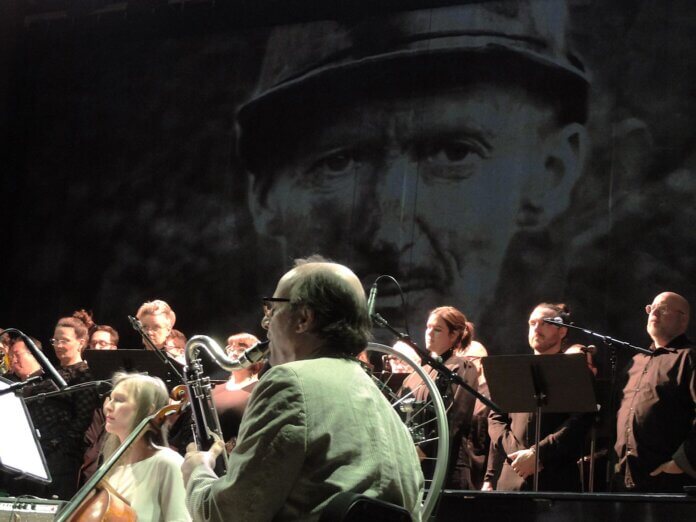
I remember attending the premiere of Anthracite Fields at BAM twelve years ago. The work is an oratorio for a forty-voice choir and chamber ensemble, expanded to include drums and electric guitar, addressing the exploitation of workers in American coal mines during the first half of the twentieth century. A sumptuous and complex composition, it earned Wolfe the prestigious Pulitzer Prize.
The performance at Roulette was even more rewarding, despite – or perhaps because of – the work’s “omnivorous” nature, encompassing the poetics of imagery, a political understanding of historical events, choral poetry, and, finally, music that never lets up, asserting itself with uncompromising force.
That is Julia Wolfe, whose artistic temperament finds its counterpoint not only in Lang but also in Gordon, the composer most intimately connected to minimalism. His precise repetitions and interlocking sonic patterns exert an utterly hypnotic, trance-like effect. After all, this music has its roots in Eastern and mystical inspirations of considerable depth, sometimes superficially mistaken for mere obsessive repetition.
The works of the three great founding fathers of this stylistic movement – Terry Riley, Steve Reich, and Philip Glass – would alone be enough to establish its lasting importance in the history of contemporary music.
Reich and Glass were also celebrated in grand style at this year’s Long Play. A new version of Philip Glass’s best-known and most commercially successful album, Glassworks, was presented. With its pronounced emphasis on a clearly defined and emotionally affecting melodic language, the album had raised suspicions among some listeners at the time that Glass was deliberately steering his work toward a more commercial direction.
Admittedly, it lacks the complexity and monumental grandeur of Music in Twelve Parts or Einstein on the Beach, but the music is undeniably beautiful, far from simplistic, even if it can be enjoyed without demanding the listener’s undivided attention.
It is also true that, following Glassworks, Glass received so many commissions and offers that some of his subsequent compositions occasionally gave the impression of being produced from ready-made templates. Yet, considering everything he has accomplished over the past sixty years, we can only pay him endless tribute.
And tribute was certainly paid to the composer, who was present in Roulette’s packed auditorium and received prolonged applause and expressions of admiration at the end of the concert.
The music of Glassworks had been rearranged for the Bang on a Can All-Stars by Glass’s most devoted interpreter, Michael Riesman, who was also in attendance. In revisiting the album’s six pieces, Riesman reshaped and refined their structure, bringing out the intrinsic nobility of Glass’s style without resorting to facile effects or decorative embellishments.
Steve Reich, meanwhile, was given one of the festival’s most prominent showcases in anticipation of his ninetieth birthday, with a marathon devoted to several of his masterpieces, presented twice at BAM’s prestigious Fisher Theater.
We thus had the pleasure of hearing once again, in concert, major works that occupy a central place in the history of twentieth-century music: Piano Phase (1967), Four Organs (1970), Sextet (1984), and Electric Counterpoint (1987). These are compositions in which Reich’s genius found its fullest expression, developing a language of minimalism that would become a model for generations of composers.
Four Organs, in particular, is perhaps the most brilliant embodiment of his aesthetic. Written for four musicians playing Farfisa keyboards, it unfolds through interlocking patterns and gradual tonal and rhythmic expansions based on a single chord, punctuated throughout by a percussionist relentlessly playing two maracas.
It is worth remembering that Philip Glass himself was one of the keyboard players on the original recording. What is astonishing is that, heard today, the piece generates the same excitement and conveys the same sense of absolute modernity that it did more than fifty years ago.
The musicians of Sō Percussion and Dither and Friends were outstanding in their precision and command of Reich’s repertoire. Both ensembles are already familiar to those who know the composer’s music, but at Long Play they demonstrated a particularly profound devotion to his work through this special marathon tribute to the figure who, perhaps more than anyone else, gave definitive shape and scope to the entire aesthetic of minimalism.
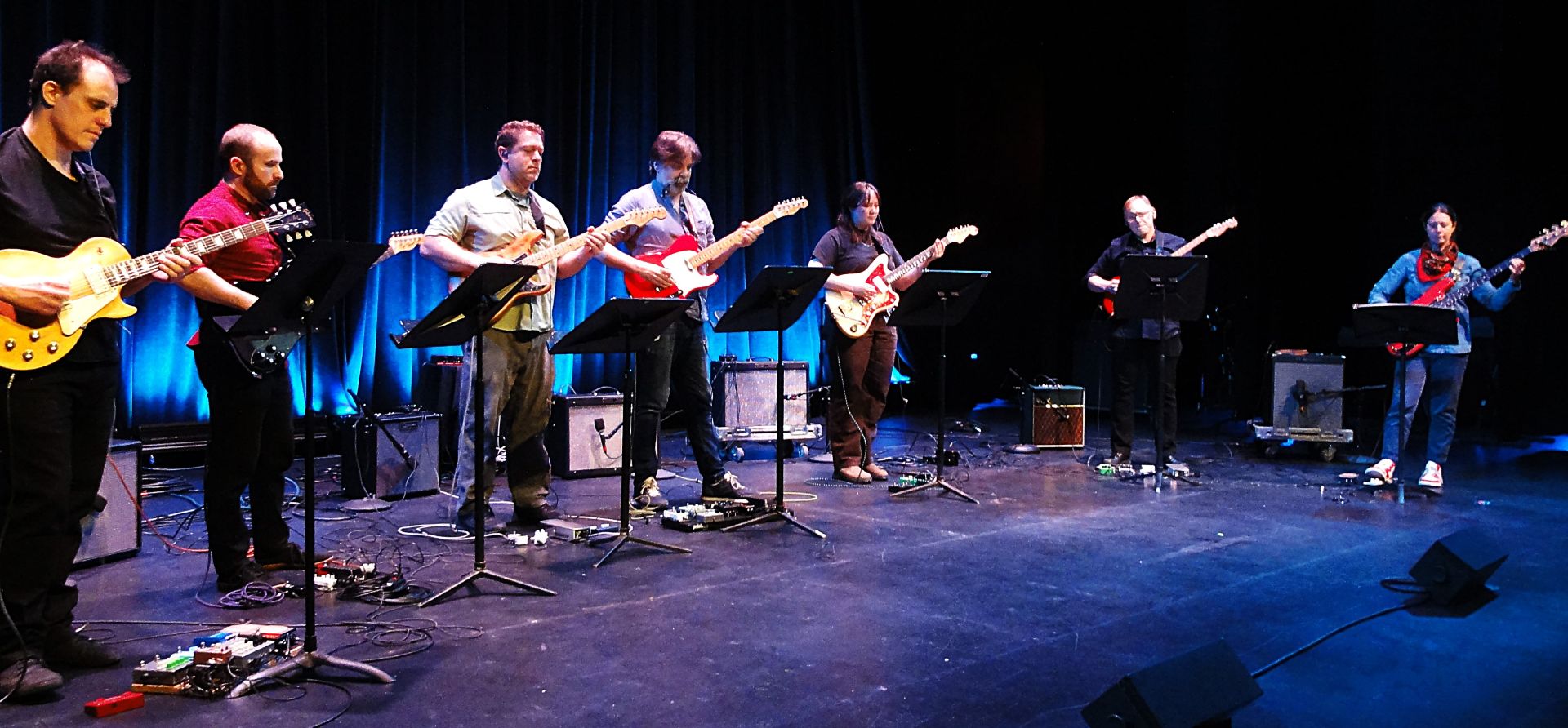
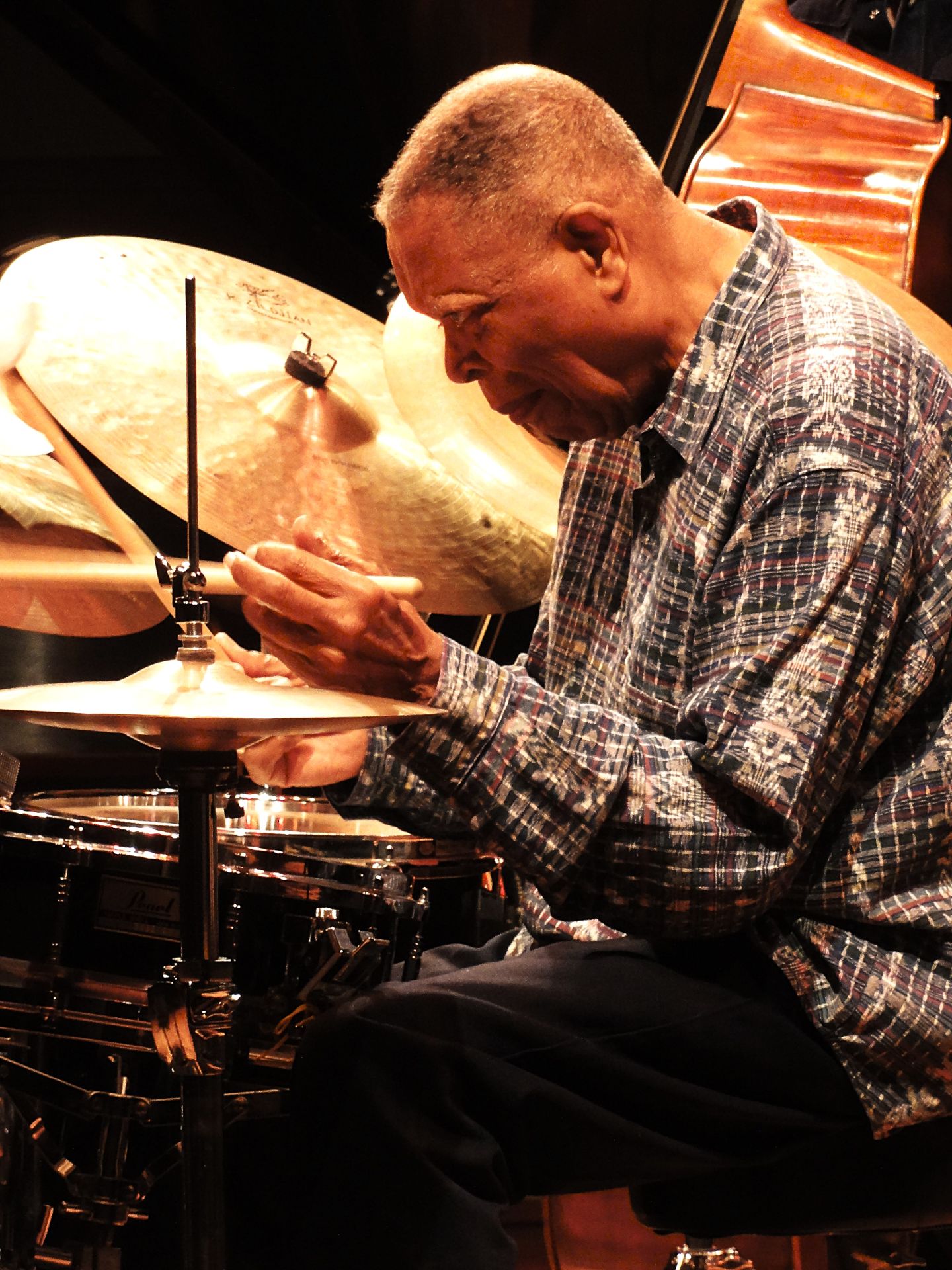
Jazz, for its part, also enjoyed a substantial presence at Long Play. Ensembles led by Billy Hart, Kris Davis, Matthew Shipp, Steve Lehman with Mark Turner, Brandon Ross, and many others enriched an already lavish festival program.
Among them, we would particularly highlight drummer Billy Hart’s quartet, featuring Nicole Glover on tenor saxophone, Ethan Iverson on piano, and Joe Martin on double bass. It is remarkable to hear the leader still performing at the highest level at the venerable age of eighty-five. Alongside him are the invariably elegant Iverson and Glover, who stands out among today’s saxophonists for her clarity of thought and exceptional sense of swing.
Speaking of saxophones, the quartet led by Lehman and Turner, presenting a magnificent tribute to the music of Anthony Braxton – one of the outstanding musical events of the year – quite simply overwhelmed the Brooklyn audience with its consummate musicianship, expressive power, and ability to do full justice to the great American composer’s music.
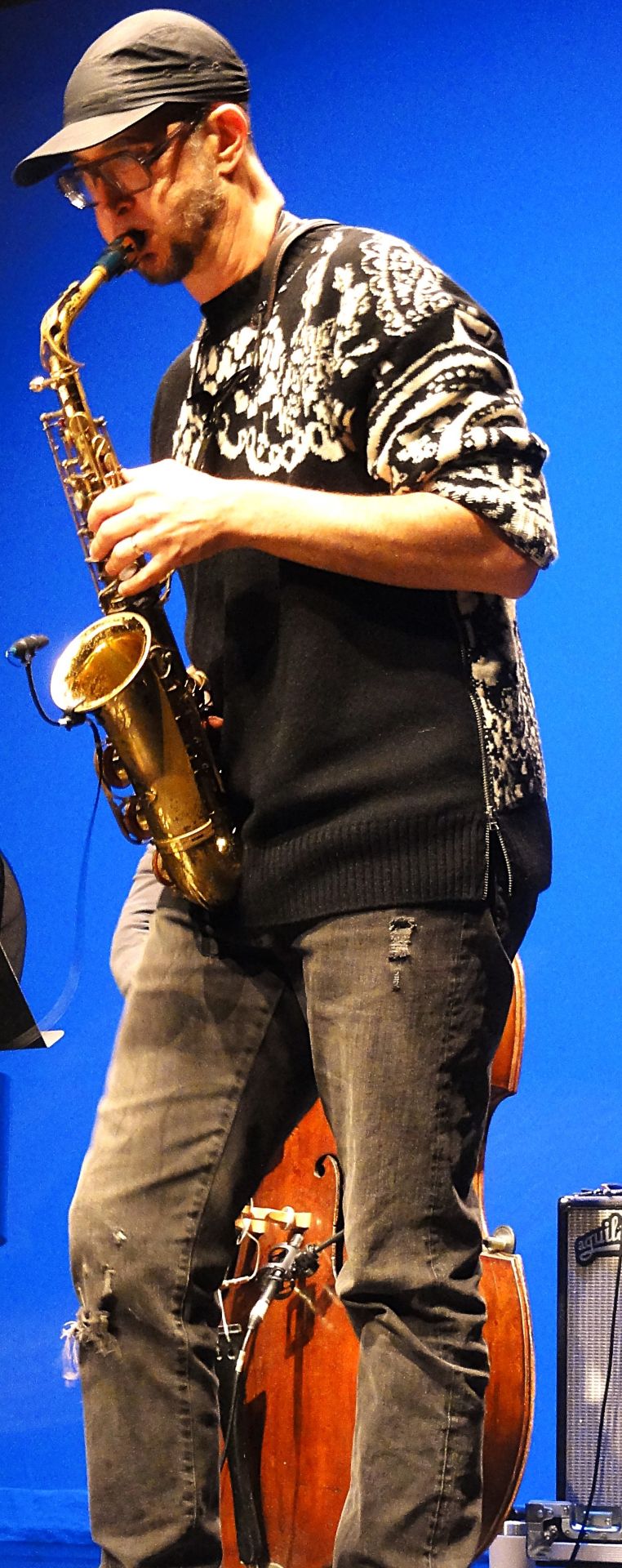
Indeed, listening to this repertoire, much of it dating from the 1970s, made us reflect on just how fundamental Braxton has been to the evolution of jazz aesthetics, an aspect of his artistry that has perhaps receded somewhat in his more recent output, increasingly cerebral and inward-looking.
Finally, a well-deserved mention must go to trombonist Kalia Vandever, whom we recently interviewed in Musica Jazz (January 2026). With her new project, she is establishing herself as one of the most significant instrumental voices on today’s musical scene, moving outward from jazz into genuinely original contemporary sound worlds, the product of an artistic personality that recognizes no boundaries whatsoever.
We will undoubtedly be hearing much more about Kalia in the future, accompanied by all the praise this young musician so richly deserves.
