
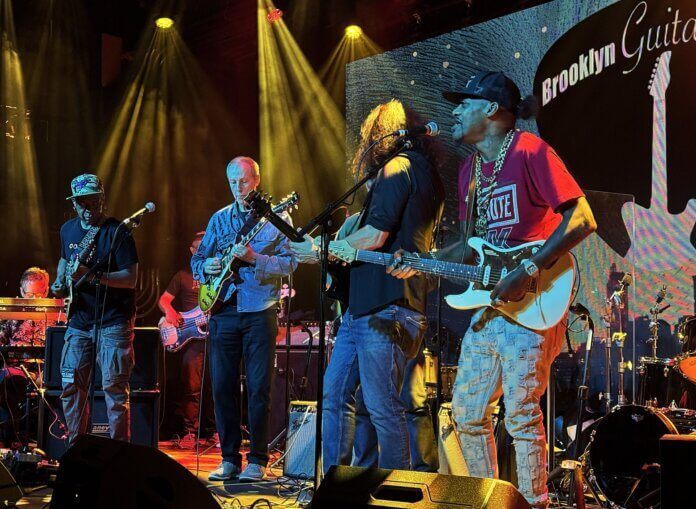


The first – and, to date, only – festival in the New York area devoted entirely to guitarists took place in mid-June, proving a resounding success in terms of both attendance and artistic quality. We followed it with great curiosity for two main reasons: the confirmation of the guitar’s resurgence, particularly the electric guitar, as we had already witnessed at the recent Big Ears Festival in Knoxville; and Brooklyn’s preeminence as the natural home for some of the most original and stimulating music being made today, whether jazz, rock, or contemporary avant-garde. The festival unfolded over a weekend at two different venues: Warsaw, a spacious theater-club usually associated with the more carefree, youthful side of rock, and the concert space at the Arlo Hotel in Williamsburg, long one of Brooklyn’s favored neighborhoods for emerging artistic talent of every kind. Both venues sold out, drawing enthusiastic audiences for five consecutive hours of music at Warsaw and no fewer than ten at the Arlo. In short, it was a two-day, nonstop immersion in guitar music, with players representing a remarkable variety of styles. The most familiar names included John Scofield, Adam Rogers, Vernon Reid, Mike Stern, Bill Frisell, Nir Felder, Al Di Meola, and Joel Harrison, one of the festival’s two organizers. The other, Alex Skolnick, may be less familiar to jazz enthusiasts, but he is a charismatic figure in American blues-rock and demonstrated an impressive command of guitar technique. His musical language owes much to two giants, Jeff Beck and Jimi Hendrix, who remain indispensable points of reference for anyone venturing into a world where the guitar reigns supreme and opens the door to seemingly limitless sonic possibilities. That was certainly the case in the 1960s and 1970s, when blues-rock dominated much of the emerging musical landscape on both sides of the Atlantic. And something similar seems to be happening today, as the subtly evocative, loose-limbed phrasing of other approaches gives way to a renewed fascination with the distorted, manipulated sound of the electric six-string in all its expansive, flamboyant glory. The presence of Scofield, Frisell, and Di Meola, on the other hand, reflected a sensibility closer to the jazz idiom, albeit in what I would call its most elevated, almost ecstatic contemporary form. Joel Harrison, who belongs to this same tradition, was undoubtedly the driving force behind bringing these artists to the festival, while leaving the more rock-oriented side of the program to Skolnick. One important point deserves emphasis: Harrison’s work is genuinely commendable, particularly his commitment to promoting the guitar as a leading voice in the emerging directions of contemporary jazz. He has also produced anthology albums featuring a variety of guitarists, specifically to champion their artistry – something rarely seen among musicians, who are often more concerned with tending and expanding their own little gardens. So congratulations to Harrison, but also to Skolnick, whose achievement extended well beyond assembling a lineup of outstanding players. By inviting musicians such as Eric Gales and Vernon Reid, whose aggressive, often thunderous but never derivative styles brought tremendous energy to the proceedings, he helped create an event with broad appeal for an audience that was passionate without necessarily being omnivorous in its tastes, yet clearly possessed considerable cultural curiosity.
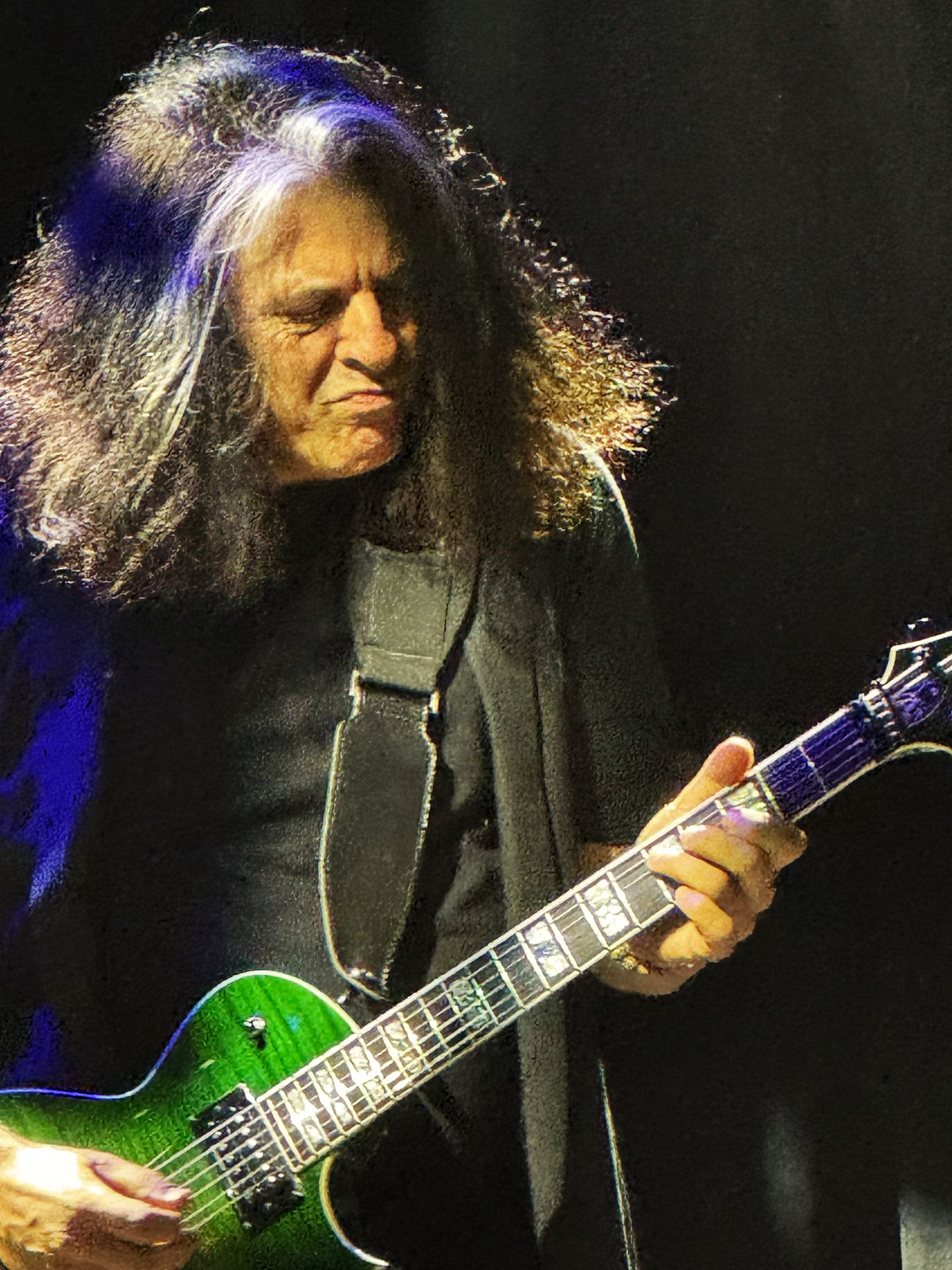
Among the festival’s newer faces, we would particularly single out the young Texas guitarist Ally Venable, whose exceptional drive and first-rate phrasing immediately commanded attention. In her, we can glimpse the future of American blues-rock, a tradition deeply indebted to the music and style of Stevie Ray Vaughan, an artist of extraordinary stature whose absence is still keenly felt decades after his death. Venable follows in his footsteps, but does so with a personality and mastery of her instrument that are entirely her own. She tells us that she will be appearing at the upcoming festival in Lucca – an opportunity not to be missed by anyone who loves this distinctive strand of the great, long and winding road of American music. Indeed, when we speak of a particular kind of sound, or even a literary tradition, we often resort to the term Americana. Within this broad cultural territory, we might place a singer such as Lucinda Williams alongside a writer such as Cormac McCarthy: artists whose work draws deeply on the extraordinarily diverse elements that make up what we call American culture. It is a kind of multiverse in which different visions and creative expressions coexist, constantly influencing one another. From our European perspective, it must be said, we often struggle to grasp and properly appreciate this complex mixture, which can strike us as discordant. Yet it is precisely from this seemingly unruly convergence that the new artistic movements of such a complex continent emerge. Returning to Venable, her youthful audacity already suggests the makings of a major artist; she simply needs to overcome certain vocal limitations. Singing, after all, has always been the Achilles’ heel of guitarists, with only the rarest exceptions. Frisell, Scofield, and other great exponents of the instrument are wise to remain silent, allowing their guitars to do the talking, or occasionally inviting a guest vocalist to take on that role. It is worth remembering that the human voice, by its very nature as a vehicle of expression, automatically becomes the focal point of any ensemble. Unless a singer possesses a voice particularly rich in color, tone, and expressive nuance, it is better to leave to someone else the demanding responsibility of carrying the band’s entire stylistic identity. The same observation applies to established blues-rock guitarists such as Vernon Reid, Greg Koch, and Eric Gales.
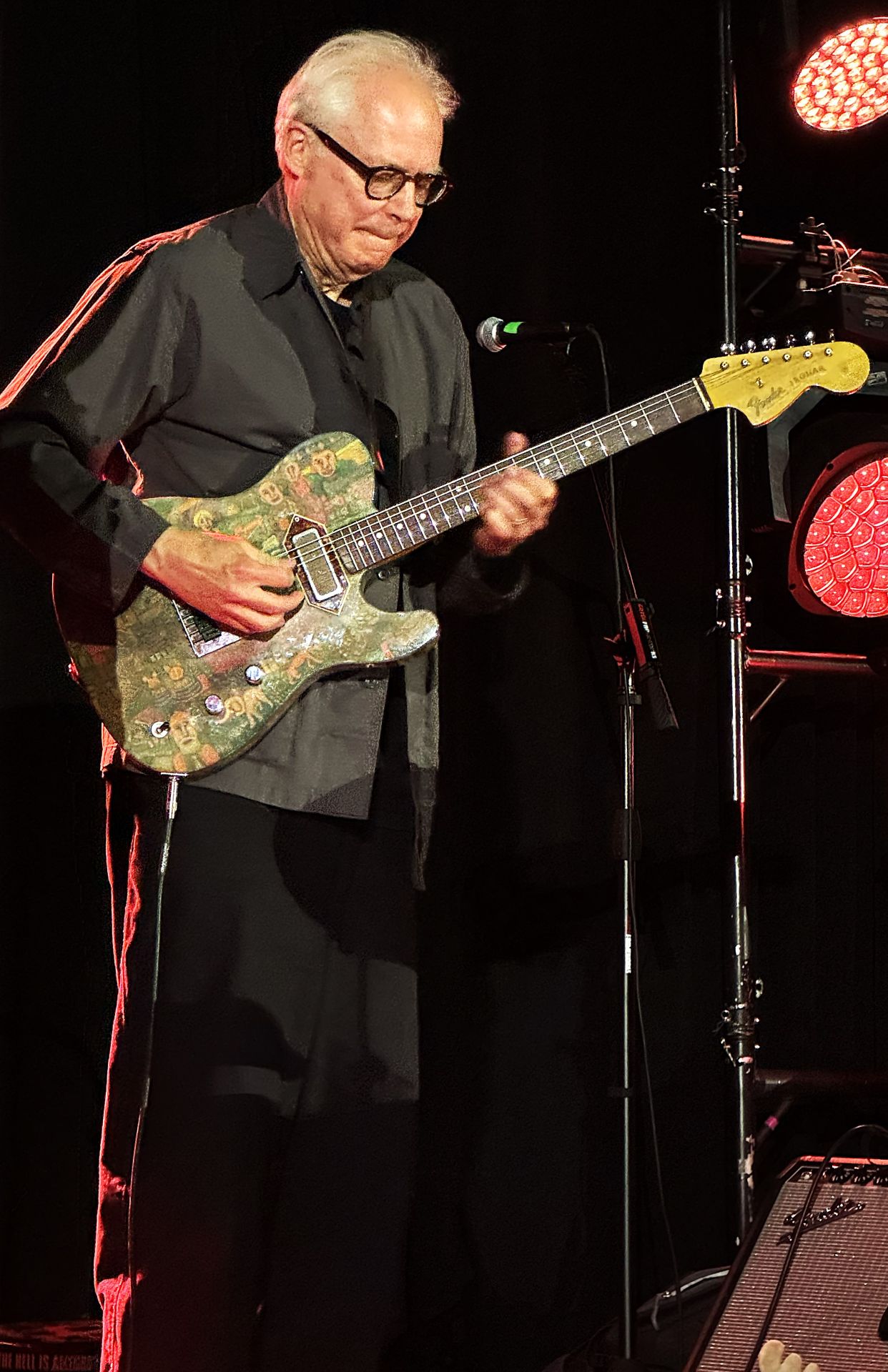
Another important feature of these two days of guitar music in Brooklyn was the tribute to the genius of Jeff Beck, a musician who left an indelible mark on the entire evolution of the contemporary electric guitar, even if the extent of his influence has not always been fully recognized. His disciples are countless, yet Beck, perhaps because of his mercurial temperament or for other reasons, received less recognition during his lifetime than some of his peers. And yet it is impossible to consider the development of blues-rock guitar over the past fifty years without placing his incomparable talent at the very forefront. Not everyone knows that Stevie Wonder, an admirer of Beck’s playing, originally wrote the celebrated “Superstition” for him. Beck subsequently recorded the song and frequently performed it in concert. It was only fitting, then, that Vernon Reid, Eric Gales, and their fellow musicians should honor him with a stellar rendition of the piece, prompting thunderous applause and standing ovations. But “Superstition” was far from the only highlight: several other well-known pieces associated with the English guitarist, who sadly passed away a few years ago, featured prominently in the tribute. Chief among them was the celebrated “Cause We’ve Ended as Lovers,” another Stevie Wonder composition and a masterclass in stylistic refinement. The festival’s other major tribute was devoted to John Scofield, with an irresistible parade of guitarists including Bill Frisell, Nir Felder, David Gilmore, Gilad Hekselman, and others tackling the repertoire of an artist whose career and recorded output are nothing short of remarkable. In a way, it was also a curious occasion, since musicians such as Frisell and Harrison – contemporaries of Scofield, with Frisell born in the same year, 1951, and Harrison only slightly younger – chose to honor him as one pays tribute to a fellow musician one knows well and deeply respects, even while pursuing quite different stylistic paths. The result, in any case, was a splendid collective performance, one that Scofield himself would surely have appreciated had he been present. His trio had performed the previous day.
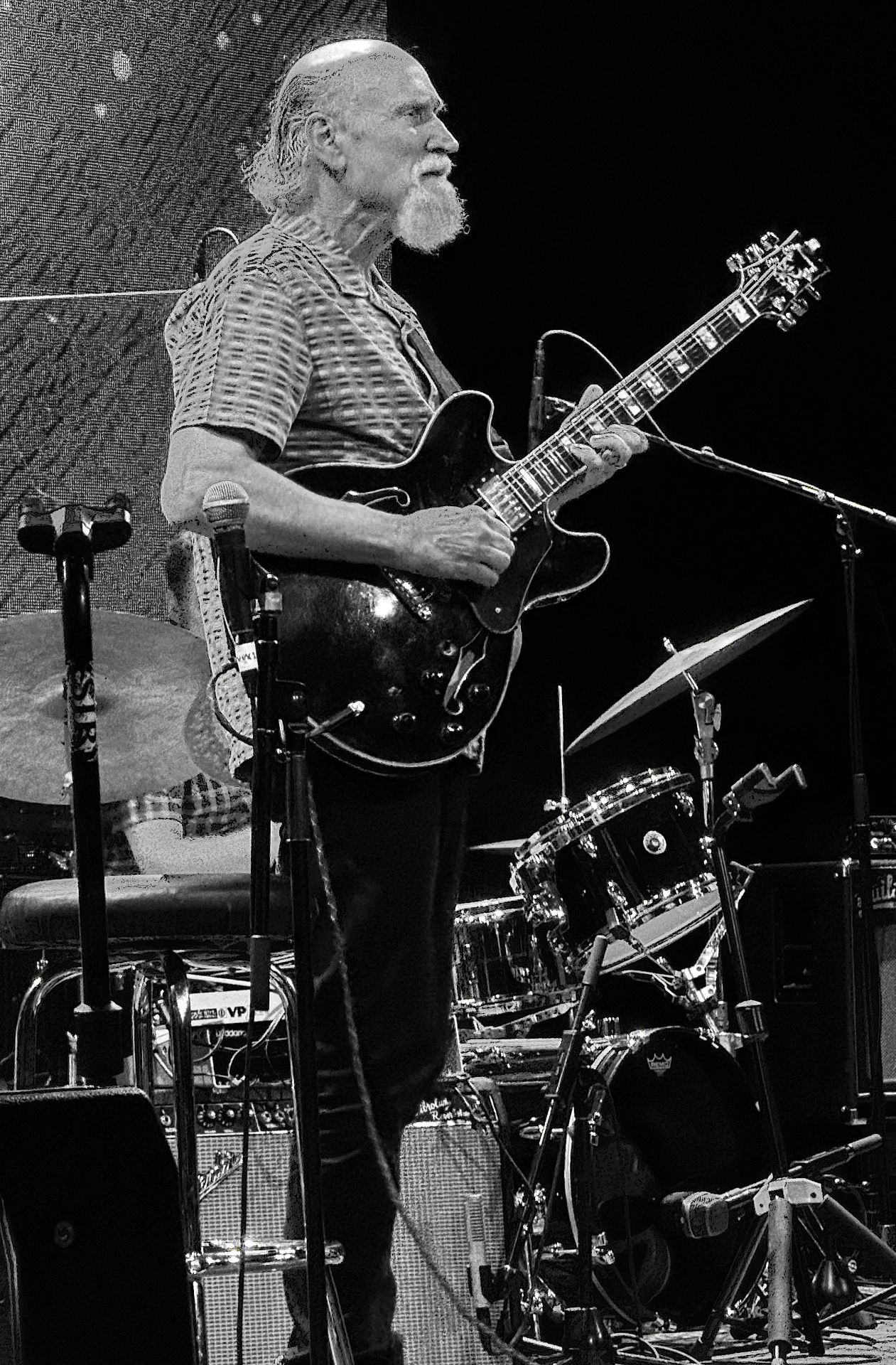
Mike Stern and Al Di Meola, however, deserve a separate discussion. Both are guitarists of exceptional caliber, but Stern seems undermined by the relative lack of substance in his compositions and by the forgettable singing of his wife Leni, who also joined him onstage. Di Meola, meanwhile, is undoubtedly a virtuoso of the highest order, but unfortunately so full of himself that toning down his evident self-importance would do his music no harm whatsoever. The noble roots of Spanish folk music are surely the most dazzling aspect of Di Meola’s art, far more so than the acrobatic flourishes of an increasingly dated fusion vocabulary in which his style too often becomes engulfed.
Nevertheless, these were two days of excellent music, and there is certainly every intention of continuing along this path. Joel Harrison himself told us that he is even considering staging a major outdoor happening next year. There is no shortage of space in Brooklyn, nor, as the festival amply demonstrated, of enthusiastic listeners. The only thing needed is a little cooperation from the weather. This year, holding the festival indoors proved to be exactly the right decision: outside, temperatures hovered around 35 degrees Celsius (95 degrees Fahrenheit), the air was oppressively sticky, and sudden downpours arrived without warning – as unpredictable as a masterful phrase from Jeff Beck.
