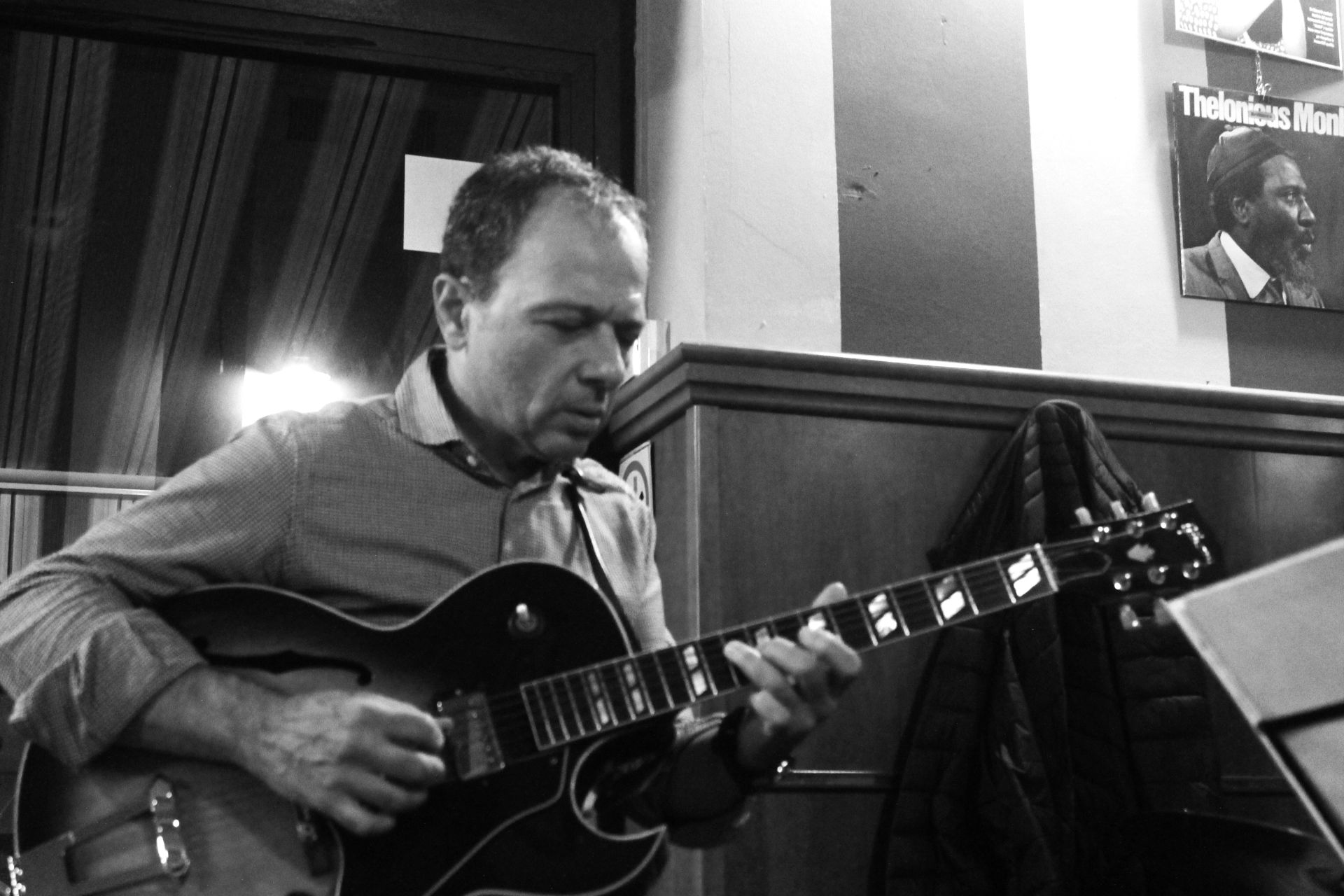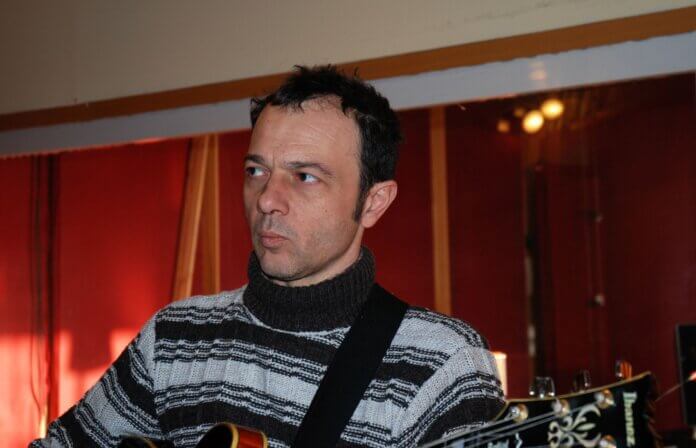


Six for Wes is the latest project by guitarist Giampiero Spina: a journey through the music of Wes Montgomery, arranged and performed by four guitars. We asked him to tell us about his ensemble approach to the compositions of the great American guitarist.
Giampiero, you’re a creative guitarist in the sense that you enjoy developing both personal projects and original reinterpretations of other composers’ work. I’m thinking of Cinema Paradiso, the Beatles-inspired Nothing Is Real, or your previous, highly personal album Alien Flowers. Tell us about this multifaceted side of your musical personality.
A musician’s personality is shaped by the musical imprint rooted in their past: it is an emotional baggage that stays with us throughout our lives. My influences are very diverse, originally because I grew up in a family where all kinds of music were listened to and played, from rock to classical music. Later came my almost accidental encounter with jazz, which was a revelation for me.
At the beginning of my musical studies, because there were so few teaching resources available but I had such a strong desire to learn, I had to develop an intuitive method of learning. I believe this approach profoundly influenced the way I feel and conceive of music. For this reason, whether writing my own pieces, reinterpreting other composers’ work or improvising, it has always felt quite natural to develop a personal style, avoiding clichés and established formulas as much as possible.
I don’t like labels or current trends: they simply aren’t part of who I am. Instead, I try to pursue a personal form of expression that is consistent with what I feel. Ever since my teenage years – back in the days of garage bands – I have felt the need to express my own ideas, following an inner impulse. Composing and sharing music with other musicians have always been a natural necessity for me, something that has accompanied me throughout my life in music.
Listening to your different projects, one gets the impression that there are two Spinas: the musician who plays in other people’s projects, including orchestral settings, seems completely different from the one we hear in your own work. How do you move between the two while retaining the qualities that make you such a versatile virtuoso?
First of all, it is something you acquire through experience. As a sideman, I’ve had the great honour of sharing musical experiences in some truly stimulating contexts, taking part in outstanding ensembles, both small groups and large formations, across numerous recording and live projects. I am grateful to everyone who had the sensitivity to involve me and choose me from among so many musicians.
Thanks to these experiences, particularly in large ensembles, I’ve had the opportunity to play alongside some of the finest jazz musicians in the world – artists I listened to as a young man and continue to listen to today, such as Bob Mintzer, Randy Brecker, Keith Tippett, Karl Berger, Mike Mainieri and Dick Oatts. I have tried to learn as much as possible from these encounters. What struck me most was their absolute dedication to music, combined with tremendous humility.
When approaching my own projects as well as those of others, I always try to retain a certain stylistic consistency while adapting to the different musical requirements. In a small group, after all, you are chosen precisely because of your individual qualities, and that is extremely rewarding from an artistic point of view. In larger ensembles, on the other hand, it is essential to be able to respond to the needs of the context: you need to be a good reader and to understand different musical languages and styles.
Jazz is the music you have devoted yourself to fully since you were very young, but rock is also an important part of your musical background. Within that world, you have a particular fondness for the Beatles, whose music you have explored extensively over the years.
Like many guitarists of my generation, I started out playing in rock bands. Being self-taught, I played in an instinctive and natural way, but I felt the need to acquire a more solid musical foundation. So I enrolled in a classical guitar course and later moved to a modern guitar school to explore the more “electric” side of the instrument.
At my first lesson, the teacher asked whether I was interested in jazz. I instinctively said yes, even though I knew absolutely nothing about that music. After a few lessons, he gave me a cassette containing a compilation of tracks he had selected specifically to introduce me to this new world. It was a genuine revelation. From that moment on, I decided to devote myself completely to jazz.
Unfortunately, the cassette has since been lost, but I still remember perfectly the pieces it contained. Among those that struck me most were a breathtaking version of “Night and Day” by Joe Pass, an extraordinary “All the Things You Are” by Keith Jarrett’s Standards Trio, as well as performances by great masters such as Wes Montgomery, Pat Metheny and Charlie Parker.
For this reason, whenever I reinterpret a piece that does not belong to the traditional jazz repertoire, I tend to approach it from a jazz perspective. Over time, I discovered that many musicians of my generation with whom I regularly collaborate also share my passion for the Beatles, so including their music in my projects came quite naturally.
The Beatles’ compositions possess a melodic and structural quality that, in some respects, brings them close to jazz standards: strong, recognisable melodies capable of supporting very different reinterpretations and arrangements. With this kind of approach, remaining faithful to the melody is fundamental. And I make no secret of the fact that paying tribute to their compositions is, for me, a genuine act of love and gratitude. After all, if I am a musician today, I owe that partly to the Fab Four.
The music you compose and play strongly reflects your personality: understated, never over the top, reflective, sentimental, ironic, nostalgic and melodic.
As calm as I may appear, I actually live in a state of almost constant excitement when it comes to music. I have always felt a very strong need for expression, and that is probably why I constantly feel the urge to renew and improve myself.
The creative and compositional process requires a great deal of patience and reflection: it is an ongoing journey, and that in itself helps me manage the kind of stress that accompanies my relationship with music. At the same time, like many musicians, I tend towards perfectionism, which means I find it difficult to leave things half-finished or incomplete.
Inspiration does not come solely from music, either. I also draw inspiration from other art forms. I love literature, cinema, theatre and art in general. For me, every form of artistic expression is a precious source of stimulation and creative nourishment.
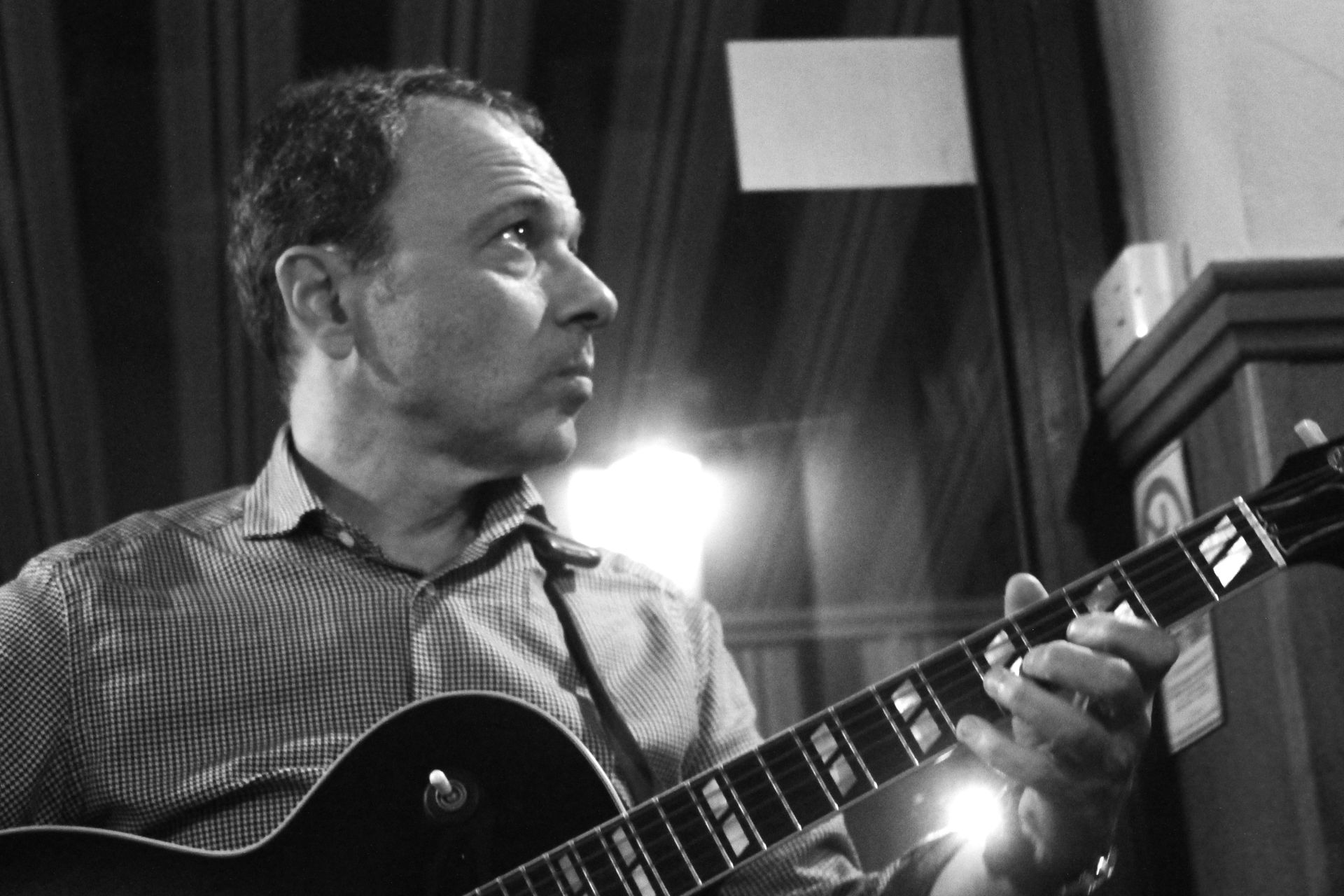
Let’s come to your latest project dedicated to Wes Montgomery. First of all, is he your main reference point as a guitarist, or are there others who inspired you to pursue your career?
Among the great jazz guitarists, Wes Montgomery is certainly a cornerstone for me, as he is for entire generations of guitarists. I believe the fundamental trio consists of Charlie Christian, Wes Montgomery and Jim Hall. Those three masters set in motion an evolution that subsequently branched out in many different directions and continues to influence the language of jazz guitar today.
When I first approached this world, fusion was particularly widespread: rock sounds were intertwining with jazz, creating an extremely fascinating mixture for someone like me who came from a rock background. I’m thinking of musicians such as Pat Metheny, John Scofield, Bill Frisell and Mike Stern, though I could name many others. Thanks to their contribution, entire generations of young people discovered jazz, and that was certainly true for me.
A fundamental and decisive encounter in the development of my career was with the great Pat Martino, whom I had the honour of meeting personally and spending an entire day with. A true philosopher of the guitar, but also of life. It is an indelible memory that I carry with me.
Six for Wes: four guitars playing Wes Montgomery’s compositions together. Is this an entirely original project, or does it have precedents?
The line-up of four guitars plus bass and drums echoes, in a sense, the more conventional format of saxophone with rhythm section, which has had illustrious precedents in jazz history – just think of Supersax. This formula applied to guitars was also explored by Franco Cerri. I remember that when I first heard it, I was deeply impressed by this kind of ensemble.
That experience gave me the idea of developing a collective guitar language which, while rooted in tradition, could open up new expressive possibilities and offer an original perspective on Wes Montgomery’s legacy.
Given the sheer size of Montgomery’s repertoire, what criteria did you use in selecting the pieces to perform?
It wasn’t difficult. I chose pieces from among those I had listened to most frequently, taken from some of the LPs that marked the beginning of my journey into jazz, such as The Incredible Jazz Guitar of Wes Montgomery, Boss Guitar, Full House and Bags Meets Wes!
I can honestly say that I know those records almost note for note, and they played a fundamental role in my musical development. So the selection came about naturally, almost instinctively, following a direct connection with my own musical history.
There are nine guitarists on the album, each with their own distinctive characteristics and style. It can’t have been easy to bring them all together. How did you manage it? Tell us about them.
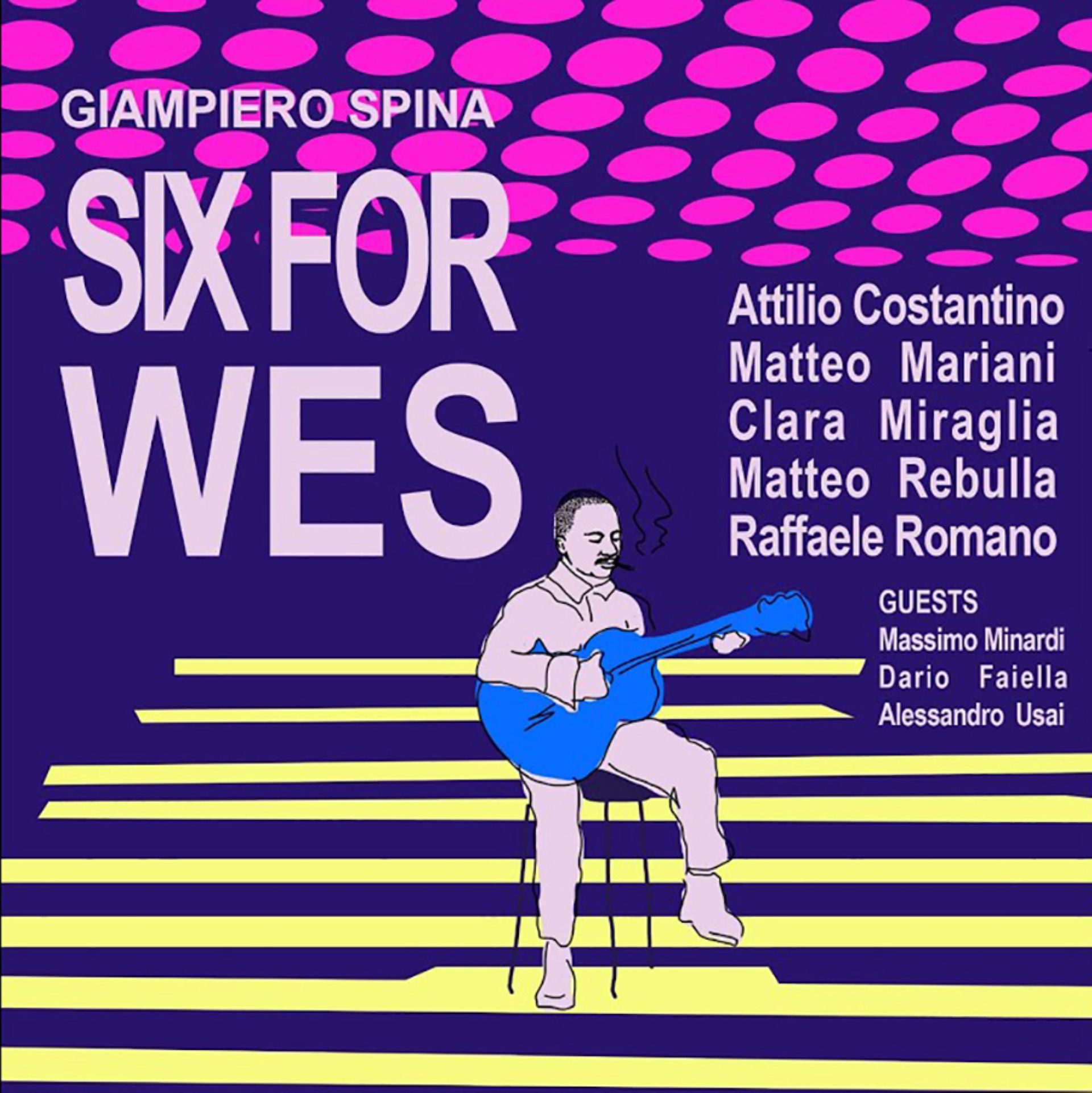
Working with young and promising guitarists such as Attilio Costantino, Clara Miraglia and Matteo Mariani is a constant source of inspiration and stimulation for me. Each of them has a personal style and a different approach, and it is precisely this diversity that is most important in my musical vision.
While making the album, it seemed like a wonderful idea to expand the project further, paying tribute to such an important figure as Wes Montgomery by involving other distinguished guests from the Italian jazz guitar scene, such as Massimo Minardi, Alessandro Usai and Dario Faiella, who, incidentally, were also our teachers.
From an organisational standpoint, it wasn’t simple. Bringing together so many musicians always involves a certain amount of complexity, especially because of everyone’s professional commitments. Yet their enthusiasm and willingness made the process surprisingly natural, to the point that the entire album was recorded in the space of a single day.
I like to think of this expanded line-up as a meeting between different generations, united by the desire to keep the legacy of a great musician alive, ideally passing the torch along what is, after all, the continuous journey of jazz.
The arrangements, with their orchestral character, can’t have been easy to construct either, particularly when it came to weaving together the different guitar parts, including the solos.
Arranging is an integral part of my work as a musician, and it is something I love deeply. Over the years, I’ve written a great deal of material, both for small ensembles – such as those featured in my own projects – and for larger formations. For a while I also conducted a big band, performing my own arrangements of famous standards, an experience that gave me enormous satisfaction.
Having studied harmony and composition, I became familiar with a variety of styles and techniques, including the traditional approach to writing for a saxophone quartet, which I have partly adapted to this project, as I mentioned earlier.
At the heart of an arranger’s work there must always be a clearly defined architectural concept, one capable of providing coherence and consistency while allowing the written parts and solo spaces to be integrated in a balanced way. It is precisely through this balance that the sonic identity of an ensemble takes shape.
Listening to Six for Wes, it becomes clear that the double bass and drums, played by Raffaele Romano and Matteo Rebulla, have a fundamental role in supporting the sonic architecture, while also providing rhythmic and timbral stimulation.
The choice of rhythm section is fundamental, as the entire history of jazz demonstrates. Throughout my work, I have been fortunate enough to collaborate with some outstanding rhythm sections, always choosing highly skilled musicians with a strong musical sensitivity.
For me, the rhythm section is not simply there to keep time: it has to interact with the soloists, creating a continuous dialogue, a lively and stimulating interplay that helps shape the music in real time.
In this project, Raffaele Romano and Matteo Rebulla fulfilled this role superbly. They were not only impeccable from a professional point of view, but also extremely responsive and deeply involved in the music. Their contribution was fundamental in supporting and giving cohesion to the entire sonic architecture of the project.
Among the ten tracks on the album – perhaps you could briefly comment on them – are one of your own compositions, “Eggs in Air”, and Miles Davis’s “The Theme”. What do they represent within a project dedicated to Montgomery?
“Eggs in Air” is one of my compositions, more precisely a contrafact: a piece built on an existing harmonic progression from the jazz repertoire but with a new melodic line – a kind of musical anagram. In this case, it is based on “Airegin” – itself an anagram of Nigeria – the famous Sonny Rollins composition that also appears on The Incredible Jazz Guitar of Wes Montgomery.
So it is a double tribute, to Wes and to Rollins, enriched by a play on words in the title, which in turn becomes an anagram of an anagram.
“The Theme”, on the other hand, is a Miles Davis composition: an apparently simple melody that is actually brilliant in its melodic and rhythmic economy, built on a harmonic progression widely used in jazz. I had already worked on this piece in the past, arranging it for another ensemble, and I felt the desire to include it in this project as well.
There is also a wonderful version on Clark Terry and Wes Montgomery’s live album Straight, No Chaser, which provides a further connection with the musical world to which this project is dedicated.
In that sense, both pieces fit naturally into the album: they are different ways of engaging with tradition while keeping the spirit of Montgomery’s music alive through personal perspectives. Massimo Minardi’s guitar is featured on both tracks.
To pay tribute to the compositional character of Montgomery’s pieces, I chose to keep the original forms intact, respecting their harmonic structures and the rhythmic framework of the arrangements. The only exception concerns the melodies, which I reworked for an ensemble of four guitars, seeking to offer a new timbral perspective without betraying the original spirit.
“Fried Pies”, the opening track on the CD, serves as an introduction to the Six for Wes project and presents the musicians involved, as does “Mr. Walker”. On the subsequent tracks, guest musicians join in for the solos: Alessandro Usai appears on “Cariba”, “Road Song” and “Full House”, while Dario Faiella is featured on “Jingles”, “Four on Six” and “West Coast Blues”. On the latter, I also arranged part of Montgomery’s original solo and incorporated it into the context of the project.
Of all the Montgomery pieces included on the album, which is the one you could never grow tired of playing in concert?
I’d say none of them… And in a way, that’s true, because every Wes Montgomery piece has something special and continues to offer new ideas every time you play it.
That said, I have a particular connection with “Four on Six”: that is where the idea for the project originated, and, in a sense, the title as well. It is a piece that never ceases to stimulate me, both musically and emotionally.