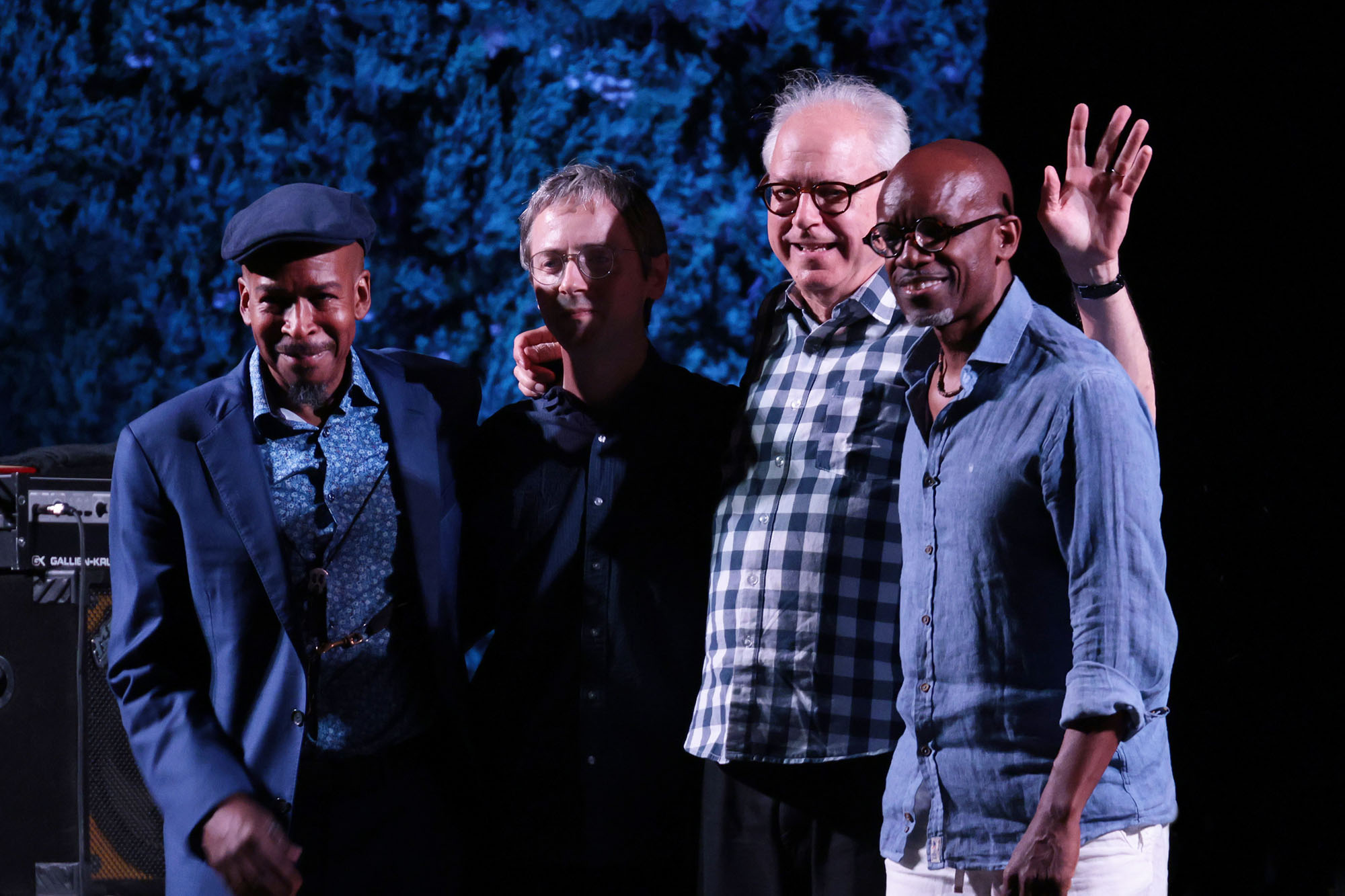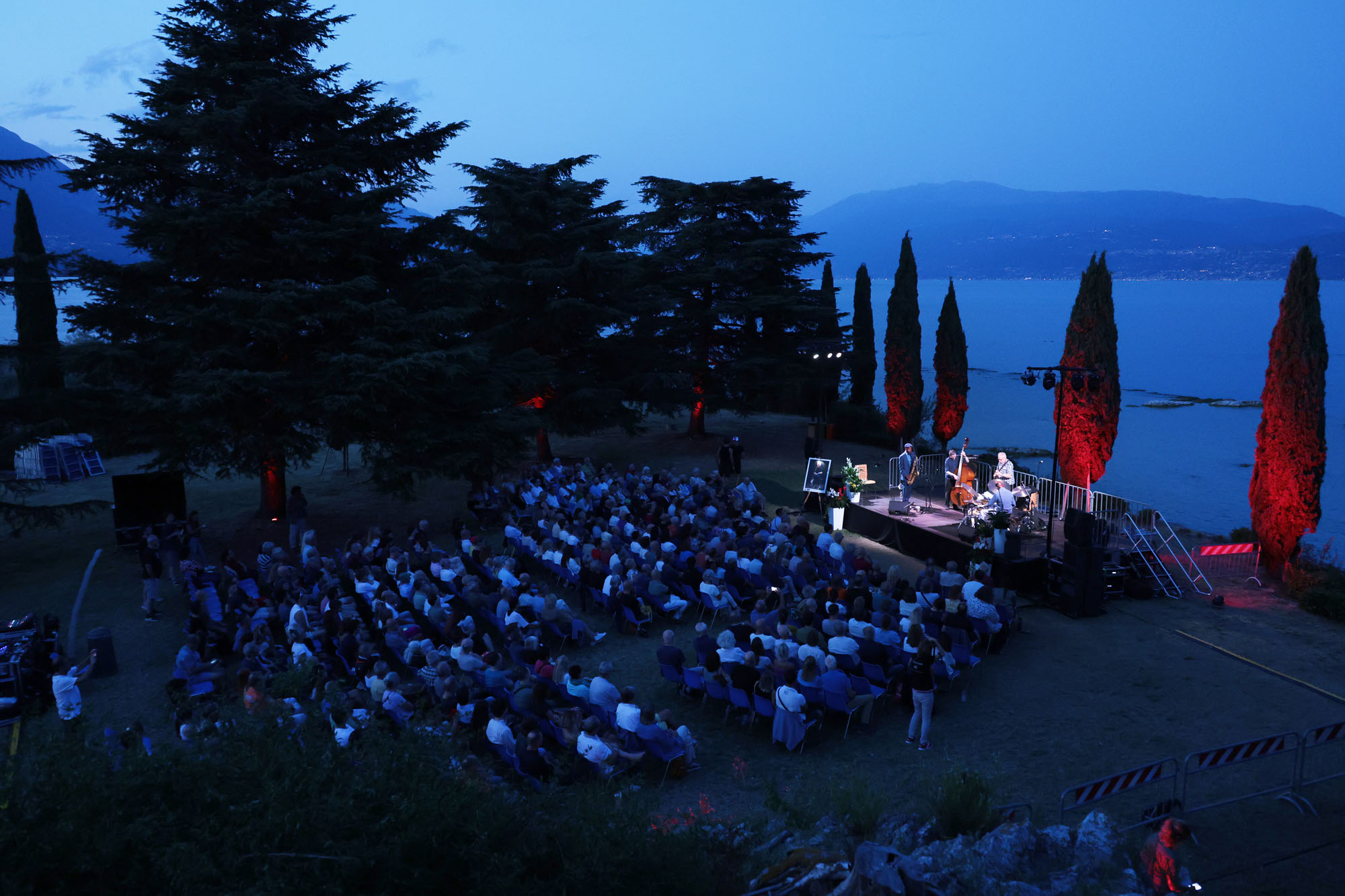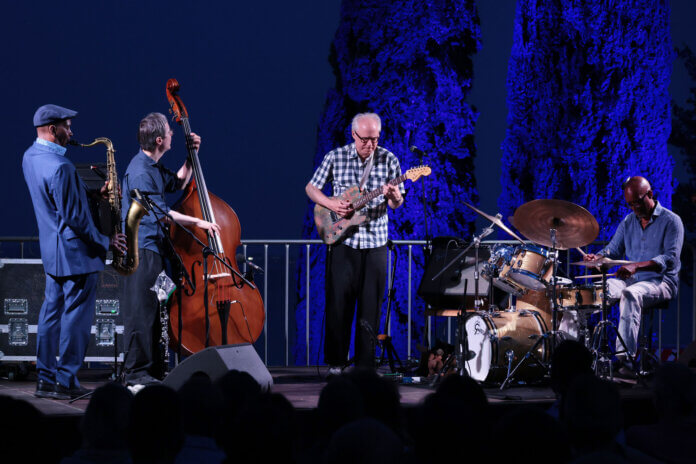


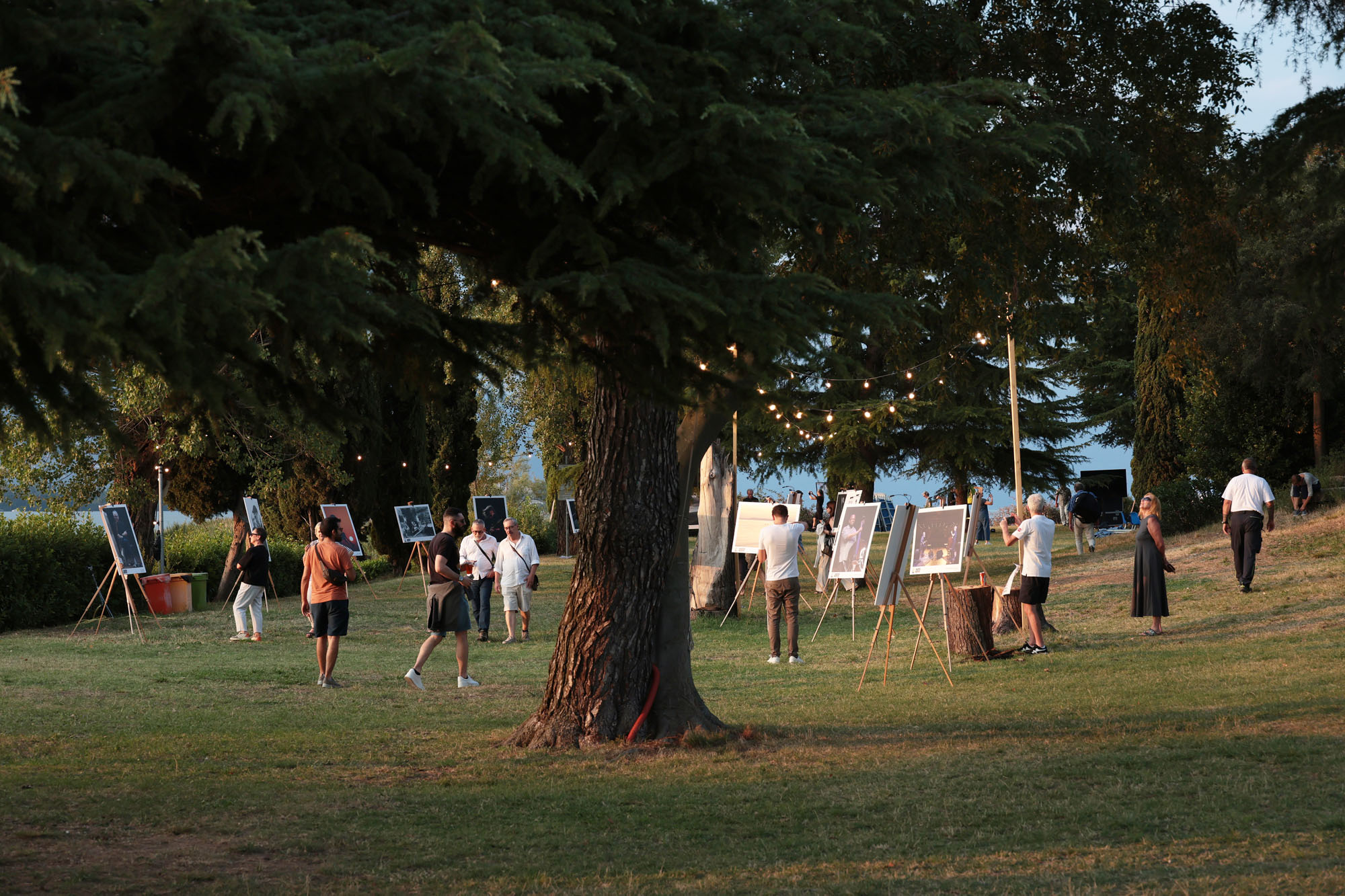
Following performances by Christian McBride & Julian Lage, Andrea Bacchetti & Dado Moroni, Antonio Faraò in a solo piano recital, and Al Di Meola, it was the turn of Bill Frisell’s trio, expanded into a quartet for the occasion by the presence of Greg Tardy on tenor saxophone and clarinet. This was the final European date of a long summer tour, and San Biagio Island provided the ideal setting in which to bring a memorable series of concerts to a close. The festival programme was further enriched by Jazz sotto le stelle (Jazz Under the Stars), Luciano Rossetti’s photography exhibition, whose evocative images accompanied the audience along the final stretch of the path leading to the natural auditorium set up at the northern tip of the island.
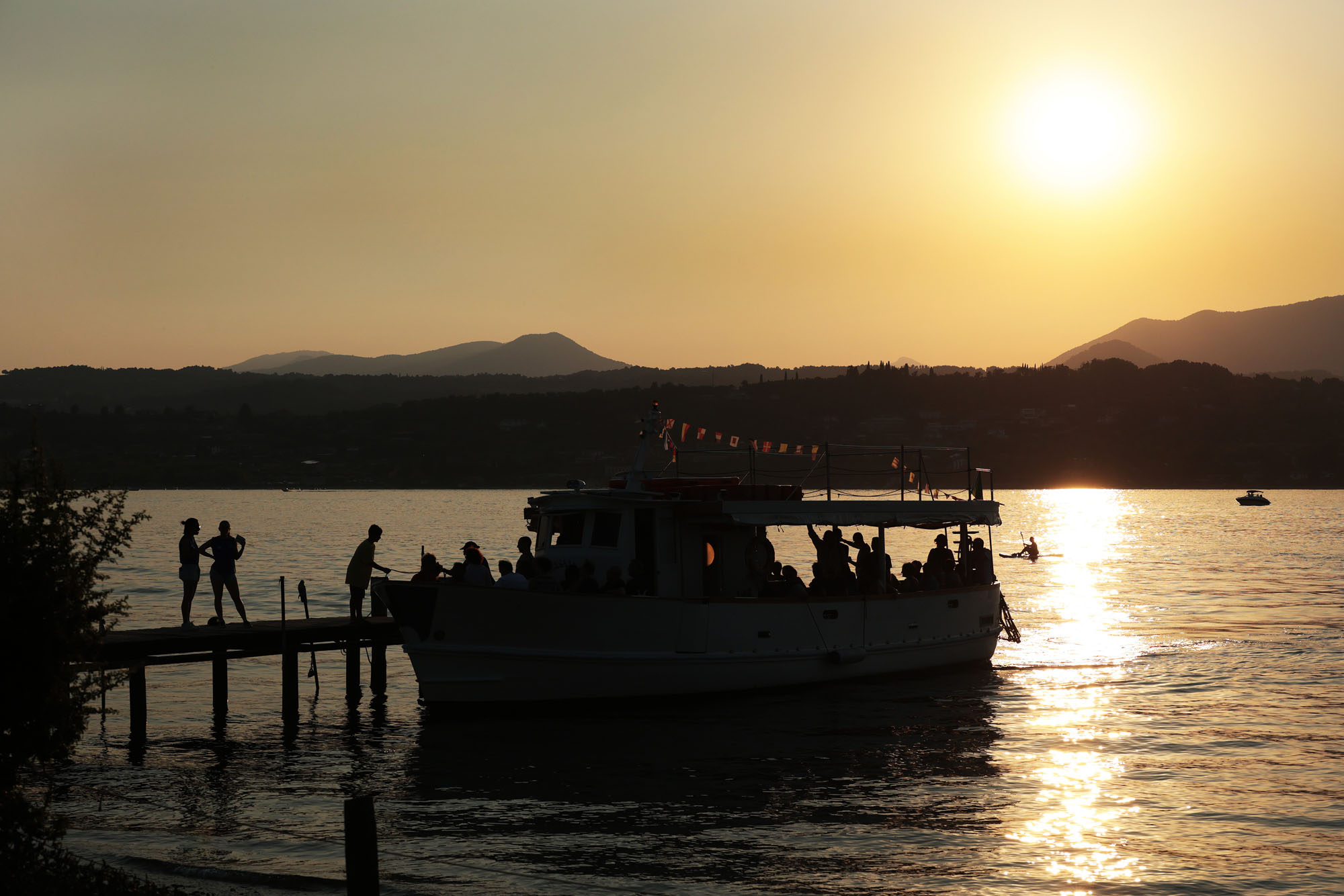
The considerable organisational effort required to make the event possible also deserves recognition. The entire audience was transported to the island and subsequently brought back to the mainland through a coordinated service involving several boats. It was a complex operation, managed with remarkable efficiency, which made a location as captivating as it was logistically challenging accessible to everyone.
Double bassist Thomas Morgan and drummer Rudy Royston have been regular collaborators of Frisell’s for around fifteen years. During that time, they have played countless concerts around the world and recorded some of the most significant albums in the guitarist’s discography. Concert after concert, the trio have refined a rapport and unity of purpose rarely encountered among contemporary jazz groups.
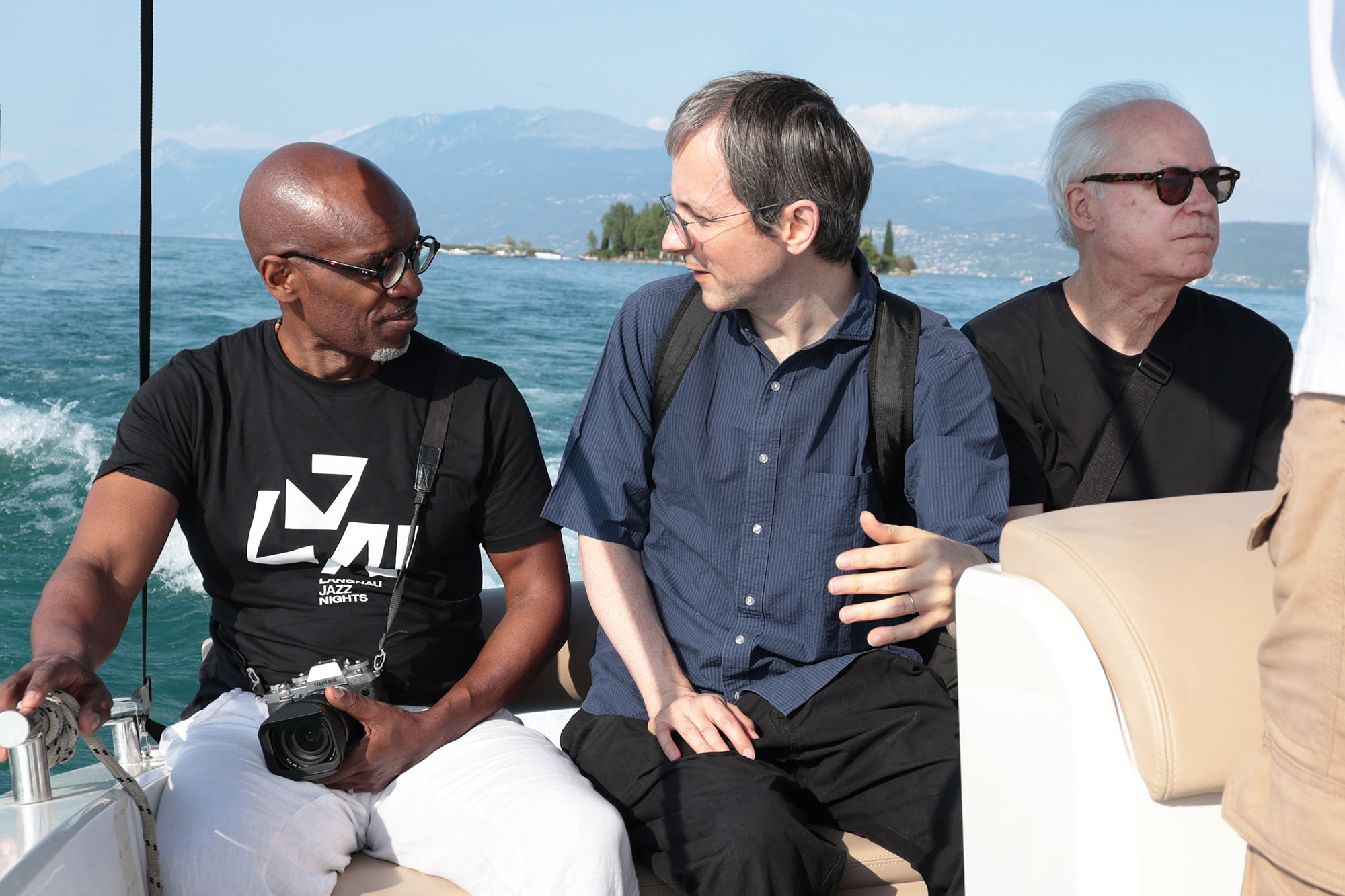
The machine was therefore well-oiled and running perfectly. For this summer tour, however, Frisell decided to fit it with a new component, not to alter its engine but to broaden its expressive range and enhance its performance. Hence the return of Greg Tardy, with whom he has recorded three albums: History, Mystery (2008), More Than Enough (2019) and Four (2022).
Tardy may be less widely known than some of his American contemporaries, but despite his limited media exposure and relatively infrequent appearances in Italy, it would be a mistake to underestimate the artistic qualities of this New Orleans-born musician. In addition to collaborating with leading figures on the American scene (including Steve Coleman, Tom Harrell and Andrew Hill), Tardy has enjoyed a career as a bandleader spanning almost thirty years. It began with Impulse! and continued on SteepleChase, for which he has recorded eleven albums, all of them well worth rediscovering.
His polished, crystalline tone, crisp yet luminous phrasing and strong melodic instinct made him an indispensable addition to this new configuration of the group. His contributions were consistently precise and perfectly suited to their musical context, without ever disturbing the balance of the original trio. Tardy also distinguished himself on alto clarinet, demonstrating how much the instrument still has to offer within a contemporary jazz setting.
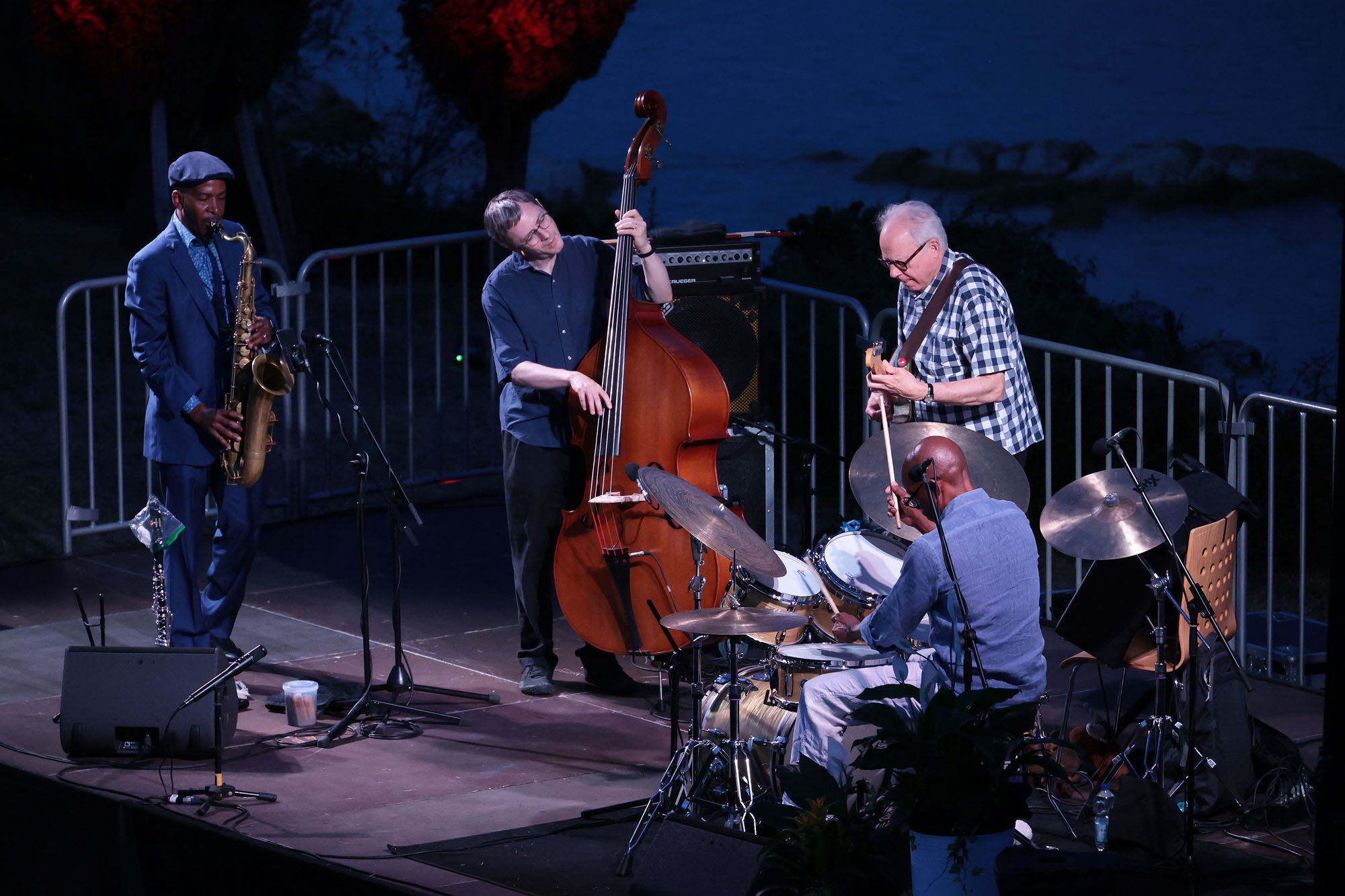
Anyone familiar with Bill Frisell knows that he inhabits a dreamlike musical universe, suspended in another dimension, where every note carries a particular weight. The concert on San Biagio Island unfolded seamlessly for just over an hour, moving through a succession of different musical landscapes. In this extended medley, Frisell drew on the sources closest to his heart: first and foremost film music, including Morricone and other themes with a distinctly Western flavour, but also suspended trio ballads that brought to mind masters such as Jim Hall and Wes Montgomery.
Among the pieces performed was an arrangement of a composition that Frisell had previously played in duo with Eyvind Kang as part of The Great Flood, a project presented at the Torino Jazz Festival at the end of April this year.
The musicians performed superbly throughout the concert and appeared even more inspired than on other occasions. One of the group’s greatest strengths lies in its ability to work with pieces that have long since become standards, reshaping them through a precise and coherent process: delving into the heart of a composition in order to reveal new nuances and colours.
Frisell enjoys playing with the recurrence of themes, allowing them to re-emerge repeatedly during a performance like echoes and turning them into sonic reference points around which improvised phrases of varying lengths can be constructed. The melody is never entirely abandoned; it remains in the background, ready to resurface and suggest a new direction to the group.
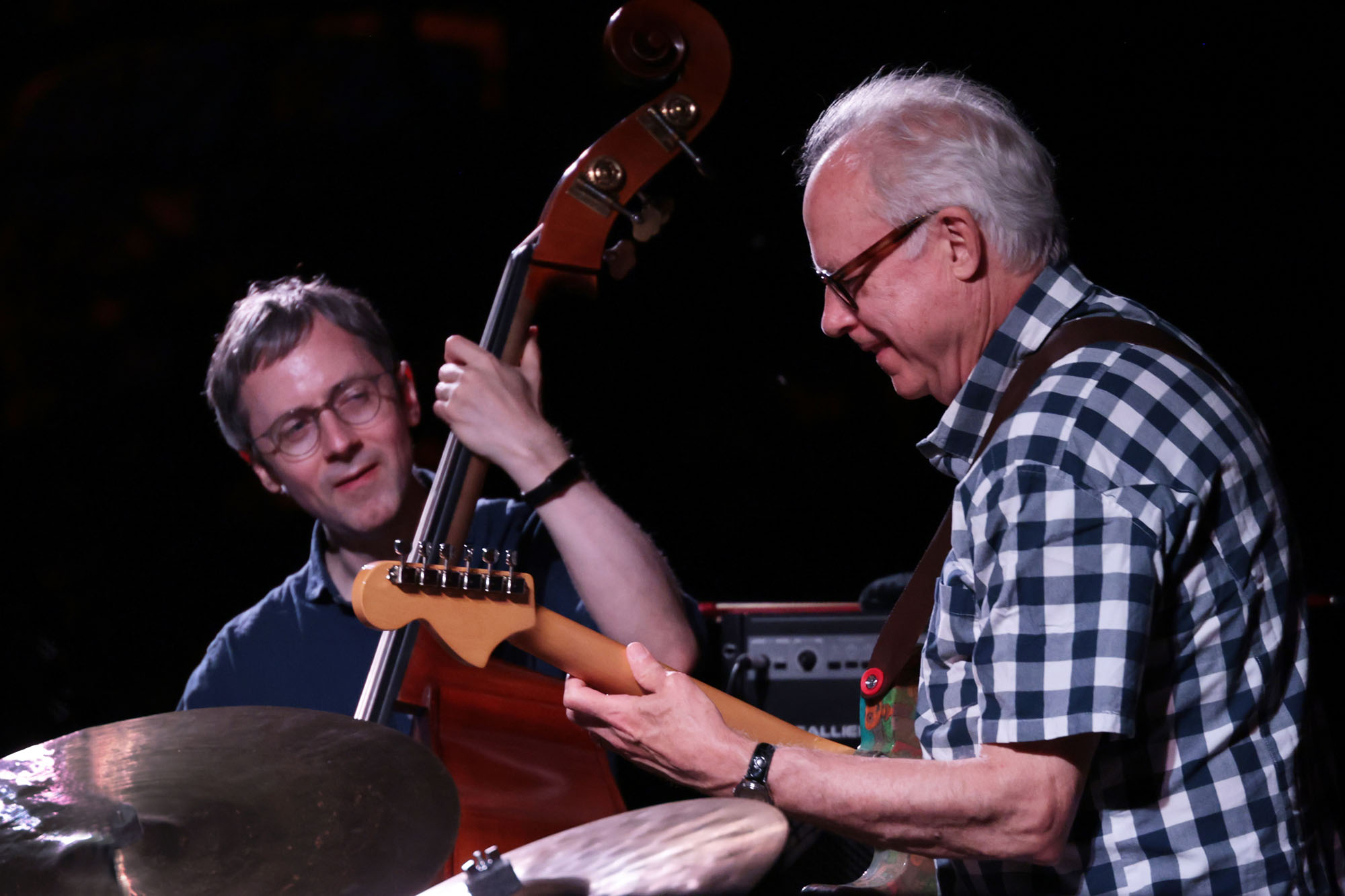
Every member of the ensemble was given space as a soloist. At times, the solos emerged from more pronounced interplay, as in the explorations of Frisell and Tardy. On other occasions, particularly during Royston’s and Morgan’s solos, the remaining musicians reduced their contributions to a minimum, leaving the soloist almost entirely free.
Tardy’s addition therefore proved entirely successful: a new voice integrated into a tried-and-tested mechanism, capable of opening up further timbral and narrative possibilities within Frisell’s music. It is regrettable that, at least for the moment, there is no recorded document of this quartet and that no further tours are planned. This formation has nevertheless confirmed, as though any further proof were needed, the extraordinary artistic stature of one of the giants of contemporary guitar.