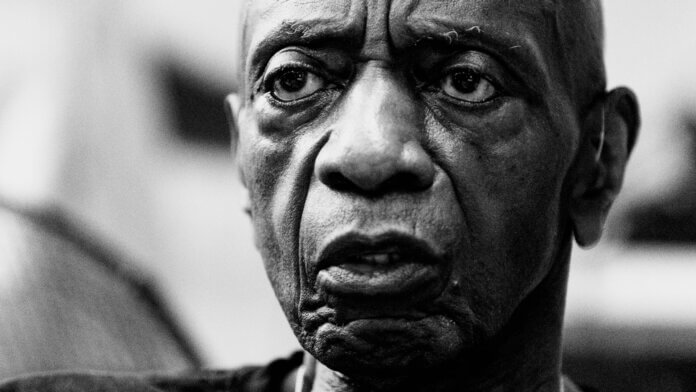

Reggie Workman: “Coltrane was part of the community”

A Conversation with Francesco Martinelli at Siena Jazz

- Advertisement -
Musica Jazz Radio

As the sun began to set over Siena’s Fortezza Medicea on June 21, 2026, a large audience composed mainly of Siena Jazz students gathered to hear one of the last living witnesses to several crucial chapters in modern jazz history.

In conversation with musicologist Francesco Martinelli, bassist Reggie Workman revisited the Philadelphia of John Coltrane and McCoy Tyner, reflected on the meaning of community, recalled the birth of Collective Black Artists in New York, shared rarely heard stories about Thelonious Monk, Miles Davis and Elvin Jones, and offered a lifetime’s worth of reflections on music, education and responsibility.

Coltrane, Philadelphia and the Meaning of Community

Francesco Martinelli: During our conversations over the last few days, John Coltrane’s name has come up many times. What struck me was that you spoke of him not only as a great leader, but as a spiritual mentor and guide.

Reggie Workman: Yes, indeed.

John Coltrane was already one of the most respected musicians in Philadelphia. Even though he was originally from North Carolina, Philadelphia had become home for him. His mother lived there, and whenever he came off the road with Miles Davis, he returned to the city and immediately reconnected with the local musicians. He was always in touch with everybody who was doing anything of significance. Anybody that was making interesting music, he was there, listetning, trying to find out how and what to include in his own repertoire. So I learnt then that he was somebody to look at, to stay in touch with, forever. And that’s why I begin to know who he was

One of the places where you could often find him was at McCoy Tyner’s mother’s beauty shop in West Philadelphia. McCoy’s mother had bought a piano and placed it there to keep him occupied, to keep him away from trouble and away from the gangs that were present in many neighborhoods at the time. McCoy practiced constantly, and naturally John would show up there. That was the beginning of the relationship between them.

The clubs were rising up in different places around the town. There was oneaone called the House of Jazz where McCoy had a trio with me and Eddie Campbell. So they hired John to come in to work with us as a ringer. That’s how I got familiar with who he was musically and who he was personally and so forth. That was the beginning of a wonderful friendship, a wonderful creation.

We can spend the entire afternoon talking about John and the experiences we had with him in Philadelphia. There was a place in Columbia where all the musicians gathered after playing to have breakfast. At that point we used to have gigs that started at 9:00 and ended at 4:00 am. John would often come by and be a part of that. So we met there many times, talked with many Philadelphian muscians, compared many notes: at that point it was one of the major things that was happening.

John was the guy that would be at the parties, he would go to town hall, he would come to sit with bands, he would do cabarets and whenever he was in Philadelphia he was not just a celebrity coming off the road with miles but he was a community guy, he was a supporter of our community. We became very close and shared a lot information with me, both spiritually and otherwise things that had nothing to do with music, it would be just about life, about where he was

Francesco Martinelli: So community is a very important word, the community of the musicians. And during all your career you always made a point to be a part of that community and to work for the community, not just for all.

Reggie Workman: Yeah, that was my life back in those days. Let me say something else about Philadelphia being right down the street from New York. Many people from all over the States would come to Philadelphia because it’s so close to New York they could come to Philadelphia, land there, get a cheap place to stay, and then go run back up to New York to try to make connections and be close to music. So many many musicians were finding a matrix in Philadelphia and I met so many people coming in from different areas landing in Philadelphia and being at the same place where we were looking to hear the music. And that was part of our life when we were supposed to be embedded ready for school next day during your homework. We were in the car zipping up the turnpike to catch the last set at the Cafe Bohemia or wherever Mingus was playing. So that was our life.

Reggie Workman at Siena Jazz
Francesco Martinelli and Reggie Workman ©Caterina Di Perri

Francesco Martinelli: Do you want to go back to the community idea?

Reggie Workman: Well, you can’t help it because that’s the major part of our development. There were so many musicians in Philadelphia, you know a lot of them. Like the McGriff’s family who lived around the corner from where we were on Webster Street. Jimmy McGriff was the organ player who learned to play piano as a child and was a child prodigy. There was Archie Shepp right up the street. There was a Sonny Fortune a few car stops down. Lee Morgan was down in Nicetown. Odean Pope was a little bit south of there. So many musicians were around the Philadelphia area that we would have to make those stops and make sure we were in touch because we had to listen to what everyone was doing. They were doing something different. We needed better here and learn it. Otherwise you might get on the game and get embarrassed. So that is what the life was in Philadelphia. There was Jimmy Smith: his father was in Pittsburgh. He was a person who would be involved with some of those gigs and although he was from Pittsburgh, he spent a lot of time in Philadelphia. And all of us had to do these trips back and forth and find the place to perform.

Francesco Martinelli: So then when you moved to New York, you did not start at the beginning with Coltrane?

Reggie Workman: Well, I moved in New York, as I said, we were back and forth whenever we needed to be in New York. We were all piled in the car with Spanky DeBrest’s friend driving and meeting downtown and shooting across the Benjamin Franklin Bridge up to turnpike to catch the last sets; that was our motive. And I pay the price for that because I almost lost my finger because of being up all night listening to the music and then going to work in the morning and working at a garment factory where I fell asleep at the machine and it came down on my head.

Yeah music was made at the boys clubs and at all social places. You guys, everyone probably remembers Herb Adderley. He was with the Giants. He was a Dynamite basketball player, a Dynamite baseball player.He was from the boys club where we used to always have jam sessions and make music. And he had a brother named Charles Adderley. And that was one of those things that happened. You all remember that in families when somebody is famous or somebody gets a lot of notoriety, the other person is suffering. So, Herb was younger than his brother Charles. So he was growing, growing, growing, getting all the notoriety and Charles couldn’t hang with that. So he ended up getting with Jimmy McGriff’s younger brother and going out and approaching a killable woman on the parking lot, robbing her in the neighborhood, in wealthy neighborhood, just, you know, in Philadelphia. That happens with a lot of families.

Reggie Workman
Reggie Workman ©Tommaso Taurisano

Collective Black Artists and the Struggle for Self-Determination

Francesco Martinelli: I would like to you to explain a bit more about the Collective Black Artist and that area of activity with collective of musicians expressing themselves and organizing concerts as well.

Reggie Workman: Yeah, you are jumping in many years ahead.

Francesco Martinelli: Yes, but that I was kind of worried. We’re going a little slower. That’s a very important part. We should all be on mind.

Reggie Workman: That was an important time. Collective Back Artist was started in New York with musicians around different parts of the States, creating organizations to take over the business of the music because we were not getting the jobs that other people got. So we said, okay, we better do something about this. So in Detroit started organizations with many of the musicians. I think Stanley Cowell came from that area, north of Detroit. A lot of musicians are coming out of Detroit: Yusef Lateef, Alice Coltrane’s brother who’s a bass player is involved with that many musicians whose names I would like to recall but I don’t remember all of them now. There’s a book that was given to me by a writer from Detroit called Music in Detroit and he talks about all the things that he knew about the musicians in Detroit. And from that book I learned that Milton Jackson, the vibe player, he wanted to be a violinist, but he was black and they didn’t have a place for him to be. So he didn’t get the opportunity to study violin so he switched to vibes and he went all the way to the top.

That’s one of the things I should suggest: find that book about Detroit musicians, because it’s online and it’s got a lot of information there about all the Detroit musicians. Joe Brazil, for example, who was a great friend of John Colotrane and John used to always go and practice when they went to Detroit. Books like Saxophone Collossus, books like Easily Slip Into Another World by Henny Thredgill. All the musicians are now beginning to write their own books to try to get the truth out there because other writers are not getting to the core of what the people need to know about the evolution of this music. And this music being such an important part that the African society gave to America, we need to know how those things happen and why they happen. The era when the Pearl Harbor was happening and the Americans were rounding up all the Asian people putting them in concentration camps. And the Asian people were gradually coming into areas where music was being made because they could survive there. And the musicians were helping them to get out of that problem into other places. So you see a lot of musicians who marry different Asians at that time.

Francesco Martinelli: And here I would like to ask Ayana to give me some help and talk about the documentary that you are preparing because this is the time. This is the time to announce this initiative.

Ayana Workman: Hi, I’m Ayanna, I’m Reggie’s daughter. We’ve been working on a documentary about Reggie and his life for the past 10 years. It was a venture between me and my mother and a team cinematographer. And we got together and we decided that the world needs to know about his life. So we’ve been working on it for a while. We’re in the editing process now. And we just wanted to let you know to stay tuned. You can follow the Instagram page, “Immortal Workman.” The film is going to be called “Immortal, the Legacy of Reggie Workman.” Or “The musical crusade of Reggie Workman”. We’re in process to figure out what the title is. But yes, please, please, please, keep aware of the socials. And it’s going to be really important. It’s going to be about Reggie’s life, but also about jazz music, that it’s African-American music, and just about the history. So yeah, thank you!

Ayana Workman, Francesco Martinelli, Reggie Workman
Ayana Workman, Francesco Martinelli and Reggie Workman ©Caterina Di Perri

Francesco Martinelli: So after introducing the documentary project, let’s go back to that experience of the collective and what actually you did at that time.

Reggie Workman: Yeah, I touched upon that, the different places, different cities, major cities, in which the organizations grew and established things. There was an organization in California and there were clubs like in the North Beach area and San Francisco had a lot of…

This guy, I can talk to this guy about all kinds of music and he’s one of the few people in the world that I know who can tune into those things and answer questions that I have forgotten. So I feel blessed to be on the podium with him.

Francesco Martinelli: Thank you, Reggie.

Reggie Workman e Francesco Martinelli
Francesco Martinelli and Reggie Workman ©Caterina Di Perri

Reggie Workman: But anyway, in Detroit, in Philadelphia, in California, in St. Louis, where Quincy Troupe and Oliver Lake and Miles are all from, and in all those major cities, and New York was a major city, and we established first Professionals Unlimited with Chris White. I’ll try to stop and I’ll bring you to that.

That was the beginning of the Collective Black Artist’s scene. And that grew into Collective Black Artists because Richard Davis, Chris White and Lisle Atkinson, a lot of bass players, Alex Lane, who were involved with that decided, yes, we’ll get together and we do what we need to do in order to make work for ourselves. In the studios black musicians were not getting the calls for the jobs, so we said, why not take some of these jobs or accept some of that misdemeanour fee that they’re offering to us? We’ll put our own amps in the studios. We’ll bring our own instruments to the thing. And so if they offer us not enough money to take the cab to the studio, there’s already stuff there that we can use. That was a part of it. Warren Smith coming from – where was Warren from? Chicago. He came to New York. He was an integral part of the development of Collective Black Artist. He had a loft on 21st Street and that was the first place where we started our meetings, where we were collecting $7 from each person every time we would have a meeting, trying to build a little financial base. And that’s it. We had all kinds of people. It was Collective Black Artists at the time, but we were inviting people from all over place. We had Heiner Stadler who was German. He was involved with it. We had Attila Zoller, he was Hungarian. He was involved. We had Gunther Schuller’s nephew or something. Many people, different denominations, but we were having those meetings.

What happened was we were not getting anywhere because we were at one another trying to solve problems that were different for all of our camps. So we told the European musicians, the other musicians who weren’t black, you go back to your hometown or your area and you deal with the people who are hiring for these record dates and then come, we’ll come back together as, as we grow in our own community and then we’ll have a stronger, cohese relationship.

Francesco Martinelli: Collective Black Artists organised also concerts and musical activities.

Reggie Workman: yeah, we had bi-monthly concerts at Town Hall. After we grew to a point where it started out with all the musicians’ wives taking care of the phone and all the technical things like that. And that lasted for a while. It couldn’t last too long. So eventually, the wives began to do what they did as wives. And we hired a woman who just lost a job with a rock company named Cobi Narita, and she became our executive director. And she was able to write grants and raise money for us to do these by monthly concerts. And those concerts were tremendously important because we did concerts with people like Ahmad Jamal, James Moody, Max Roach, Art Blakey, Archie Shepp, Andrew White and these were one of those people who were having a whole two-hour concert and Slide Hampton who was directing the band. Everything was revolving around music, the Collective. When we started at Warren’s place, we started about rehearsing music. And so those concerts were the continuation of the string for this organization that happened and those concerts at Town Hall became very popular and somewhere, in some way, someone’s basement there are stacks of flyers with all the information about all those concepts. I have a lot of them at home at myself. And that’s a historical document, but we can’t keep all those things over. There’s new time to really archive all of this stuff. So I called Jimmy Owens, who was another major part of that group. And he has a lot of those flyers in his basement piled up with his history that he can put his hands on.

Monk, Miles and the Human Side of Jazz History

Francesco Martinelli: Do you want to add something or can I ask the audience if they have questions?

Reggie Workman: We have many questions from the audience but I have to say one story that happened during the Collective Black Artists days. We were approaching everybody to, like Miles Davis and Thelonious Monk and all those biggies to do concerts with us. And when I was at the Vanguard with Thelonious, my job was trying to get Thelonious to do a concert with us. And Thelonious was dancing around with his brandy and one side. And when I asked him about to do the concert, he said, “But, Workman, I’ve done that.” And then he would throw right across, like, twist, right past my face to let me know how dare you asked me that. Another thing that would happen, I would go to Freddie Freeloader, we were hanging it out a lot. And Freeloader said, “Come on Workman. I’ll take you by Miles’s pad.” So he would take me by Miles and my job was to ask Miles, “Miles would you help us by doing a concert with us to raise funds for the organization”. So he took me by Miles’s pad and we knocked on the door. Miles came to the door and he said, “Hey, Workman, how are you doing?” And so I started talking to him about the Collective values. He said, “You don’t have to tell me that. I know what you guys are doing, but don’t come and ask me to do something for your money. It took me all these years to get my money up to the point where I’m now. You must be crazy thinking I’m going to back off that and do a concert for you.” He said that at the door. He didn’t say “come inside”. He knew at the door. He was allowing me to talk and question him at that point. Yeah, so that was one of those things that I can share with you. There are so many stories that we can share.

Reggie Workman
Reggie Workman ©Tommaso Taurisano

Making the Bass Sing: On Sound, Technique and Elvin Jones

Francesco Martinelli: I’d like to know if anyone is interested in asking a few questions, we have our microphone available, if there’s someone who’s prepared and can hear us, so we can broaden the discussion beyond me and Maestro Workman.

Audience Question: I’m so sorry but my question is incredibly specific. I wanted to ask you about this, since you’re one of the greatest bass players that we have today, and I wanted to ask you about your conception of the double bass in Afro-American music today. What should a young bass player study or practise in order to improve his playing and play this kind of music?

Reggie Workman: I think young bass players have to realise their position in the band. Many of the bass players don’t understand how important that instrument and that voice is in the band. They don’t realise that they have their hands on the reins as far as where the music can go. And they have to understand that in order to get to the point of knowing how to deal with those reins, you have to study the instrument. You have to learn what the instrument can do. You have to play all your scales, minor modes, you have to play all your so-called European classical music that takes you to the instrument to help you develop a voice to speak on that instrument the way that you want to have your story come across.

And when you listen to many bass players, like Paul Chambers being a saxophone player who decided he couldn’t play the saxophone anymore, so he studied bass. You have bass players like Charlie Mingus who was a hell of a composer, after Ellington. You have bass players like Richard Davis who was a major part of Collective Black Artists’ development. He was the first bass part of the Collective Black Artists’ ensemble. And all those bass players that we talk about had major roles in the development of this music and what we did as far as all that was concerned.

Are you a bassist yourself?

Audience memeber: yes, I am!

Reggie Workman: ok, I see a lot of bassist who are dealing with the instrument and dealing with the music. Many bassist have the bass so high because they want to be comfortable in the upper position. The bass is so high that half of this is above their head somewhere, so their peripheral vision doesn’t see this beautiful dance that their fingers are making on the keyboard. They don’t see that, they’re not inspired by that, they don’t understand how important that dance is in the position of your hand.

Reggie Workman
Reggie Workman mimicking “that beautiful finger dance” ©Caterina Di Perri

And also, a lot of bassists are holding the bass by allowing the instrument to be flat by their stomach. The bass is here, and the side of the bass is right on their stomach, where they need to have this bone in contact with the sound of the bass, not dampening the sound of the bass by their body. So those are subtle things that a lot of people don’t talk about. Bow technique is so important, because I was very late developing bow technique when I went to City College, and Art Davis was my teacher, and he saw me with the bow, and he said, “Man, you need to change the German bow”. But I had already started with the French bow, and I said, “I can’t do that, man, I’ve spent half of my life dealing with the French bow, I don’t have that together, and now you want me to do German”. But I understand why he wanted me to do that, because the German bow gives a different sound than the French bow. And if I had listened to him, I probably would be miles ahead of where I am now. But that’s the way it went, and those are the things that happened. I hope I answered your question.

Audience member: You more than answered my question, you gave me a lot of food for thought. I am guilty of playing really high.

Reggie Workman: Let me give you one more zoom and that is like because you have the bass up so high so you can be relaxed in the upper positions, but when you put the bass down low and you want to go to the upper positions, many times bass players reached this way and they’re turning their back instead of using their knees to change the position. Instead if you use your knees and have your whole body to move, you’ll get to understand the positions and feel positions where you want to go. So that’s a very important thing that I learned coming along. And there are lots of little jewels like that I learned from my predecessors and people who gave me that knowledge, you know. So I’m sharing that with you and all the rest of the bass players at the school. And I’m hoping to hear your music soon.

Elvin Jones, “Thunder” e “Shango”

Audience Question: Good evening, Mr. Workman. I’ve got actually a couple of questions, but… I will do one. I was saying, since you played with basically all of the best musicians in the history, I was particularly curious about Mr. Elvin Jones, if you have a particular story or a memory about him.

Reggie Workman: Elvin Jones was a unique character, and he was like one of a kind, he had a spirit that was so high, he had a strength that was so high, we used to call him Thunder. A lot of the musicians called him Shango, because he was so powerful on the drums, and he was really able to control his strength and his volume in such a way that he could play… He could make music, we don’t play, we’re serious as cancer. He could make music in such a way that he could develop his volume, he could control his volume to the point where he would always let the most important thing about the music come through, and he would always grab the music at that point and take it to his level.

He was a special kind of character. As a matter of fact, when I was looking for a place to stay, when I first moved from Philadelphia to New York, and I got one apartment, I was first staying with Spanky and Tootie on 6th Street, where many of the musicians stayed, and Elvin said, “There’s a buddy moving out of my building”, and he was living on 11th Street between 1st and 8th, and he said, “There’s an apartment developed”, it was one room, one of those New York apartments with the tub, with the bathroom, about as big as that square right there, and the bedroom, and then the window, and then the fire escape, and that was your apartment. The rent was affordable at that time, you could have an apartment like that, maybe for less than $100, it was very cheap.

So Elvin introduced me, at that point he was living on that place, and the apartment was right across the hall from there, and in those days we would go to sleep without locking our doors, because everybody knew everyone, and Elvin was right across the hall, so I would be asleep, and I would wake up sometime, and Elvin would be in my bathroom, picking pimples, looking in the mirror, picking his pimples in my mirror, and I’d wake up and there’s Elvin in the bathroom, using my facility, my bathroom to do things like that.

Another thing about Elvin, he was loved so much by John, John loved him so much he understood things he was going through with his Jones. We would drive from New York to California, for example, and John was driving the station wagon, McCoy was on the right side of the bass, I was on the left side of the bass, in the back of the station wagon, and there’s John driving. So John got tired, so we suggested, “Hey John, we better pull over so you can get some rest”, so Elvin said “I’ll take it, I’ll take it”. This was by the time we got to Cleveland, coming out of Philadelphia and Pennsylvania, so Elvin said I’ll take it, so we all fell asleep, and Elvin was driving, and when we woke up we were in Detroit, at the place where Elvin hung out with his people, and I said how can John allow this to happen, and it was a situation where John was so much understanding the pain that Elvin was going through, and the thing that he had to go through to keep his pain away from him. He allowed it to happen, he took over the wheel, after Elvin came downstairs from his cup, and we got started again going toward California.

Things like that, those are some inside things that nobody would really understand or know, or realise why that happens, because musicians have gone through so many changes together, and there’s a lot of things that happen within the community that most people on the outside don’t understand, but I’m sharing some things with you that ordinarily you would not hear.

Reggie Workman
Reggie Workman ©Tommaso Taurisano

Audience Question: imagine tomorrow, winning a special lottery, so Mr. Workman turns like 15 or 20, again. So what would you focus yourself on, specifically about jazz, starting today? 

Reggie Workman: Oh, I would probably go more into conservatory to balance the scales. My conservatory were the streets and the bandstand, and the experience, and get musicians to tell me what I need to know in order to grow. I didn’t go to the conservatory as you are doing, as most of the musicians here are doing. I didn’t do that. Because I was busy with survival.

I’m from a huge family, and I was doing a lot of things to keep my family alive. I was hustling to make money to keep my family alive. And I was maybe working jobs. I was playing electric bass for a while, and wearing a tuxedo, and a shawl collar, and a cummerbund, telling jokes, and kicking my high heels up, and on the bandstand, working with Mitchell Avery when I was a young man. And while I was doing that, I should have been trying to figure out a way to get to school.

Women in the History of Jazz

Francesco Martinelli: I would like to comment about the importance of female component in jazz.

Reggie Workman: oh, I’m glad you brought that out. There were so many strong women that many people didn’t know about, because they would make jobs, hold themselvs back in the band and they didn’t put themselves out forward like the way women are today. Now, today, women are more forward and they’re taking their place where they should be. Jazz musicians like Mary Lou Williams, like Alice Coltrane, like so many female musicians, like Camille Yarbrough. I think I mentioned to you about Camille Yarbrough, she was the one who, she was a musician, she sang, chanted, but she wrote stories about what she saw on her stoop when she was being raised in Harlem and she wrote stories about all the things she saw in the community and put it to music and had the musicians perform along with her stories. And so when you want to deal with that, go to the online and look for Camille Yarbrough, the Iron Pot Cooker. And Camille wrote about things that you probably wouldn’t even experience unless you checked stuff like that.

Reggie Workman
Reggie Workman with a student from the Siena Jazz seminars ©Tommaso Taurisano

During those days, we used to have our family loading into my oldest brother’s truck with hay rides going down south to get people to register to vote.

And I wish we had some people who would do things like that today. We need that particular kind of energy and I was young so they couldn’t leave me in the house alone, so they would load me into the truck as well and I would end up going down south with them and doing whatever we had to do in order to get this registration thing done. Then come back to New York and so forth.

And that was part of our style and that was part of the thing that we did as a family. My oldest brother who came out of the Navy and started Ebony Enterprise was a business that the Workman family started. So we had a couple of trucks and we had things that they did to hustle money and they were into the rubber companies delivering tyres and all that and that’s how we had the trucks and the hay rides and so forth and stuff like that.

Francesco Martinelli: are there any other questions from the audience? Do you have a microphone? Ah, more than one!

Audience Member: first of all, thank you for the opportunity to have a living legend like Reggie Workman here in Siena. I think Franco Caroni would have been really proud of such an important presence. A personal question for the master: Who were the double bass players who inspired you when you were young?

Reggie Workman: mainly Paul Chambers, Percy Heath, Ray Brown, Oscar Pettiford, Charlie Mangus. All those people were my heroes. We would have to study all what they were doing, how they were playing.
I have to share something else with you. You steered me into another area. We used to go from our houses and go to Lee Morgan’s house. Lee Morgan had one of the hell collections in his living room with a lot of records that the rest of us didn’t have. We all had the job of finding those records, vinyl records, and sharing them with one another. You better not go to your girlfriend’s house for a date without the latest record on there. She’s going to send you back home. Those were the things that were happening back then.
We used to have sessions at Lee Morgan’s house with his collection and we had contests identifying each musician from the way they played. We had contests like being able to recognise how the pianist actually played, how Tommy Flanagan sounds different from Hank Jones, or why was Horace Silver because of his Latino background and so much into composition and rhythms like that. Stuff like that were things that we had to study and deal with as a group. Those groups came together often. That was part of our school. Lee was one of those guys who opened his heart and his apartment up to all the musicians who were willing to come and hang out with him. Lee’s father was a truck driver and he sometimes would come back home in the middle of what we were doing at the pad. Lee’s mom was basically Cherokee Indian and they had a certain kind of experience. Lee had a big Irish setter that he loved very much. That was his companion who was always in the window in the yard.

Lee and I would go downtown to the club, the Showboat, and the bouncer would recognise us as talented musicians and let us sneak into the club and sit us in a dark corner and put a coke in front of us and make it look like we were customers having a drink. So we were able to hear a lot of bands like that just sneaking in the club and being able to listen. Sometimes when we couldn’t get into the club to listen, we would be upstairs in the hotel area where the Showboat was. So we did everything we could do to get close to the music. It was constantly, constantly something like that happening. I could tell more stories about…

Francesco Martinelli: is there somebody else who wanted to ask a question?

Reggie Workman: yeah, I have a question. My question is how many of the women in the audience want to bring forth names of women who you revere and share some of the experiences of what they went through? Because many times the women were not put out there but they were very important parts of the development.

Silvia Bolognesi: it’s a good question because I think it’s very important to have an inspiration, someone to look after and for me, as a bass player, it was a French double bass player: Joelle Leandre. I don’t know if you know her: she’s a great improviser and for me it was very important. Francesco Martinelli gave me a book where I could learn about her and then I met her and it was very important. Because it’s true: when you are the only one you are like feeling weird, uncomfortable… and Joelle was very important even if I didn’t end up playing her music but she was very important not to feel lonely so I think it’s very important that women musicians show on stage and let other kids, young ladies see that it is an option: a double bass is an option, a bassoon is an option, drums is an option, all instruments are an option. Women can do everything, period. Also nowadays in jazz music there is an amazing musician like Nicole Mitchell, an amazing composer from Chicago, or Melba Liston. Some of them are not very known but they also were amazing composers and yes, that’s it!

Francesco Martinelli Silvia Bolognesi Reggie Workman
Francesco Martinelli, Silvia Bolognesi and Reggie Workman ©Caterina Di Perri

Reggie Workman: speaking of digress with me back to the club again. In the club where we used to sneak in and hide in the corner I got a chance to hear Aretha Franklin, Nina Simone and I didn’t get acquainted with Billie Holiday because she was around the corner at Pep’s and I got a chance to hear her music and get close to what she was about but I never really met her. It was something special that she would bring to the situation. Then being with John Coltrane of course. Alice was an important female pianist in Detroit and you’ll read about her in that book about Detroit musicians and she grew and stayed with supporting John as a part of that relationship and she continued on from where she left off. Since I was involved with that part of the community she began to hire me, she related to me as a part of the community and she would hire me for the festivals that she was producing for John. I was very fortunate to do many of the festivals that they were developing in California and different college campuses in Detroit and so forth. So those female musicians were very important and I got to know some people like Nina because she was in the club, in the Showboat and I would be hanging out with her and her band and her friends and it brought us all together. But those are the things that are important and I wanted to digress and I wanted to ask the women in the audience what do you think about the musicians and the music and the women in the business, because today there are many powerful women that you hear but you don’t know about the women who passed who laid the groundwork like Melba Liston. She was a hell of a composer and trombone player and she was in the band with Dizzy, John Birks Gillespie, when Lee Morgan, Benny Golson and Charli Persip were in the band and there are certain things that happened because Lee was a prankster: he was a joker and they would be on the bandstand and Dizzy would have Charlie stand up and take a bow and Charlie would take a bow and then they would pull the seat out from under him when he got ready to back up and sit down and so he would damn near fall off the high bandstand. They were playing the kind of jokes that it would be time for Benny Golson’s solo and then a lot of people were smoking cigarettes and the cigarettes had that cellophane cover on the package. They would take that cellophane cover when Benny Golson wasn’t looking, take his mouthpiece off, put the cellophane on and then put the mouthpiece back on when it was time for him to take his solo after the intermission and Dizzy would call his name and he was totally embarrassed because no sound would come out. Those were jokes, those were things that happened, inside jokes, things happened on the bandstand and big laughter in the world.

Francesco Martinelli: I’m a bit tired after all this translation work and above all we need to arrange the stage for the concert. If you agree, I would consider this conversation concluded and I would like to give a big round of applause to Maestro Reggie Workman who gave us this opportunity.

Francesco Martinelli e Reggie Workman
Francesco Martinelli and Reggie Workman ©Caterina Di Perri
- Advertisement -
Musica Jazz Radio

Sign up for our newsletter

Sign up now to our newsletter to receive the latest news on international JAZZ

I authorize the processing of my personal data (pursuant to art. 7 of GDPR 2016/679 and current national legislation).