
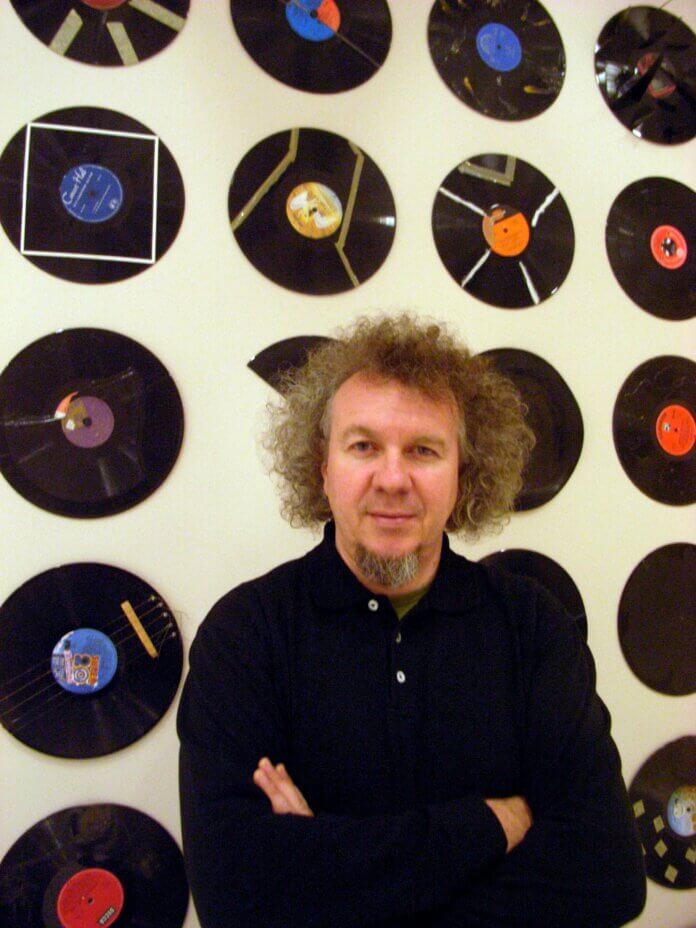


Let’s start with your personal journey. How did you find your way to jazz, and eventually to founding Abeat?
“It all began almost by accident, because I had no particular ambitions of becoming a jazz record producer. My background was in popular music, although I studied classical double bass. I started working as a professional musician when I was eighteen. Between the late 1990s and the early 2000s, I was teaching at the Centro Espressione Musicale in Gallarate, and I would often meet jazz musicians in the corridors who complained about the lack of generational renewal in the Italian jazz scene. The same producers and labels had been around for years, their way of working had become somewhat tired, and the creative stimulus was beginning to fade.
At a certain point, half-jokingly, they asked me why I didn’t start a record label myself. In truth, I’ve always been an unconventional musician, someone who has approached music from every possible angle, not merely by studying and performing. I’ve worked as a technician and sound engineer, conducted an orchestra, and composed numerous pop albums, some of them commercially successful. That flexibility – that tendency to think about music as a whole – probably helped me. So I threw myself into record production with complete recklessness, following what has always been my instinct: when I sense a worthwhile challenge, I dive in headfirst.
I started strongly with Il Poeta by the Renato Sellani Quartet, my very first release. The second was equally impressive: Prism, featuring Don Friedman, Stefano Bagnoli and Marco Ricci, produced by Paolo Jannacci, son of Enzo Jannacci. Those were still years when records could sell. Not the huge numbers of the 1980s and 1990s, but there was still a market. Finding a distributor, however, was far from easy, because they had little interest in newly established labels with only a handful of releases or limited commercial appeal.
I was fortunate in that regard as well, because I knew the son of one of the partners at IRD – International Record Distribution. Through that entirely chance connection, Franco Ratti, the founder of IRD, agreed to work with me. I still remember receiving a phone call from him fifteen days after the album’s release. He told me they had received excellent orders, especially from Japan. I thought: ‘Good – we’re off and running.’”
How did you choose the label’s name?
“I’m a bassist, so the beat – the rhythmic foundation – has a central significance for me. The ‘A’ at the beginning came partly from imagination, but also from a small commercial consideration. A friend once told me that a company whose name begins with A always appears at the top of lists. In fact, at trade fairs and in catalogues I often find myself right at the front, which can be useful. Then there are those who pronounce it in English, those who Italianise it, and even those who imagine a refined Latinism by adding an H and calling it ‘Habeat’.”
Abeat releases around ten albums a year. I imagine there is a demanding selection process behind that. What criteria do you use when deciding to support a recording, an artist or a project?
“First of all, it should be said that the Abeat catalogue is very broad and far from monolithic. You can find projects ranging from mainstream jazz – though relatively rarely – to avant-garde music, as well as works that venture into world music territory. Above all, I look for records that shine with their own light and possess a strong personal identity, something that is apparent even from their visual presentation.
Many labels become almost excessively recognisable from a graphic standpoint, to the point where the label’s brand overshadows the identity of the album itself. We follow exactly the opposite approach. A record must stand out because of its own personality and originality, beginning with the artwork and packaging, which we treat with particular care.”
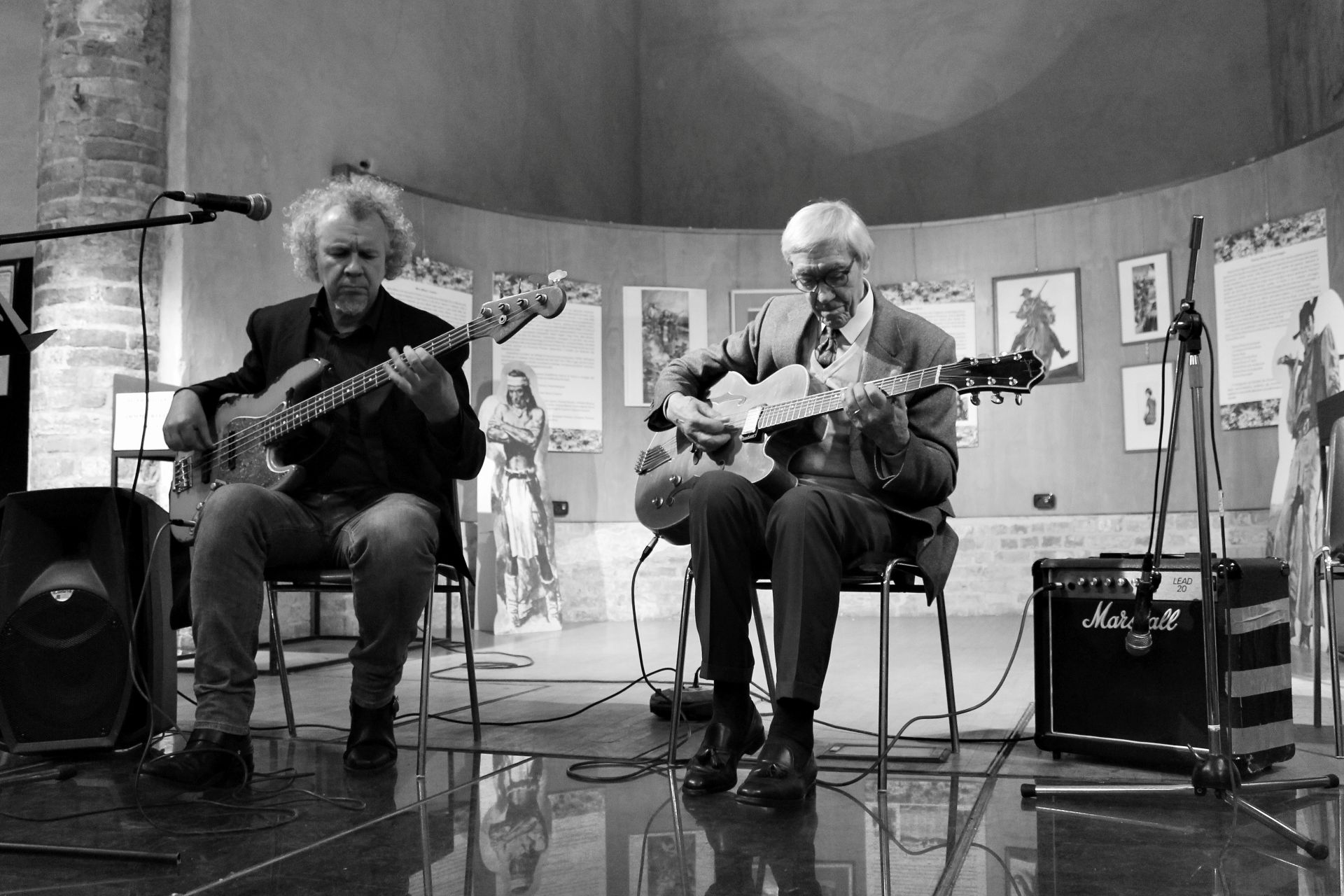
So recognisability matters, but so does the individuality of each release.
“Exactly. We don’t simply publish whatever we please without discussion. There is always a collaborative relationship with the artist, who is involved throughout the entire production process. That begins with the packaging, which should primarily reflect the artist’s personality and the identity of the album.
Even after all these years, people still recognise us for that approach, and it has become something of our trademark. Jazz enthusiasts know that with Abeat they can encounter projects covering a wide range of musical aesthetics while maintaining a consistently high level of quality. We create all of our artwork internally and, particularly in recent years, I have been supported by my wife, Marina Barbensi, a professional graphic designer responsible for most of our album covers.”
How much room is there, then, for your own personal taste?
“Of course there is room for that, especially considering that we now operate in a context where business considerations are probably the least of our concerns. Fortunately, my tastes are quite broad. More than anything else, however, I’m interested in building long-term relationships with artists.
I enjoy embarking on a journey that doesn’t end with the release of a single album but continues over many years, allowing results to mature gradually. When a collaboration takes shape, everything becomes more interesting. Projects are often conceived together, and naturally we hope they turn out well.”
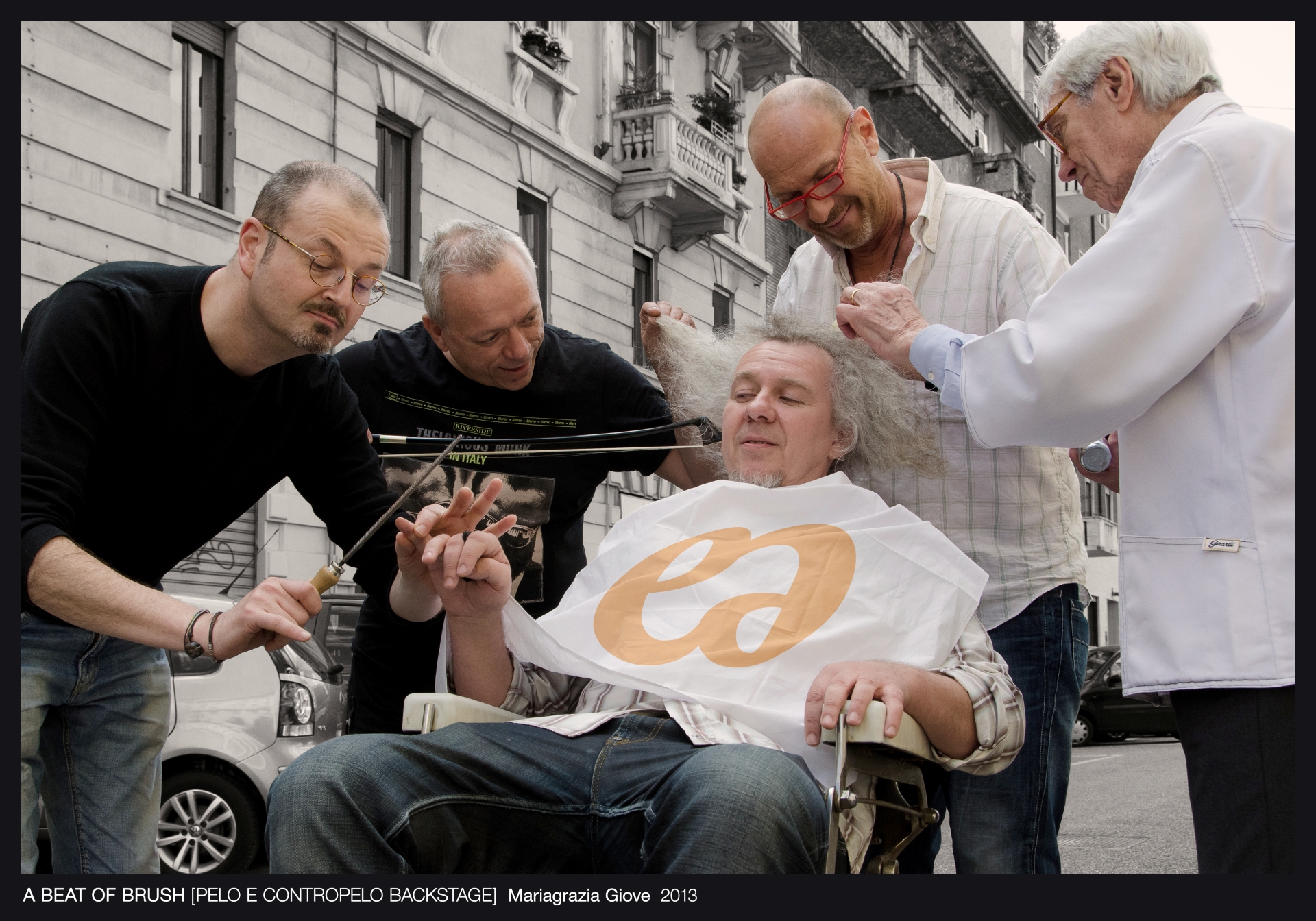
Let’s reverse the perspective for a moment. What is the right approach a musician – particularly a young one – should have when approaching you?
“There is one thing that tends to make me uneasy. Sometimes an artist views the release of an album as the conclusion of a chapter, only to immediately start thinking about the next one. In today’s market, however, promotion and live performances are equally important.
If a musician records an album without any intention of investing time and energy in developing that project over the long term, everything risks becoming sterile – beginning with the effort we put into releasing something that is, in any case, a major unknown. There has to be strong motivation behind it. I want to meet the artist’s expectations as fully as possible, and I know I can only help them in a proactive and inspiring way when there is a genuine sharing of goals and intentions.”
What is the role of a small independent label like yours in 2026? What purpose can it serve in the age of streaming platforms?
“There was a time when a record label could finance every aspect of production and, in some cases, even guarantee royalties. Over the years, with the collapse of the physical market, that reality has almost disappeared.
Today, artists can naturally do everything themselves. They can self-produce, upload their music to digital platforms, or manufacture physical copies independently. But that requires a tremendous investment of energy and financial resources, involving countless steps and responsibilities. Often what is missing is the professionalism that comes from decades of experience, not to mention the advice and guidance that such experience can provide.
That familiarity with the production process still has value. In essence, I would say that today the role of a label resembles that of a service provider.
But let me add something about streaming. For small labels whose core business was the sale of physical media, the arrival of streaming represented a radical transformation. Generating meaningful income on digital platforms requires millions of streams – an unattainable target for non-commercial genres. Yet the world keeps moving, and we must adapt by developing new strategies.
At this stage, artists and labels alike must invest increasing amounts of time and money simply to achieve visibility. The system is far more complex and expensive than it once was. These are challenges that deserve serious discussion, particularly regarding how a more equitable distribution of resources might benefit everyone involved.
Artists whose catalogues are absent from streaming services often experience a kind of identity crisis. Even though they know the financial return will be minimal, they still feel compelled to be present. At first I was reluctant to embrace the changes brought about by digital technology, but through conversations with artists we ultimately decided to face them together, while maintaining a shared critical perspective.”
When you look at the audiences attending the concerts you organise, what do you see? Have interest, curiosity and musical awareness increased?
“I have always had one mission: bringing as many people as possible closer to jazz, which is really an enormous umbrella encompassing dozens of different subgenres.
I like to think of jazz as a music founded on improvisation and spontaneous creation. Historically, jazz in Italy has often been perceived as music for a select few, where improvisers can reach a level of complexity that leaves listeners without the necessary tools completely bewildered.
That is why I organise festivals that maintain uncompromising artistic standards while also offering more accessible music, with melodic appeal and approachable rhythms. These concerts frequently sell out, proving that jazz can still move a broader audience.
At the same time, I do not want to abandon what I might call an educational mission. Within our festivals we also present more complex, more demanding music. Audiences may not leave with an immediate emotional response, but they remain curious, recognise the quality of what they have heard, and take another step forward in their understanding of jazz.
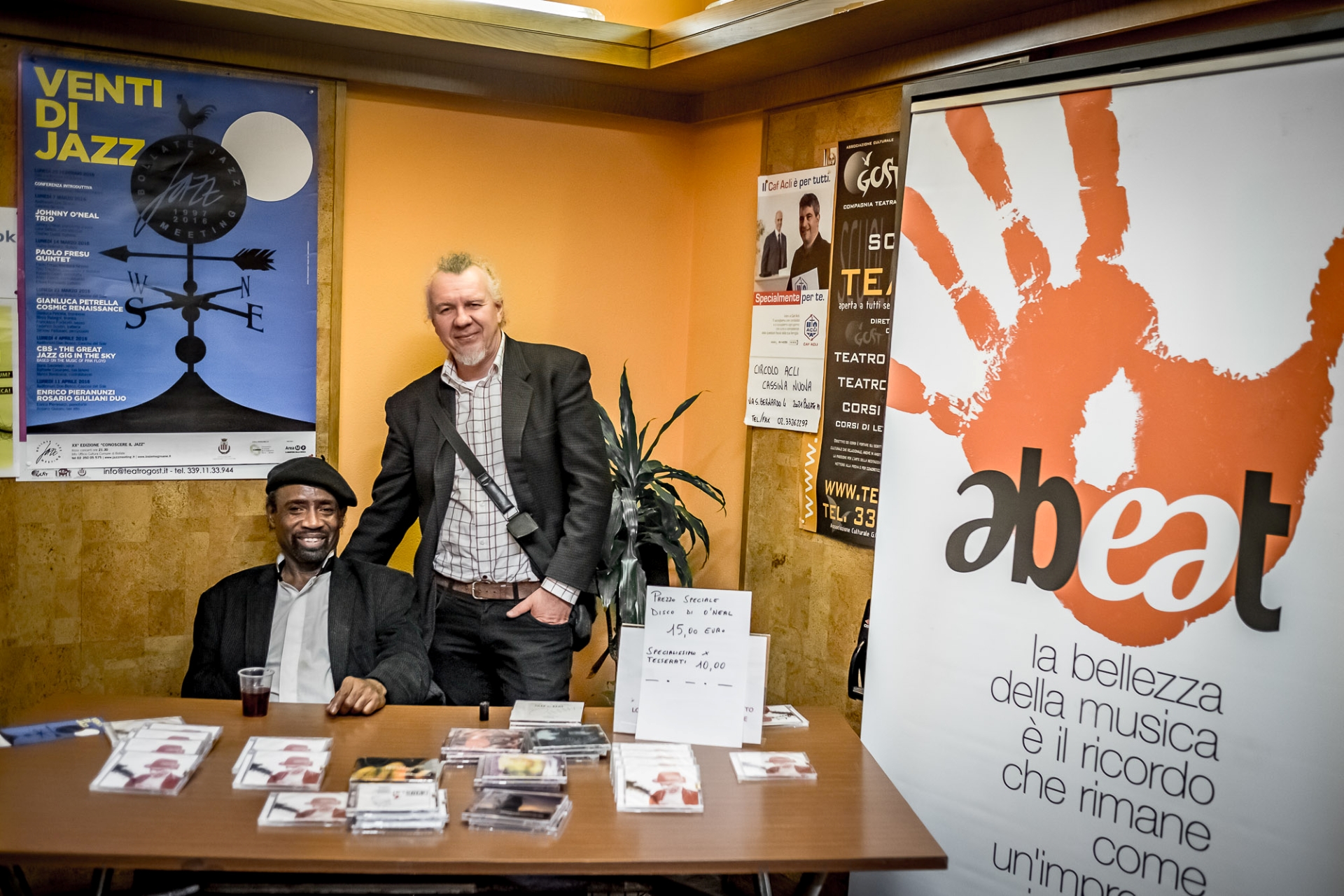
Let me tell you a story. Johnny O’Neal was Clark Terry’s pianist during the 1980s. I released one of his albums several years ago. He’s a classic Black pianist of his generation, someone who lives to connect with audiences and move them emotionally. I’ve invited him many times.
When he sees a diverse audience, he gradually wins them over with melodic, singable tunes, charming them with his personality. Then, once they are fully engaged, he launches into extraordinarily difficult material. By that point, however, the audience is ready. You’ve guided them. You’ve taken them by the hand.
I like to think that I apply the same approach to Abeat’s editorial direction: proposing, guiding and moving people, without ever sacrificing quality or discovery.”
After twenty-five years as a record producer, you must have accumulated countless stories like that. Is there a particular person or creative moment that you remember with special emotion?
“I could write entire books about it. One story that immediately comes to mind concerns Tom Harrell.
It was early 2007 and Dado Moroni, with whom I had already built an important artistic relationship over several years, and I decided to make an album featuring a major international guest. I asked Dado who he would most like to collaborate with, and he chose Harrell.
Only later did I discover that he was living through one of the most traumatic periods of his life. He was no longer able to play consistently or with his customary mastery because of physical problems affecting his lips and musculature. He hadn’t recorded an album in years.
When Dado explained the situation to me, I somewhat recklessly decided to embrace that extraordinary challenge. The financial demands were considerable and non-negotiable. At one point, in desperation, I told him on the phone: ‘All right, I’ll give you that fee, but you must guarantee me an additional day in the studio with Dado.’ He agreed.
We finalised the contract and searched for a top-level studio in Milan, one equipped with an anechoic room because Harrell occasionally needed complete darkness and isolation for several hours. We booked the entire week. After three days, however, we had not recorded a single usable note.
Then, on the fourth day, while I was chatting with photographer Roberto Cifarelli in the studio and keeping one ear on what was happening in the recording room, we heard something astonishing. Almost magically, Harrell broke through his block and played flawlessly from morning until evening.
I remember telling the musicians not to stop, to keep playing for as long as they had the energy. It felt like I was witnessing a historic day.
I like to think I contributed in some small way to Harrell’s artistic rebirth, although perhaps that is merely a private illusion I cherish.
In addition to The Cube, which we had conceived together with Dado, Andrea Dulbecco, Stefano Bagnoli, Enzo Zirilli and Riccardo Fioravanti, we also managed to record Humanity, a duo album with Moroni, in a single morning. That record – a symbol of Abeat – introduced me to audiences around the world.”
