
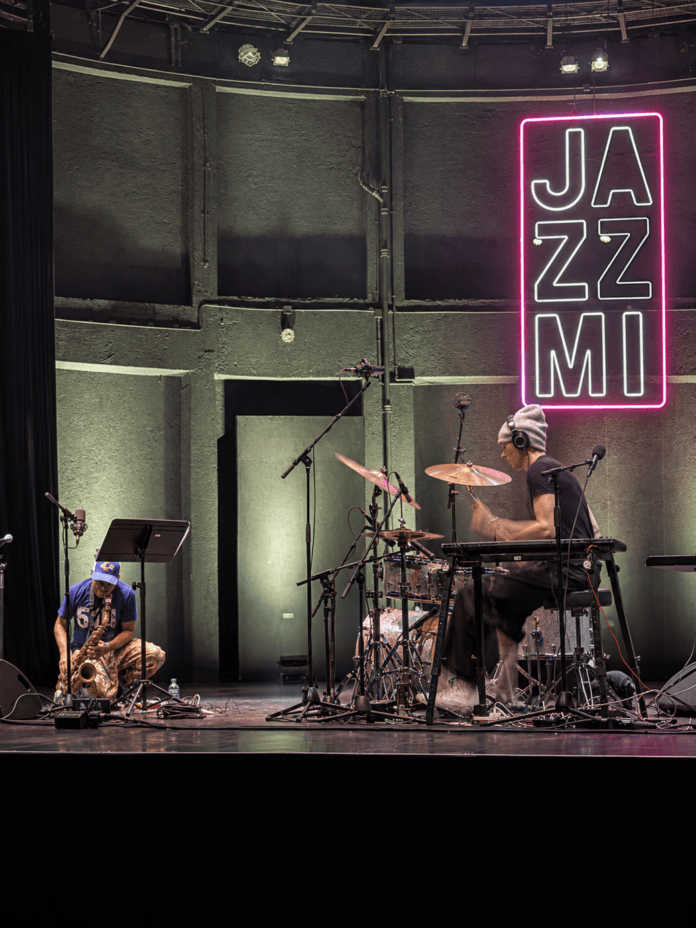


During the final week of JAZZMI 2026, we attended several performances that offered interesting insights into the directions African American music is taking. Among the artists featured, James Brandon Lewis held a special place: this was the fifth time we had heard him perform in 2026, once again with a band we had first encountered earlier that year.
Louis Cole & David Binney
Our first concert took place on Tuesday, November 3, at Teatro dell’Arte, featuring Louis Cole and David Binney. Drummer, composer, and multi-instrumentalist, Cole is one of the most recognizable figures on the Los Angeles alternative music scene, operating at the intersection of jazz-funk, electronic music, and experimental pop. As co-founder of the duo Knower alongside singer Genevieve Artadi, he has built a substantial following through audiovisual productions that have attracted millions of views on digital platforms, particularly among younger audiences. His collaborations include work with Thundercat and Snarky Puppy, while several of his projects have been released on Brainfeeder, the label founded by Flying Lotus. His career reflects a particularly vibrant musical environment in which different genres and styles coexist without any clear hierarchy.
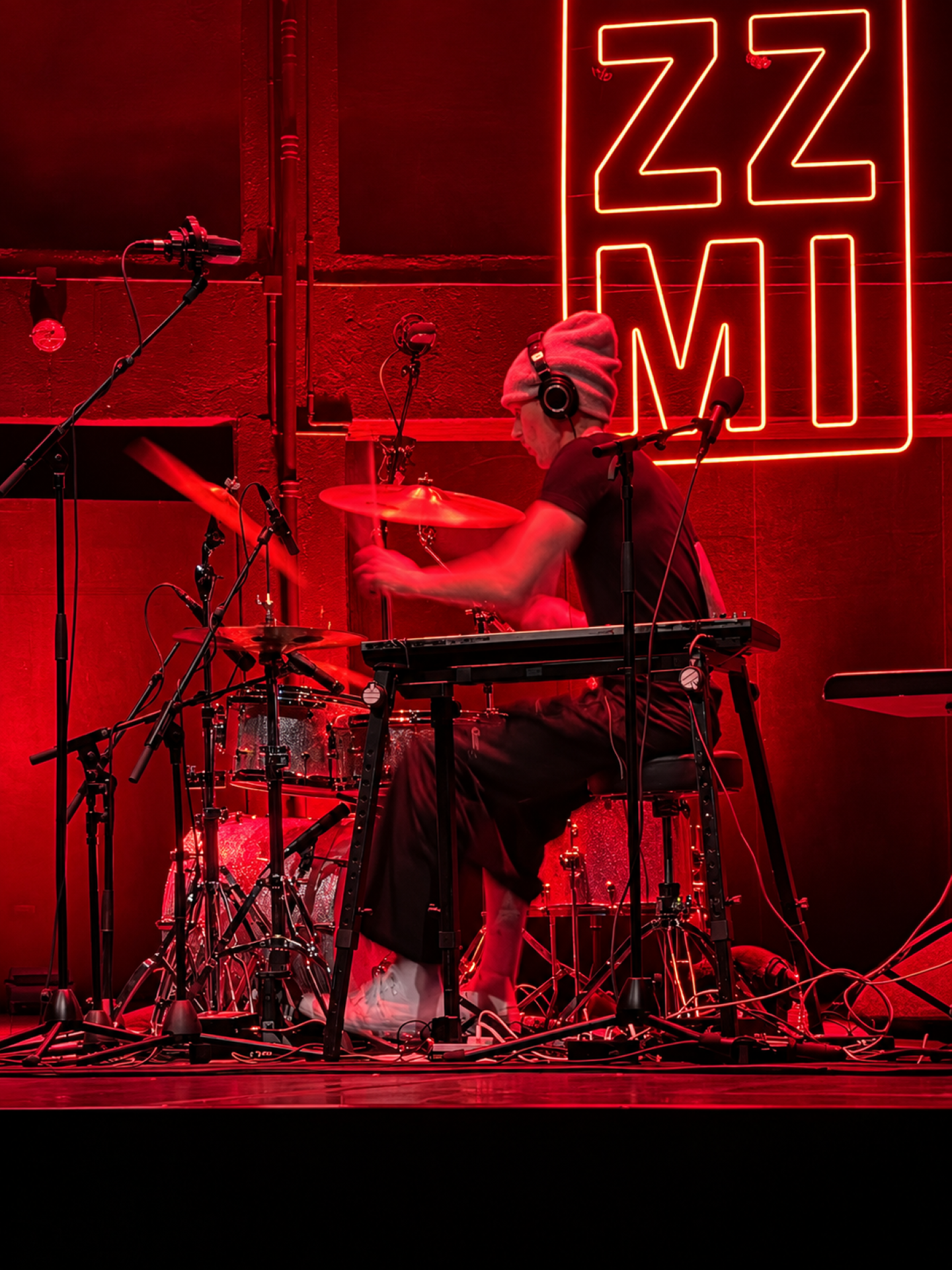
Artistic director Luciano Linzi had presented the performance as a possible glimpse into the future of jazz, inevitably raising expectations. However, the decision to stage the concert at a prestigious venue such as the Triennale raised some questions about the suitability of the setting. Given its immediacy, volume, and rhythmic intensity, Cole’s music would probably have been better suited to a standing-room venue, where the audience could engage more physically with the music.
Classifying Cole’s musical language as jazz is, to some extent, a stretch. He is undoubtedly a musician of considerable technical ability, with a powerful sound and remarkable command of polyrhythmic structures, but his musical imagination draws primarily on drum and bass, jungle, mathcore, and techno. What he seems to have inherited from jazz is, above all, a particular approach to structuring a set, alternating slow, delicate passages, sometimes featuring his own vocals, with sudden accelerations at extremely high tempos, driven by aggressive, relentless grooves. In some respects, this contrast recalls the traditional alternation between ballads and uptempo numbers, although expressed through radically different aesthetic coordinates.
David Binney brought to the project the experience of a musician deeply rooted in the jazz tradition, yet accustomed to working with a wide variety of musical materials. A leading figure on New York’s underground jazz scene in the 1990s, Binney subsequently moved to Los Angeles, where he began collaborating with Cole. It is telling that, on the way out of the concert, audience members could purchase one of his recordings for Criss Cross, a label historically associated with straight-ahead jazz. The saxophonist’s artistic trajectory illustrates the omnivorous musical appetite of many musicians of that generation, who move effortlessly between widely differing experiences, from traditional jazz to the musical subcultures that emerged during the 1990s.
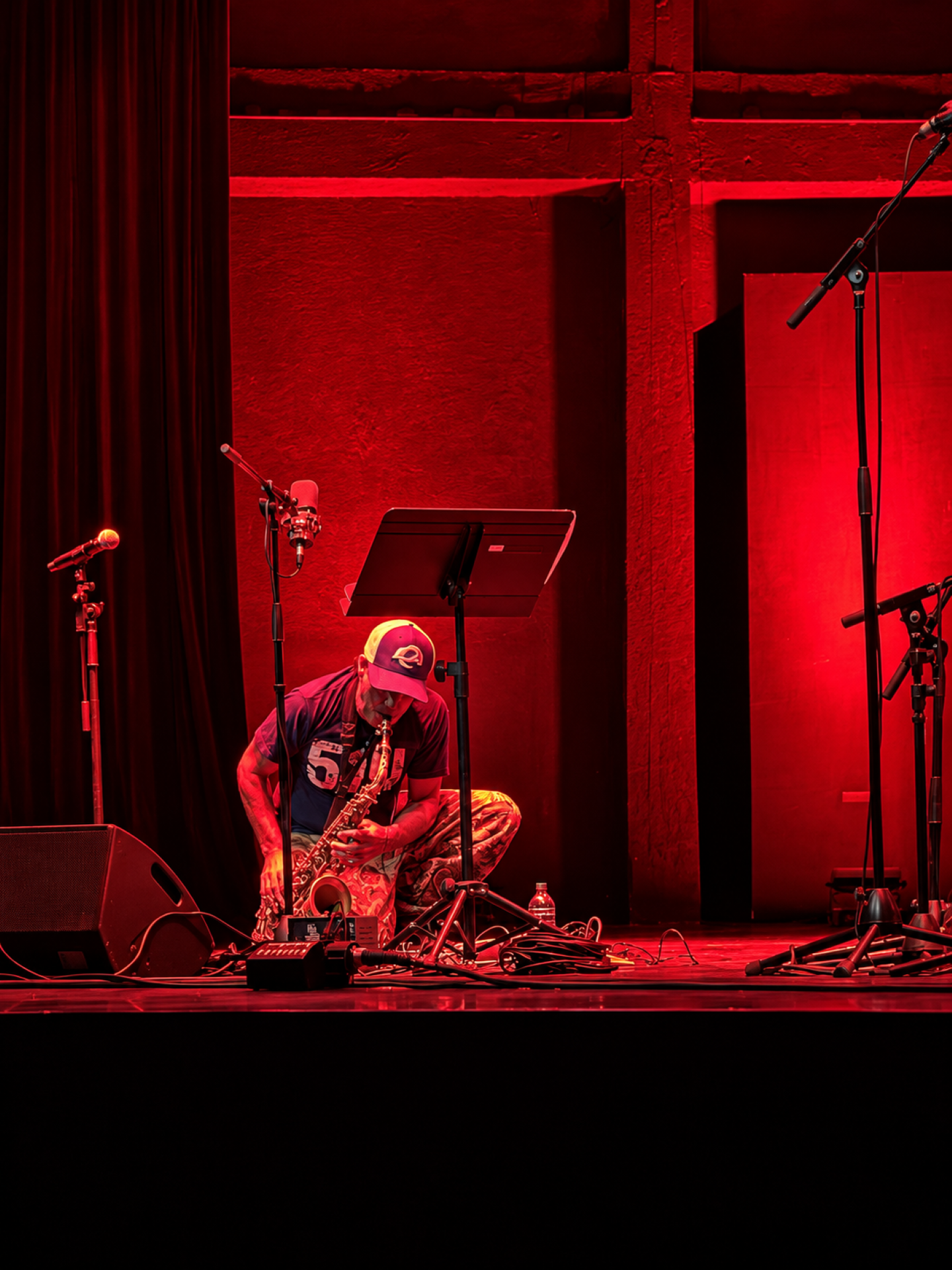
Throughout the performance, Binney employed delay effects and other forms of sound manipulation, adding new shades and textures to a musical framework that tends to favor a direct, abrasive, and insistent aesthetic. Cole, meanwhile, supplemented his drumming with sampled backing tracks and electronic devices. At times, the music reached considerable levels of intensity, propelled by particularly compelling rhythmic interplay. In many pieces, however, just as the music seemed to reach a peak of tension, the piece would come to an abrupt end, without allowing the material to develop toward a gradual breakdown or natural conclusion. Repeated several times over the course of the evening, this approach eventually became predictable, limiting the possibilities for further musical development.
Over the course of ninety minutes, the limitations of this formula became increasingly apparent. Despite moments of great intensity and some interesting rhythmic ideas, the music ultimately revealed a certain repetitiveness. It was a concert of highs and lows, one that perhaps failed to realize the full potential of the collaboration between these two musicians.
James Brandon Lewis & The Messthetics
On Saturday, November 7, at Santeria Toscana, James Brandon Lewis took the stage with the Messthetics. It was the fifth opportunity we had had to hear the saxophonist perform in 2026. Each time, in markedly different lineups and musical settings, Lewis had revealed another facet of his artistry, confirming a versatility that remains one of the most fascinating aspects of his musical personality. His talent had already received a particularly significant endorsement from Sonny Rollins, who had identified Lewis as one of the most promising young musicians of his generation.
The core of Lewis’s recorded output remains his quartet, with which he continues to develop original music within the historically established framework of saxophone, piano, double bass, and drums. An important part of this exploration grew out of his duo work with drummer Chad Taylor, with whom he also performed in Europe in October 2026 in a series of concerts dedicated to John Coltrane and Rashied Ali. Far from being a nostalgic or slavishly imitative tribute to Interstellar Space, that performance sought above all to capture the spirit of freedom and radical interaction between the two instruments.
Equally significant are his experiences with the Red Lily Quintet, along with his excursions into chamber music, documented by a work for saxophone and string quartet. Alongside these projects is the more electric side of his output, indebted to the drum-and-bass and alternative rock cultures of the 1990s, explored both in the Apple Cores trio and in his collaboration with the Messthetics. The former project is dominated by hip-hop, funk, and dub influences, while the latter draws primarily on alternative rock and post-hardcore.
What stands out is Lewis’s ability to maintain an immediately recognizable identity while moving through such different musical territories, without imitating his influences or becoming confined to a single style. Each experience seems to feed into the next, contributing to the development of an increasingly assured and distinctive musical voice. This quality was particularly evident when recalling the Messthetics’ performance at the Sons d’Hiver festival in early 2026, which we had also attended.
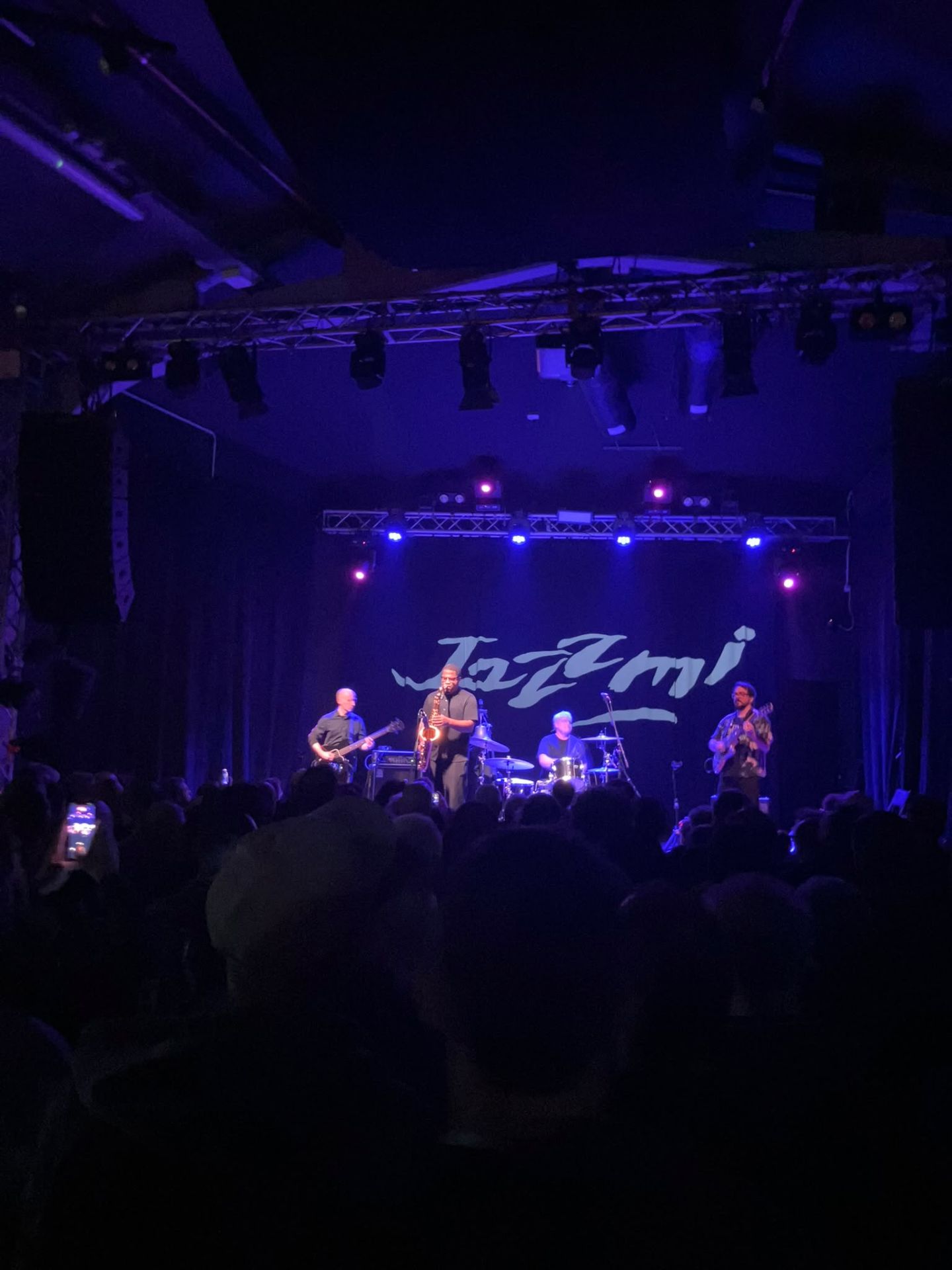
Even then, the band had already completed an extensive touring schedule, with more than a hundred performances behind it. By the time of the Milan concert, the group had also released its second album with Lewis, a recording we discussed with the saxophonist in the April 2026 issue of Musica Jazz. Hearing them again offered an opportunity to appreciate their evolution and growing cohesion, the result of an increasingly close musical partnership.
Being able to experience the concert standing up, in an environment more reminiscent of a rock club than a traditional concert hall, certainly made it easier to become immersed in the band’s extraordinary energy. To imagine the nature of this project, picture an alternative rock band in which the singer’s voice has been replaced by a saxophone, capable of taking on the role of frontman without sacrificing its jazz identity.
The rhythm section features Joe Lally and Brendan Canty, both former members of Fugazi, a seminal band on the American post-hardcore scene. On guitar is Anthony Pirog, a longtime collaborator of Lewis with whom he has developed a remarkable rapport. The result is a group in which the saxophone is not simply superimposed on an existing rock framework but becomes an essential part of the musical architecture.
Compared with the band’s performance in Paris earlier in 2026, the Milan concert featured new material and particularly interesting arrangements of passages played in unison by saxophone and guitar. The group has further refined an aesthetic that has nothing to do with a nostalgic exercise or a tribute band. The aim is not to reproduce the sound of 1990s alternative rock but to use that musical world as a starting point for creating something new, in which the language of jazz finds an organic place.
This is no small challenge, particularly given the need to prevent the saxophone from sounding like an alien element within an already strongly defined musical setting. In Milan, however, Lewis seemed completely integrated into the band’s sound, interacting with Pirog and the rhythm section even more naturally than during their previous performance. It was as though his work in other areas of his musical activity had further enriched his contribution to the Messthetics, demonstrating just how closely interconnected the different strands of his artistic development have become.
The enthusiastic response from the audience showed how Lewis is gaining genuine recognition beyond strictly jazz-oriented circles. This is a particularly significant achievement for an artist who continues to seek new challenges without compromising his identity, demonstrating that it is possible to reach different audiences without necessarily altering or simplifying one’s musical language.
Isaiah Collier Quartet
Our final concert took place on Sunday, November 8, with the Isaiah Collier Quartet at the Triennale, on the closing day of the festival. A Chicago saxophonist born in 1998, Collier is one of the most interesting voices among the younger generation of American saxophonists. Having developed his musical language within the AACM environment, as artistic director Luciano Linzi pointed out, he has also become a regular presence on the Italian concert and festival circuit.
Collier is often described as one of the heirs to John Coltrane’s legacy. There is certainly some justification for this comparison in his approach to the tenor saxophone, the quality of his intonation, and the clarity of his phrasing. The Milan performance, in particular, revealed an affinity with the period of Coltrane’s work spanning the late 1950s and early 1960s, when the richness of his sound, melodic construction, and increasingly sophisticated exploration of harmonic possibilities were central elements of his musical language.
Not, therefore, the more radical Coltrane of his final years, characterized by heightened expressive tension and growing formal freedom, but rather the musician engaged in developing a language in which the force of improvisation still coexisted with a particular sense of formal balance and a strong emphasis on melody.
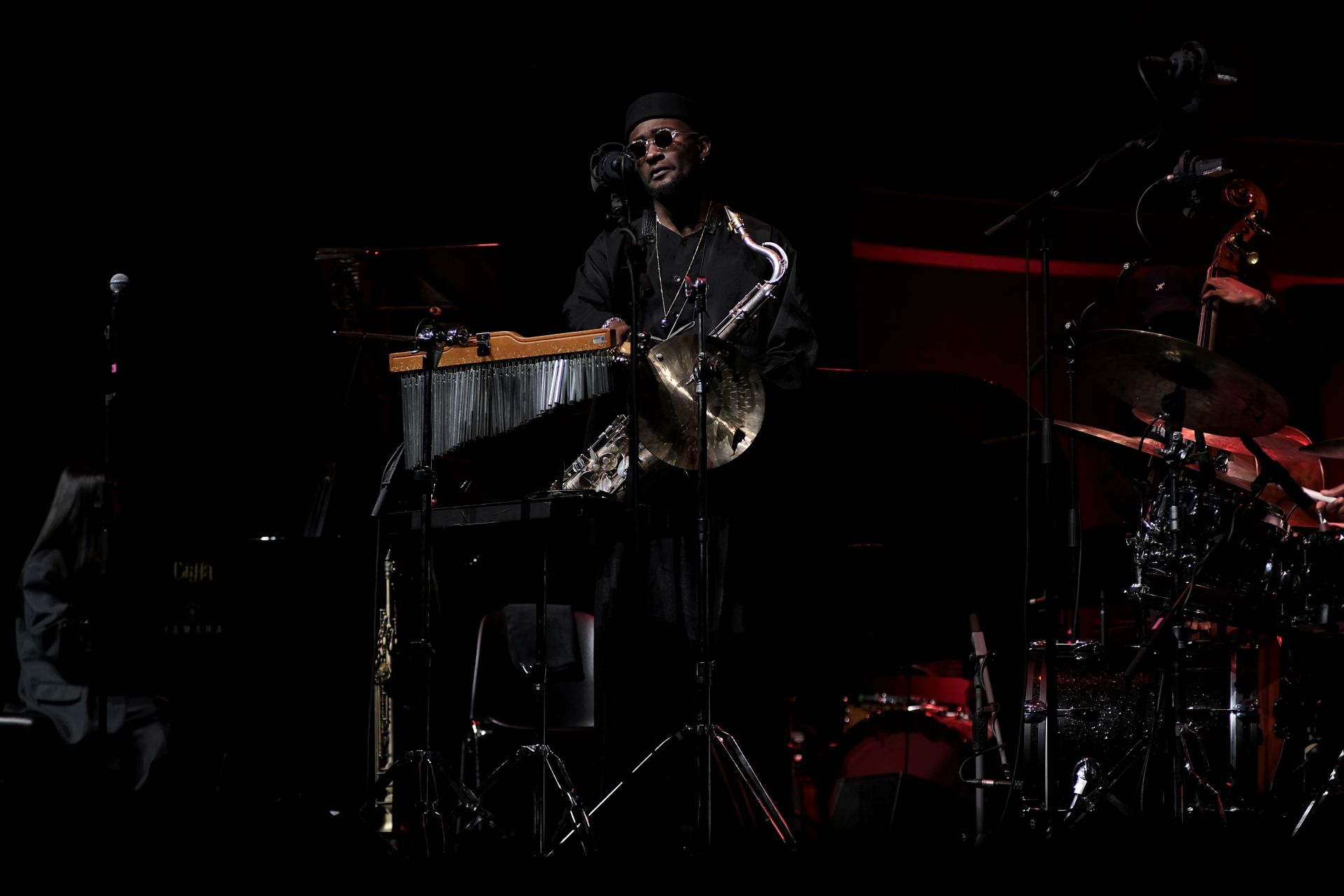
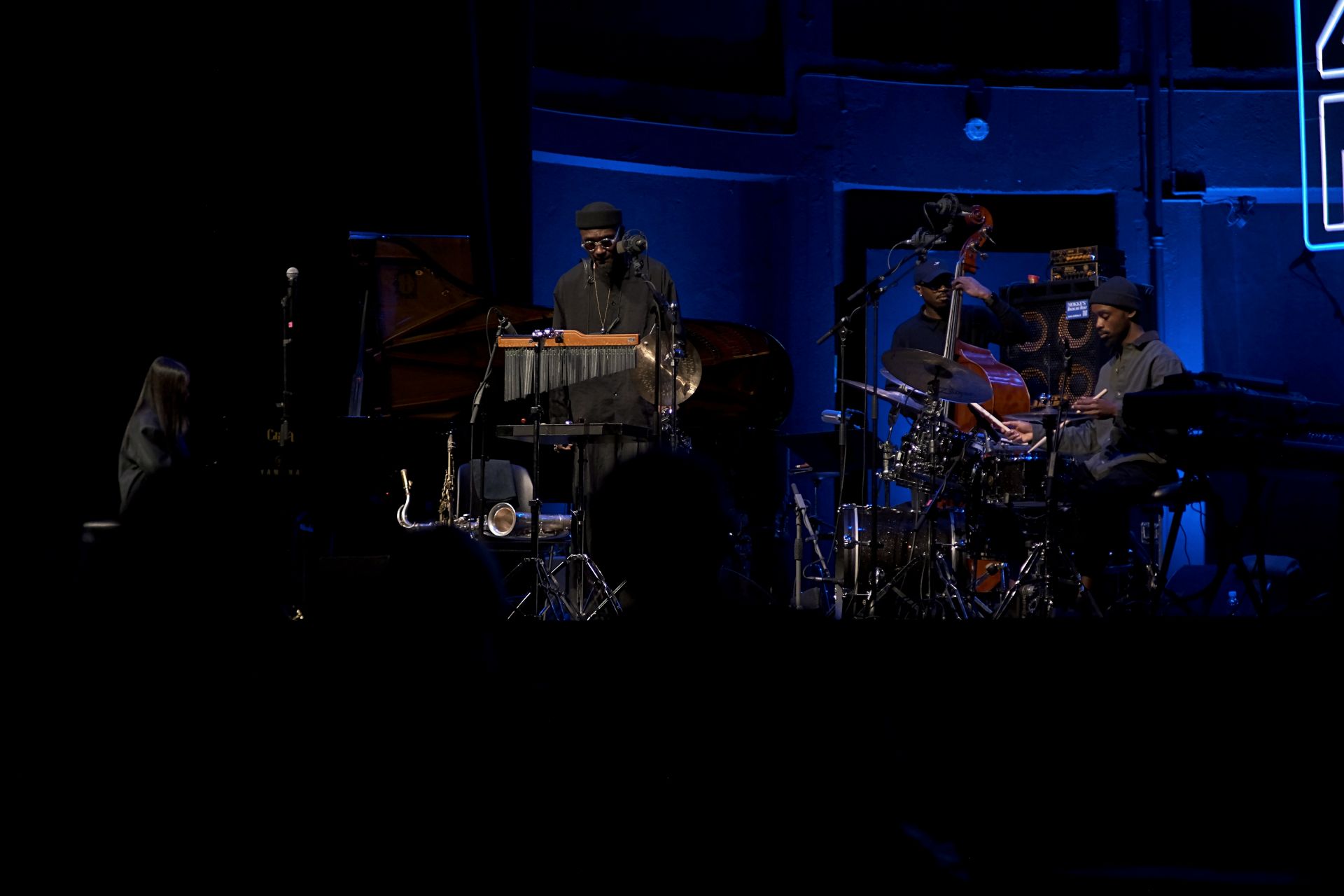
The quartet performed three extended compositions, each lasting approximately twenty minutes. The concert opened with a particularly delicate ballad that immediately established the atmosphere of the evening. Throughout the performance, ample room was given to the individual musicians: pianist Liya Grigoryan and double bassist Conway Campbell both had opportunities to develop extended contributions, while drummer Tim Regis provided restrained, solid accompaniment without ever becoming overpowering.
Also particularly noticeable was Collier’s extensive use of the Mark Tree, a percussion instrument he employed at various points to enrich the rhythmic texture. In several passages, the saxophonist temporarily put his instrument aside, allowing piano, bass, and drums to take the foreground while contributing directly to the rhythmic fabric through percussion. This approach helped shape the development of the compositions, alternating the leader’s contributions with those of the other members of the quartet.
A comparison with James Brandon Lewis, whom we had heard just twenty-four hours earlier, is almost inevitable, even though the two musicians are at different stages of their artistic development. What stands out in the Buffalo-born saxophonist is his ability to absorb widely differing musical experiences and transform them into an authentic, personal language. With Collier, by contrast, we felt that the references to the Coltrane tradition remained rather too explicit.
In certain passages, the resemblance to particular musical approaches from the past seemed almost slavishly imitative, as though the historical model were exerting too strong an influence on the development of the music rather than serving as a point of departure for a freer exploration. This marks a substantial difference from Lewis, who seems already to have achieved the expressive maturity needed to bring his various influences together within a fully individual voice.
That said, it was nevertheless a concert of excellent quality, performed by accomplished musicians who approached a demanding repertoire with care and sensitivity. The performance ended without an encore, partly out of respect for the day’s schedule, which still included the festival’s final two events, both sets by Calibro 35.
These three concerts offered three distinct perspectives on contemporary American jazz, from the exploration of new sonic territories to an engagement with a musical heritage that remains an essential point of reference. Of the artists we heard during JAZZMI 2026, James Brandon Lewis made the strongest impression. Hearing him again with the Messthetics, after encountering him in numerous other musical settings, allowed us to appreciate the richness of an artistic journey unfolding in multiple directions without losing its coherence or distinctive identity. An eternal return that shows no sign of coming to an end.
