




When Miroslav Vitouš was not yet a year old, in 1948, Prague and Czechoslovakia officially entered the Stalinist orbit following a Communist coup d’état. Through a relentless series of purges, Antonín Novotný and the Communist Party (KSČ) built one of the most rigid socialist republics in the Eastern Bloc, a system formally consolidated in 1960 with the adoption of a new constitution. That same year, the young Miroslav was searching for his musical identity. He tried the violin at six, the piano at ten, and discovered the double bass at fourteen. Shortly afterwards, he entered the Prague Conservatory – a legendary institution renowned for its austerity, discipline, and distinguished history under the leadership of Antonín Dvořák. There he studied with František Pošta, for decades a principal member of the Czech Philharmonic.
Educational institutions were hardly known for leniency. Academic programmes were expected to reproduce the aesthetics of Socialist Realism faithfully, reinforcing ideology through sacrifice and discipline in the service of creating the “new man.” Vitouš himself recalls, in the matter-of-fact manner that characterises him, the suffocating discipline and overwhelming workload imposed on students, including six years of demanding examinations. Sport further shaped the character of young people, and Vitouš was no exception. Athletic achievement served as both symbol and showcase of the regime’s supposed excellence. He excelled as a swimmer and soon turned professional. Even in sport, however, the rigour of daily training was essential for avoiding the suspicion reserved for “problematic” personalities – especially for anyone aspiring to participate in the hugely popular Spartakiads held every four years at Prague’s Strahov Stadium.
Such are the contradictions of history. Had the discipline of musical and athletic training not dominated his youth, Vitouš would probably never have won a scholarship to study at Berklee College of Music in Boston in 1965, shortly after reaching adulthood. Nor would he have gone on to establish himself in New York among the elite of contemporary jazz – musicians such as Chick Corea, Miles Davis, Art Farmer, Herbie Mann and Stan Getz. Crossing the Atlantic was by no means a foregone conclusion, even though the regime was already beginning to creak under the pressure of student protests, only a few years before the arrival of Alexander Dubček and the Prague Spring.
On the other side of the ocean, Vitouš encountered an entirely different reality: a booming capitalist economy and a mass democracy led by President Lyndon B. Johnson, who had signed the Voting Rights Act only a year before Vitouš’s arrival, delivering the legislative death blow to segregation. It was another world altogether, with a per-capita GDP roughly four times higher than that of Czechoslovakia. It is difficult not to imagine the inner upheaval involved in moving abruptly from one geopolitical bloc to another, and equally difficult not to wonder how such formative experiences shaped Vitouš’s character – a man who navigated some of the defining tensions of twentieth-century history through talent and merit, forging a fiercely independent identity of his own.
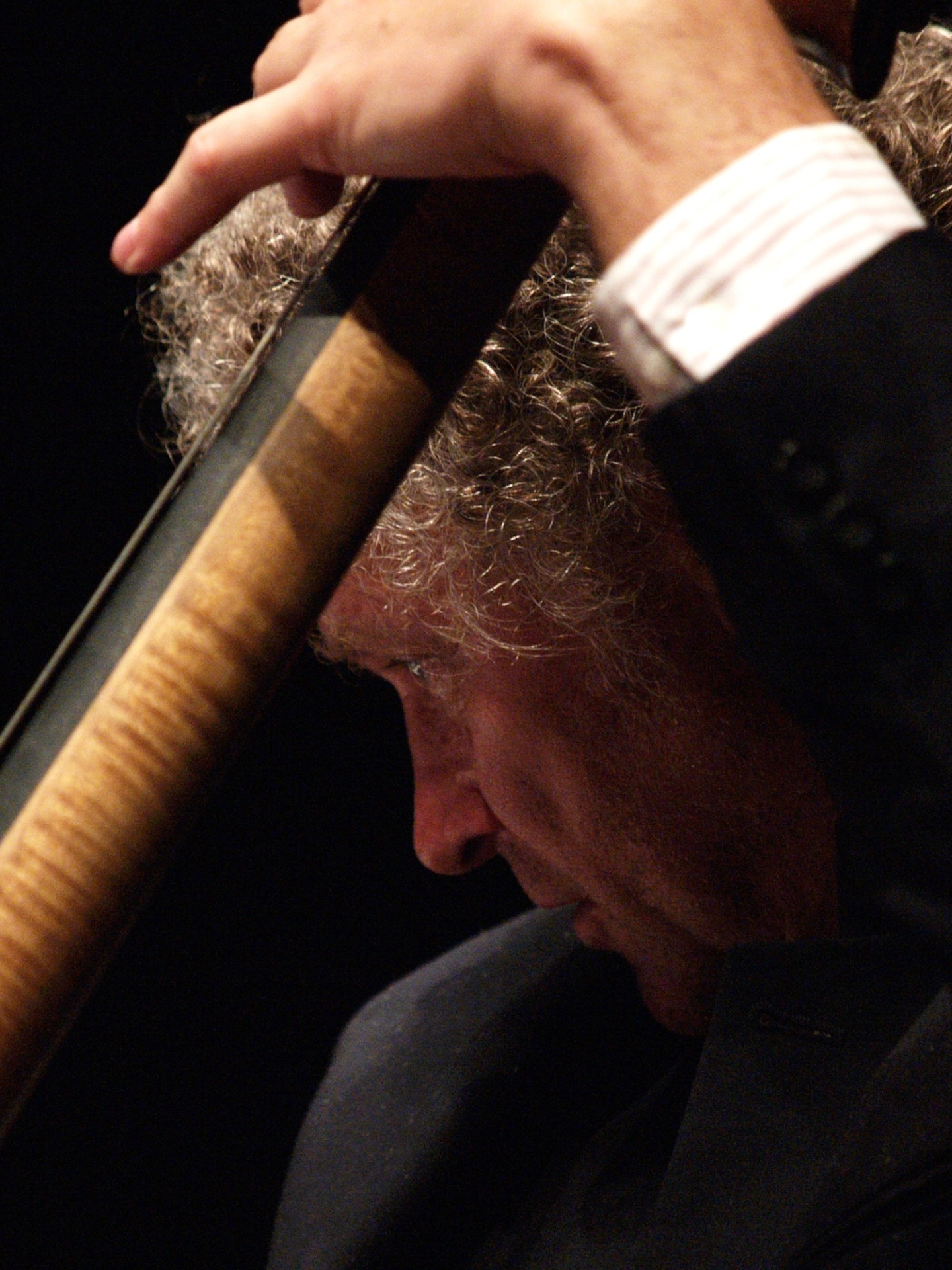
While not inevitable, it is perhaps unsurprising that such a relentless investment in self-discipline produced an equally formidable toughness of temperament. Alongside the near-universal critical acclaim earned by his revolutionary work, this uncompromising character generated more than a few difficulties throughout his career. His artistic intransigence and refusal to compromise famously led him to describe Joe Zawinul – himself born in Vienna – as a “mediocre manipulator” for steering the co-founded Weather Report away from experimental exploration and toward commercial success.
In many respects, theirs was an anachronistic Habsburg duel between two men who were perhaps too similar ever to become true allies. Zawinul had also begun with the clarinet before moving on to cello and then piano. He too had left Vienna for Berklee in Boston – six years before Vitouš – before eventually settling in New York.
Nor did matters end there. Vitouš eventually took Wayne Shorter and Shorter’s wife Ana Maria – yes, the same Ana Maria immortalised in the title track of Native Dancer in 1975 – to court, accusing her of entering his apartment and removing contracts proving his co-ownership of the Weather Report enterprise. For those who enjoy legal drama, the case ultimately ended in a settlement.
Over time, this uncompromising disposition cost Vitouš a form of damnatio memoriae in relation to his original vision of Weather Report. Today, the group is remembered largely through the recordings featuring Jaco Pastorius, Alphonso Johnson and Victor Bailey, while the conceptual foundations laid by its co-founder are often overlooked.
When Shorter – universally described as a gentle and conciliatory man – attempted to mend fences in 1996 by unexpectedly inviting Vitouš to record several tracks for High Life, he was met with an uncompromising refusal. The Prague-born bassist would not play written parts. Shorter accepted the situation and promptly replaced him with Marcus Miller.
Vitouš’s integrity and devotion to music in its purest form eventually led him to describe pop music as “music for slaves” because, in his view, it eradicates independent thought. His devotion to sound borders on the spiritual. He has often repeated a phrase that has become central to his artistic philosophy: “Music doesn’t come from me. It passes through me. I answer only to the Universe.”
A remarkably similar sentiment appears on the homepage of his website, in a quotation from Miles Davis – another musician not exactly known for an easy temperament: “It has always been a gift to hear music the way I do. I don’t know where it comes from. It’s there, and I don’t ask questions.”
And Vitouš is certainly not fond of questions. He answers them with all the enthusiasm of a fish caught in a trap. For that reason, despite the extraordinary privilege of having him speak with Musica Jazz – for which we remain grateful, as well as for the handful of interviews he has granted over the last decade, perhaps no more than three publications in all of Europe – it seems more useful to set aside the conventional interview format and instead reflect more freely on his remarkable return as a leader after a ten-year absence from the recording scene.
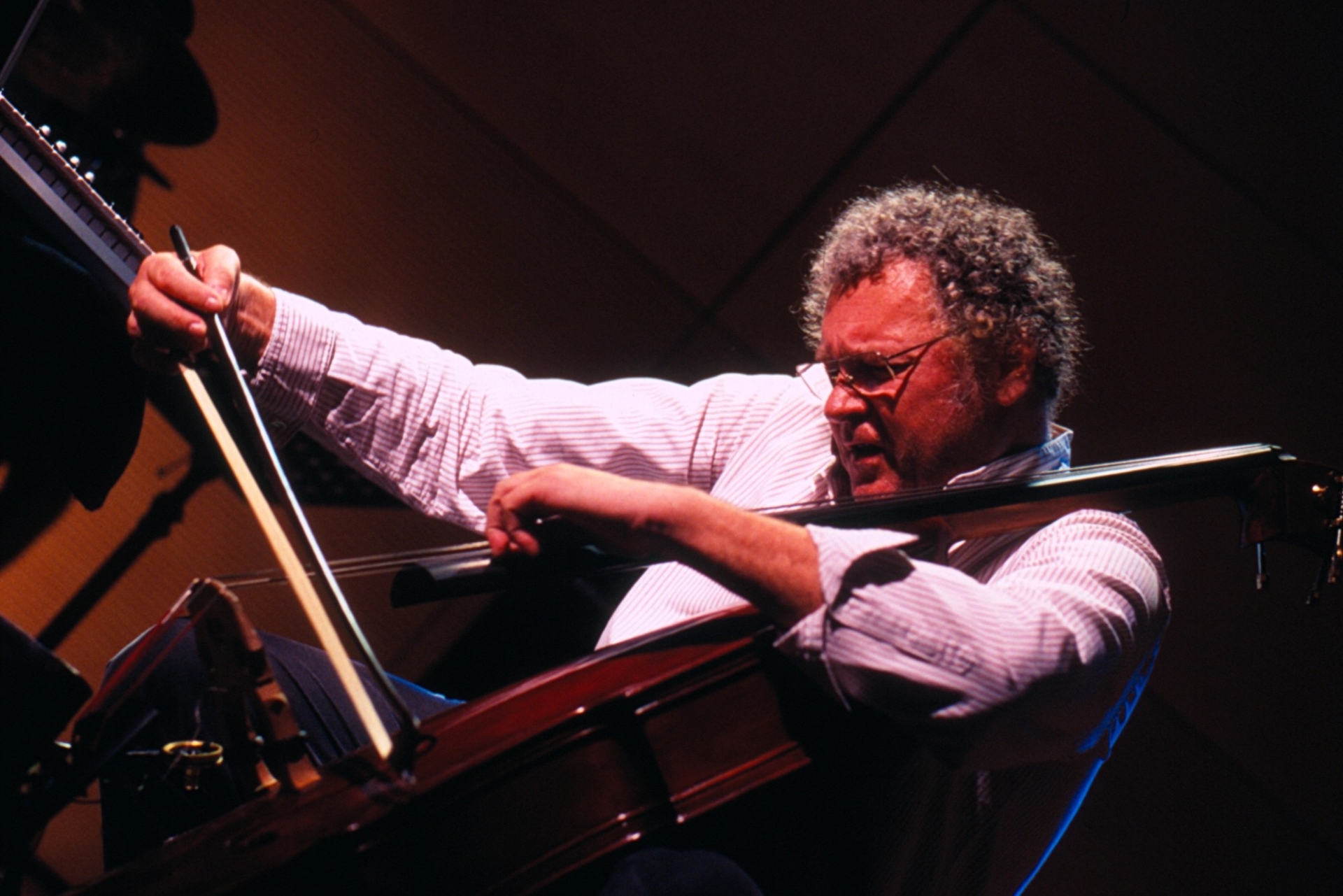
Over the past twenty years, the man who has launched no fewer than three lifeboats to bring a musical genius like Vitouš back into the spotlight has been Manfred Eicher.
The first came in 2009 with ECM’s release of Remembering Weather Report – a kind of Count of Monte Cristo-style revenge through which Vitouš was able to reclaim intellectual ownership of the original concept and show listeners where Weather Report might have gone without the intervention of the great “manipulator” Zawinul. The second came with Universal Syncopation II in 2013. The third – finally – arrived this year with Mountain Call, a magnificent synthesis of his creative vision, enhanced by the presence of the much-missed Jack DeJohnette and Michel Portal.
Vitouš speaks at greater length about both musicians: “Of course Jack has been my favourite drummer since the 1960s, when we used to play in my apartment in New York. That’s where Infinite Search was born. Michel, on the other hand, is not only a classical performer but also an improviser. I would never call him a jazz musician. Which is rather unusual for someone coming from the classical world – most of them can’t improvise, they can’t play anything outside what is written.”
Recorded over seven years, between 2003 and 2010, Mountain Call offers a comprehensive overview of the eclecticism of this musical giant. The album is organised around various ensembles and includes ten original compositions alongside two extended suites: Evolution, in three parts, and Rhapsody, in five parts. The latter features Gerald Cleaver on drums instead of DeJohnette.
One of the album’s tracks was previewed by Eicher for Musica Jazz last summer: “Tribal Dance”, performed as a double bass and drums duo, alongside “New Energy”, the album’s other key track. The ECM founder’s enthusiasm stemmed from recognising in that eruptive spontaneity the quintessence of what makes music extraordinary: dynamic interplay and intuitive understanding between musicians.
“I don’t know why I chose that one,” Vitouš tells us. “There are many others with the same intensity. Dynamics are simply part of my expression. I don’t have to think about them. They come naturally.”
If the duets represent some of the album’s highest peaks, thanks to Vitouš’s inexhaustible inventiveness and timbral exploration, he also surrounded himself with an exceptional cast: Esperanza Spalding on vocals – making her ECM debut – Bob Mintzer on bass clarinet, Gary Campbell on saxophones, and a remarkable collective of musicians from the Czech National Symphony Orchestra.
Such a line-up spares the Prague-born composer from having to explain much. “I don’t explain anything. They already know. They’re operating at a level more than sufficient to understand the music and play it the way it should be played. If they weren’t, I wouldn’t have called them.”
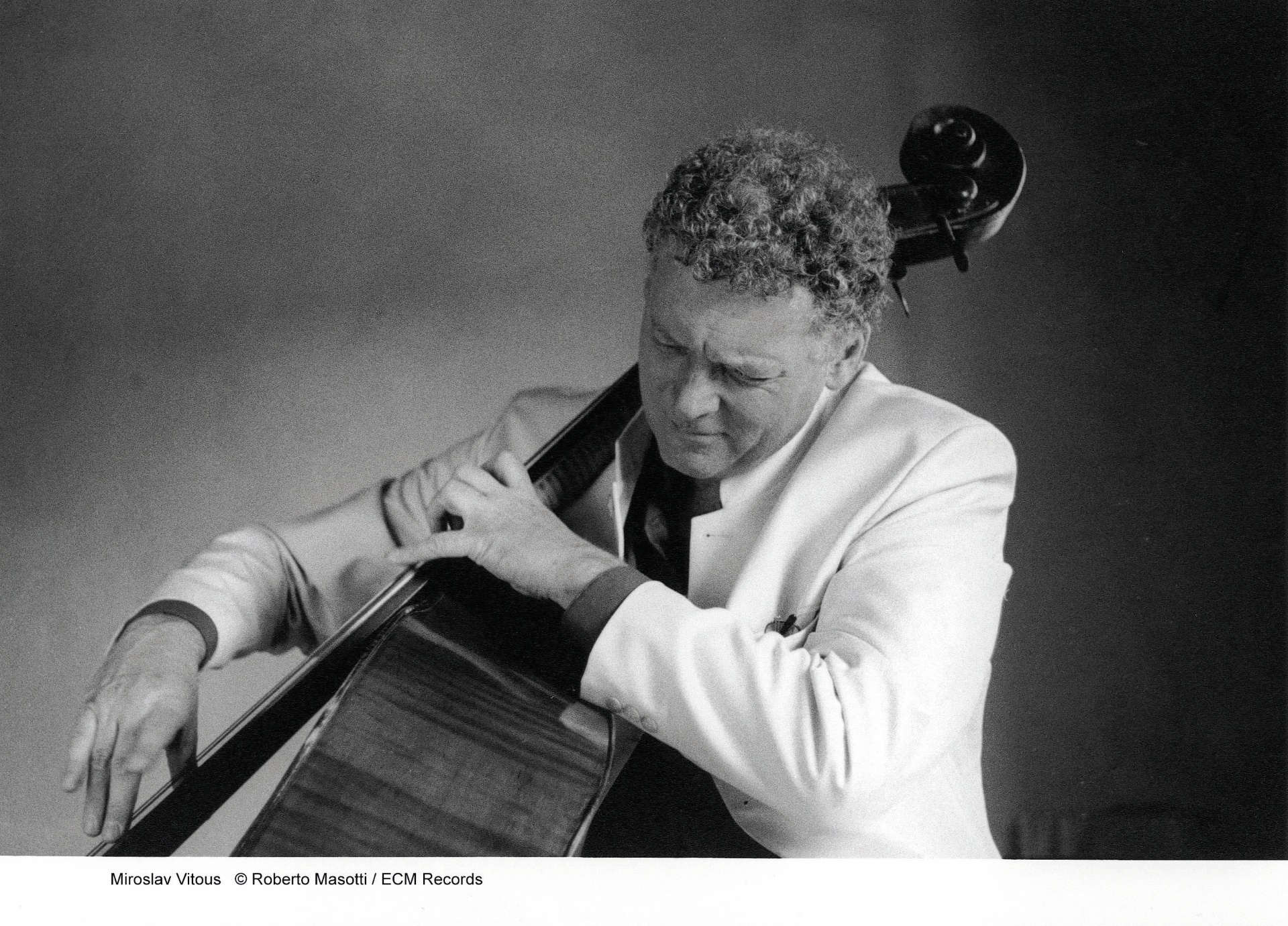
To create Mountain Call, Vitouš worked obsessively on his personal digital library of symphonic-orchestra samples, a discipline he still pursues daily with extraordinary rigour. In fact, he is working when we speak with him.
“I compose on the computer using samplers. Not because I particularly love technology, but because it’s the only way I can create music. I couldn’t do without it. I’ve never used an eraser and pencil.”
The possibility that his compositions might survive him and eventually find their way into concert halls and opera houses seems of little concern.
“If people want to play them, they will. They’re written down. There’s a melody, there’s a rhythm. They can perform them. I create music and live my life. That’s all. I don’t work while imagining what somebody else might think.”
The same focus has also made him somewhat less interested in questions of generational succession than he once was when he directed the Jazz Department at the New England Conservatory.
“It’s important that younger musicians learn, but I have my own life to continue living. I have to compose and play. That is my centre now. I’m not spending my time worrying about younger generations. They are out there doing their own thing and learning what they need to learn from what we have done.”
There is a vivid and unmistakable urgency running through Mountain Call, making it one of the finest musical gifts of the year. Health issues, Vitouš tells us, no longer allow him to play the bass or tour extensively. Yet he remains completely immersed in composition and seems barely aware that he is approaching his eightieth birthday.
“I don’t stare at myself in the mirror like a slave. I’m getting older. That’s normal. I have no opinion about the passing of time. It’s simply life.”
And perhaps he is right. Right to invoke a kind of listening experience that cannot truly be translated into words. Right to enjoy the journey, seizing every available moment of beauty and creativity, without indulging in self-celebration or thoughts of revenge.
His place in jazz history is already secure. Between the 1970s and 1980s, he radically transformed the role of the double bass and redefined its relationship with the other instruments in the ensemble. One only has to revisit the extraordinary line-up assembled for his 1970 debut, Infinite Search, recorded when he was just twenty-three years old: Joe Henderson, John McLaughlin, Jack DeJohnette, Herbie Hancock and Joe Chambers.
Given the radical originality of his aesthetic vision, it was almost inevitable that Eicher would continue to champion him with remarkable consistency from First Meeting in 1979 right through to the present day, providing both the freedom and the means necessary to develop his art and bring it to listeners.
Questions and answers, after all, are not always the most important things. More than a century ago, Guido Gozzano wrote with characteristic irony:
“Why do you climb to my chambers?
Why do you chatter on and on?
I do not permit anyone to speak to me
when I am speaking with the Stars.”
