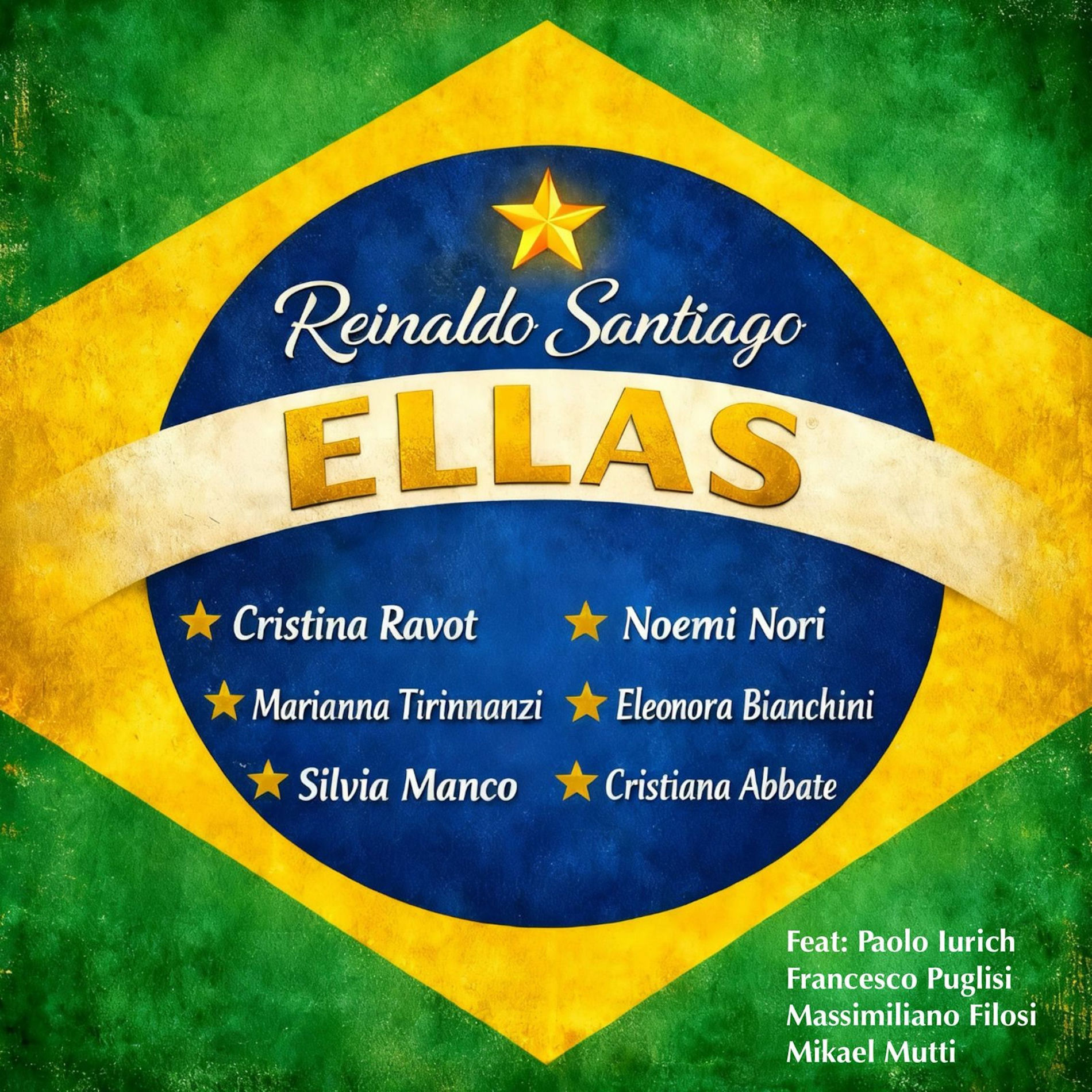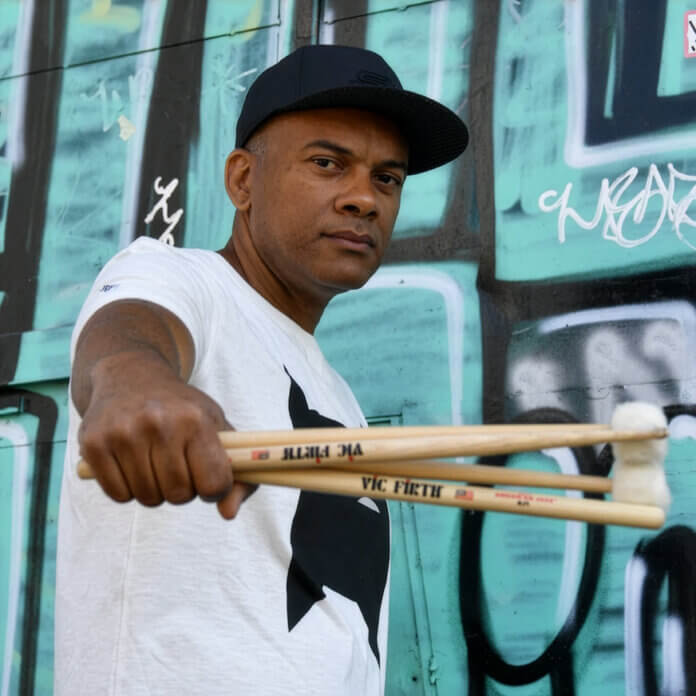


With ELLAS, Brazilian drummer Reinaldo Santiago revisits Música Popular Brasileira through a musical perspective deeply rooted in samba de roda and capoeira traditions. The result is a collective project built around Italian female voices, grounded in essential writing and a jazz-oriented sensibility that shifts the focus away from improvisation and toward rhythm and the emotional power of the voice.
You were born in Salvador de Bahia and now live in Italy. As a drummer whose musical journey began on the streets through samba de roda and capoeira, your discography – from Origem to The Colors of the Planet and now ELLAS, released on January 23 on the GBmusic Smoothnotes label – reveals a continuous evolution of rhythmic and formal language. How does this profoundly percussive background influence the way you think about arranging, interplay and composition today?
Growing up in Salvador de Bahia means being immersed in an extraordinarily vibrant and layered musical culture. For me, rhythm has never been something separate from music – it is a way of thinking, breathing and organizing sound. Playing in very different contexts, from the streets to traditional Brazilian ensembles, taught me not to create musical boundaries. In ELLAS, this percussive background is reflected above all in the interplay, in the way the different parts communicate with one another, and in the organic relationship between the voices and the rhythm section.
Beyond the individual performances, what is the deeper meaning that emerges from the album as a whole?
ELLAS began with a simple intuition – the idea of creating a project dedicated to Italian female singers performing Brazilian songs in their original language. It was a demanding journey, partly because not everyone immediately embraced the challenge. Yet that very difficulty helped strengthen the identity of the project. I gave each singer complete freedom to choose the song that felt closest to her own sensibility, and this generated a collective narrative infused with a very positive energy. The album should be experienced as a whole – as a plurality of voices converging into a single vision.
MPB – the heart of Brazilian songwriter culture, poised between tradition and experimentation – is the starting point of ELLAS. What inspired you to reinterpret it today through a European jazz language?
The project began with the songs chosen by the singers themselves. I was looking for emotional depth and a rhythmic approach capable of giving voice to women. Together with Paolo Iurich, I worked on targeted interventions that were never intrusive. Often, the transformation is rhythmic rather than harmonic. In some cases, I completely changed the original groove in order to bring it closer to the meaning of the lyrics.
For example, “O Que É, O Que É” was originally written as a samba, but I chose to perform it as a baião because the lyrics resonate strongly with the social and cultural reality of Brazil’s Northeast. In “Vatapá”, I employed the ijexá rhythm, a traditional groove from Salvador with deep African roots, closely linked to the Afro-Bahian culture from which the dish celebrated in the song also originates. The song itself refers to the famous Afro-Bahian dish of the same name, a powerful symbol of Salvador’s African heritage.
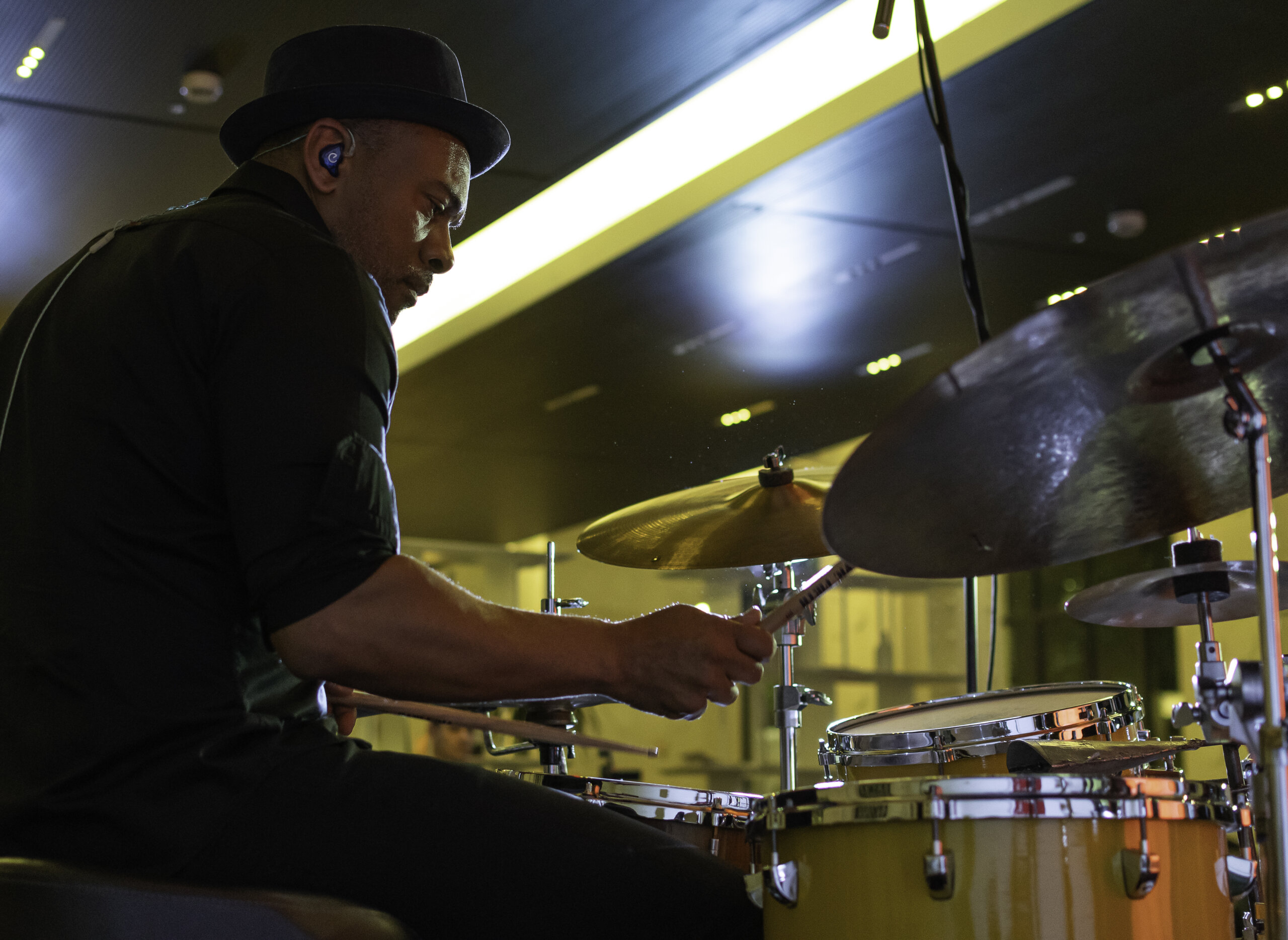
The arrangements, developed alongside Paolo Iurich (piano), Massimiliano Filosi (saxophone and flute), Francesco Puglisi (electric bass) and Mikael Mutti (keyboards), reveal a strong sense of formal economy. What criteria guided you in reducing the original material while preserving its melodic and narrative identity?
Once the repertoire had been defined, I felt the need to do something completely different from my previous projects. I wanted a sound that recalled the MPB recordings of the 1980s and 1990s – their recording aesthetics, their focus on melody and their imaginative arrangements. I was not looking for jazz improvisation; I wanted clear, melodic writing, with introductions and formal structures that are becoming increasingly rare today. It was a process of subtraction, but also one marked by meticulous attention to sonic detail.
The project places a plurality of female voices at the centre of its narrative identity. How does musical writing change when the story is told through different performers while remaining part of a unified sonic design?
When you work with multiple voices, the writing can no longer revolve around a single timbral identity. It becomes a form of architecture. Differences in colour, register and intensity should not be smoothed out but rather conceived as structural elements. This requires great attention to keys, dynamics and the density of the arrangements. The singers were completely free to express themselves, and that freedom became an integral part of the sound of ELLAS.
How did you approach the balance between written material and improvisation, particularly in the relationship between the six voices and the rhythm section?
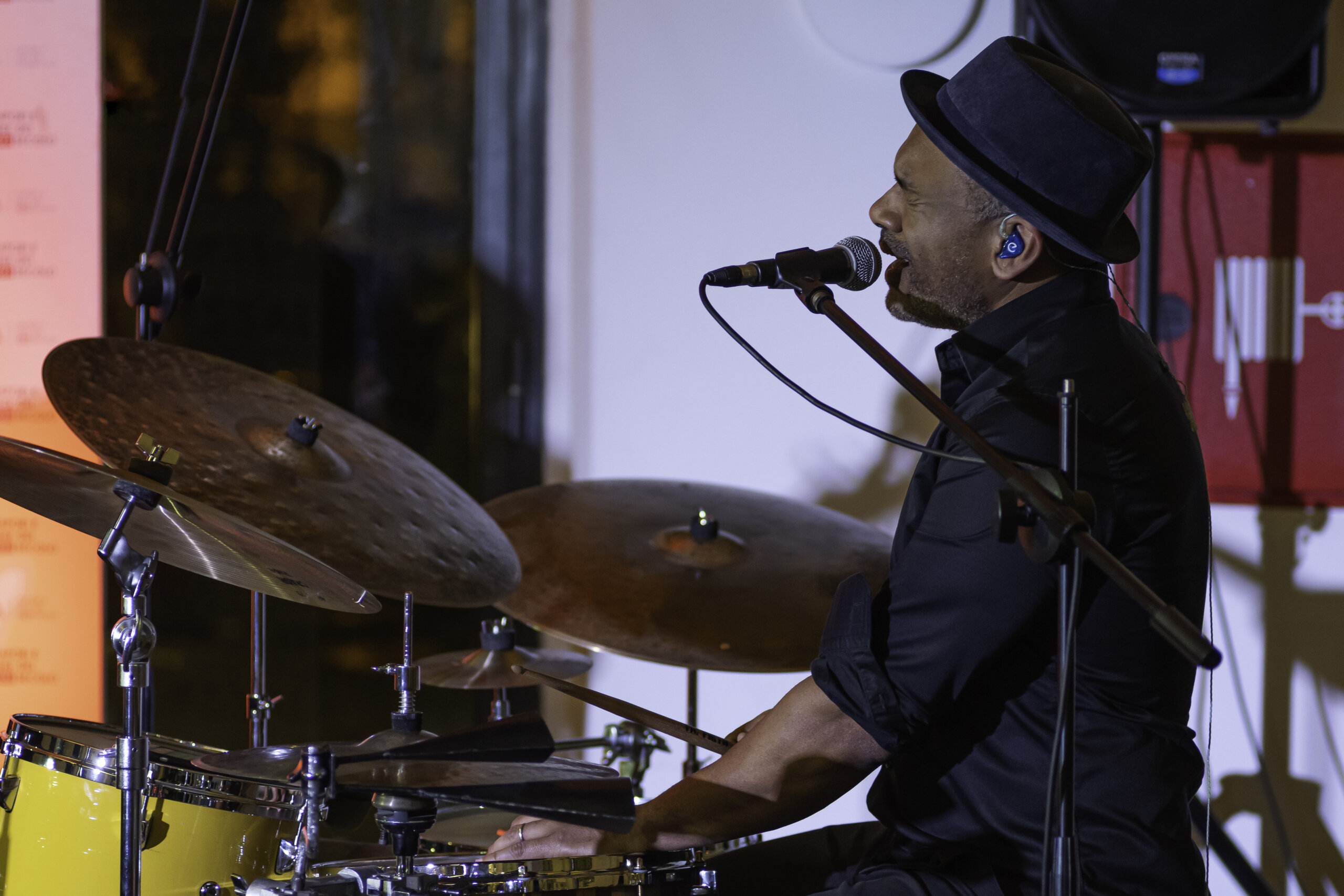
In this project, my absolute priority was the emotional content of the lyrics. Whenever I accompany a songwriter or singer, I try to understand deeply what they are communicating, so that I can give rhythmic meaning to the words. Being Brazilian and having an intimate knowledge of both the language and the culture made this process very natural. The space devoted to improvisation is intentionally limited. The only track featuring a more open section is “Inútil Paisagem”, where the drums take on a more prominent role.
The entire album is performed in Brazilian Portuguese by six Italian singers: Cristina Ravot, Silvia Manco, Cristiana Abbate, Eleonora Bianchini, Marianna Tirinnanzi and Noemi Nori. How did language, accent and prosody influence phrasing, timing and vocal intention?
I am extremely proud of them. They approached the language, the accent and the emotional content of the lyrics with great respect and awareness. In ELLAS, they represent an Italian voice engaging authentically with Brazilian culture. I could not imagine more suitable interpreters for this project.
Looking back on your artistic journey, who have been – and continue to be – your key jazz references and musical heroes? How do they still influence your writing and arranging today?
I listen to a great deal of music and I still attend concerts regularly – for me, that is essential. I strongly believe in discipline, daily practice and constant research. Among my Brazilian references are musicians such as Hermeto Pascoal, Egberto Gismonti, Nelson Veras and Nico Assumpção.
In international jazz, I have a deep love for large ensembles and for figures such as Miles Davis, Tony Williams, Elvin Jones, Roy Haynes, Brad Mehldau, Jeff Ballard, Dave Weckl, Seamus Blake and Lage Lund. Each of them, in different ways, continues to shape the way I think about music.
Finally, ELLAS seems to have been conceived with a strong live dimension in mind.
Absolutely. The project was designed for attentive listening environments such as theatres, festivals and jazz concert series, where the audience can fully appreciate both the musical details and the emotional depth of the performances.