



New York in the mid-1970s was a city full of wounds. The streets of the Lower East Side were dirty corridors where neon signs flickered like boxers tired of fighting, and the night was a necessity in which one learned how to stay awake. There was nothing particularly glamorous about it, yet it was precisely on those streets that Willy DeVille – the last of the romantics – learned how to stand upright, arriving like a man who had already lost something. Rock music in those years loved labels: punk, new wave, art rock. Willy did not. He haunted CBGB without embracing its aesthetic. He carried with him doo-wop, soul, Latin melancholy, and an idea of romance that, at the time, sounded hopelessly out of step. He was elegant in an environment where elegance counted for very little, sentimental in a world where everyone wanted to appear cynical. He moved through the wrong place and, perhaps, that was exactly why people noticed him.
His band was called Mink DeVille, but it was Willy himself who served as its beating heart. It was 1977. While punk was taking shape as a language of negation, Willy sang about love as condemnation and the street as a destiny one had to confront. The first album, Cabretta, sounded like a nocturnal confession abandoned on a sticky barroom table. Inside were echoes of The Coasters, Ben E. King, and the Black rhythms of urban America filtered through rough-edged guitars uninterested in purity. People called it punk, but the Mink DeVille had very little to do with punk. Looking back today, we can say they simply used punk as a way to carve out space in a crowded world full of people desperate to be seen. It was a world of posturing from which Willy soon distanced himself. His voice did not scream – it seduced, pleaded, narrated the depths without self-indulgence. It was not the voice of a hero but that of a loser uninterested in applause.
At a time when rock mythologised rupture, Willy DeVille worked in long durations. He was a soul singer disguised as a rocker – or perhaps the other way around. In any case, he was difficult to categorise, at times uncomfortable. CBGB – more precisely CBGB-OMFUG, the acronym for Country, Bluegrass, Blues and Other Music for Uplifting Gourmandizers – located at 315 Bowery in Manhattan’s East Village, was the temple of punk in those years, a forge of identities but also a trap. “Once I was on stage minding my own business,” he recalled, “when a mixture of piss and wine started dripping onto the microphone. We had terrible grounding.” Anyone stepping onto that stage risked becoming a photograph. DeVille decided not to take that risk. He used the visibility of that stage to make himself known because his New York was not the epicentre of modernity. It was a port, a transit zone where musics collided, contaminated one another and became dirty. It was soul America singing in Spanish, dancing even when there was nothing left to celebrate.
Willy DeVille was already an adult while rock pretended to be adolescent. He understood that every song was born from another song, every voice from another voice. That was an almost heretical position in 1977, when the dominant impulse seemed to demand the burning of the past. DeVille wanted to burn nothing. He wanted to preserve, reshape and give back. An archivist rather than an iconoclast, completely against the current of that era.
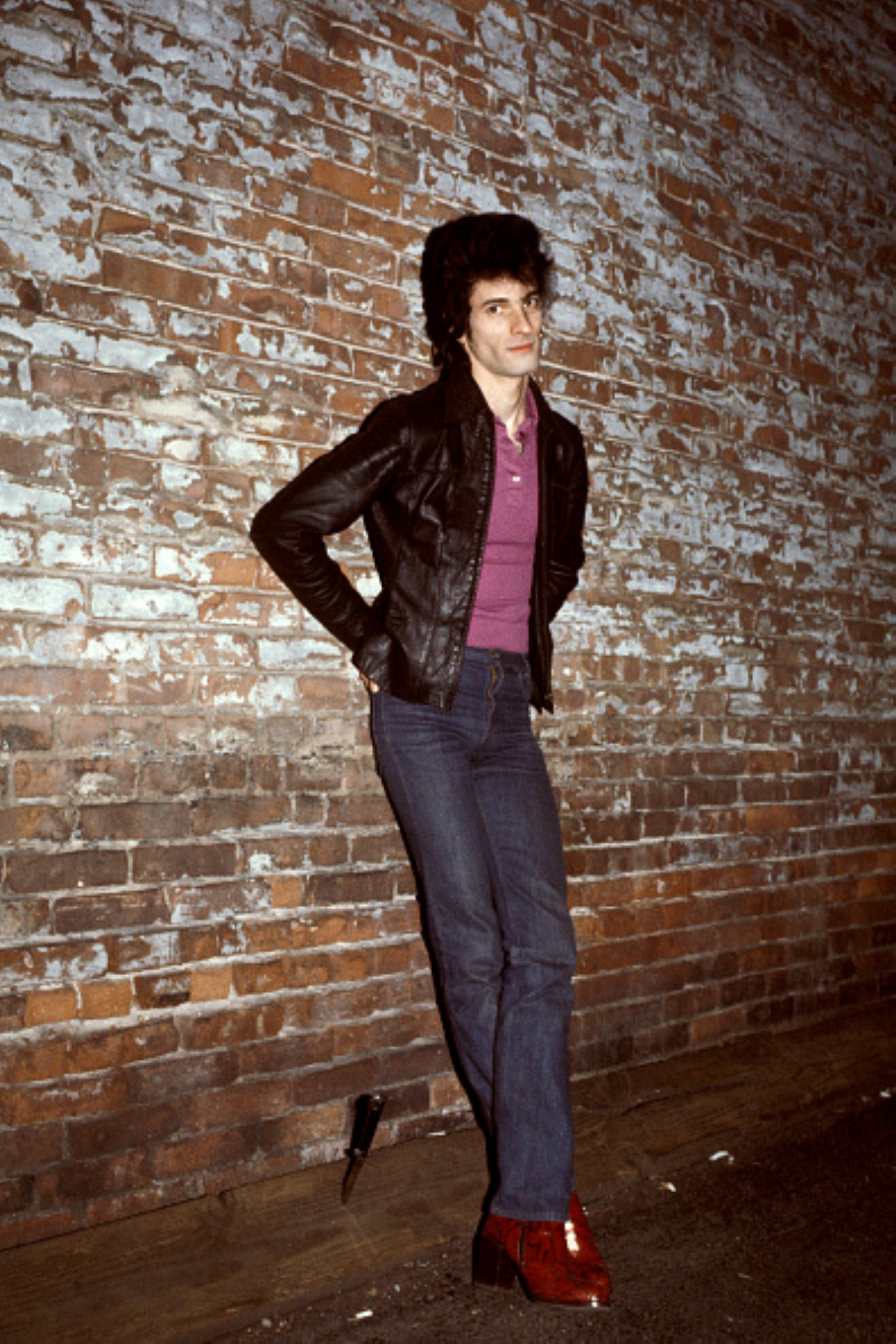
His elegance was never a pose. The suit, the slicked-back hair, the romantic gangster aura were all ways of keeping chaos at a distance. For him, singing was intimate business, something with nothing to do with “showing off.” Not everyone understood him, and Mink DeVille remained for years a cult band – too soulful for punks, too dirty for R&B purists, too sentimental for those afraid of sentimentality itself. Yet it was precisely in that no man’s land that Willy DeVille’s greatness emerged. This was before rock turned into either museum culture or an industry of nostalgia. He revealed its most fragile side: love, the night, a voice telling the truth even when the truth hurt.
Later, DeVille would move to New Orleans, but that came afterwards. At that moment there was only the awareness that real music travelled beside him. It accompanied him. Willy DeVille walked through the night because the night was the only place where songs did not need to explain themselves. It was there, at night, that he managed to express himself without slogans. And from there began a story that never quite became legend, remaining instead close to the hearts of many, impossible to forget.
There came a moment in Willy DeVille’s trajectory when New York ceased to be a horizon and became a cage. The city was not to blame. Some souls simply cannot survive the repetition of myth forever. It was the 1980s: CBGB had become a postcard, punk a recognisable grammar, while DeVille continued moving by subtraction, following a call that had nothing theoretical about it. It was a physical summons from the South.
In 1988, New Orleans was not an aesthetic choice. There music – his music – was truly lived, because in New Orleans pain and the sacred coexisted with vice, without excuses. There Willy understood that soul was not a genre but a moral posture. It was not about playing Black or Latin music. It was about accepting that music is born from loss rather than success.
Until then he had conceived music as something collective, something to be played within a band. From that moment onward he began exposing himself more directly. His writing became leaner, less ironic. Love turned into an open wound. And when Miracle arrived in 1987 with songs such as “Spanish Jack” and “Storybook Love”, it became clear that Willy had found his language – a language composed of soul, mariachi, rhythm & blues and melodrama. Many mistook it for excess without understanding that excess was the only form of truth he had left.
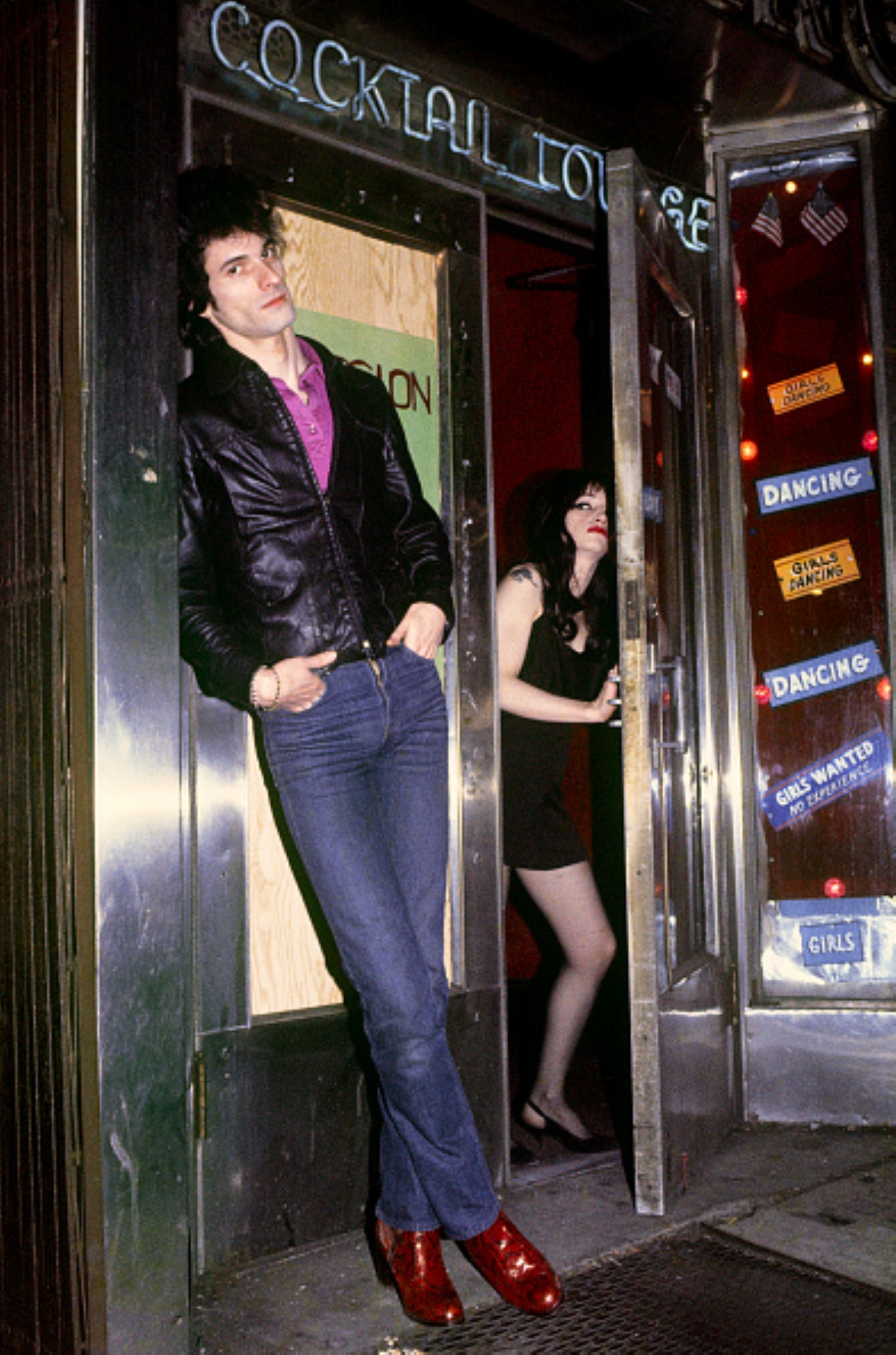
By the 1980s rock had put on the double-breasted suit of professionalism: polished, competitive, photogenic. DeVille moved in the opposite direction. He dirtied his sound, stretched his phrasing, sang as if every song might be his last. He began flirting with Cuba, with New Orleans, with the borderlands of things. He saw America from below – the America that dances in order not to collapse, that mixes languages because one alone is insufficient to express pain.
At that point Willy DeVille’s romanticism became definitively political, even if no one described it that way. At a time when rock was becoming institution, he chose abandonment, placing all his fragility on display. The price, naturally, was high. His body began paying the bill. The nights grew longer, excess became necessity. These were not the glamorous excesses of magazine covers. Willy DeVille was never a photogenic damned soul. He was simply someone who had never learned how to protect himself.
Every song became a public confession. His voice, increasingly rough, began carrying the marks of a life lived without restraint. Yet this was exactly what made it unique: imperfect, vulnerable, true. While rock continued constructing idols, Willy slipped toward the margins. He never disappeared, but he ceased to occupy centre stage. And precisely in this decentralisation his figure gained depth. He was no longer the singer from CBGB’s, nor the custodian of tradition. He became a man traversing music the way one crosses cities at night – without maps, trusting only instinct.
New Orleans taught him one essential lesson: music is not meant to help you win, but to help you remain human. And he, with all his flaws, remained human to the end – loving, drinking, singing. Doing all of it in excess. One thing he never did was betray his voice. He never domesticated it, never made it respectable. He simply let it go, even when it hurt.
And that is where his myth, if it can be called one, took shape. Not as legend but as subterranean presence. Willy DeVille became the singer of the backstreets, the one you recognise only when you need him, the one who never plays on the “right” radio station but arrives at precisely the right moment. Not a leader – a nocturnal companion.
All of this nocturnal, underground dimension can be found throughout the coherence of his refined discography because Willy DeVille – loser, crooner of the defeated – never searched for the “correct” album, the one aimed at the mainstream. Nor did he ever adjust his trajectory in pursuit of it. Each album resembles a different room within the same night, illuminated by different lights, marked by new scars.
That is what made him a genuine outsider: not because he was excluded, but because he never truly wanted entry. He only wanted to play. To sing. And, above all, to express his view of the world.
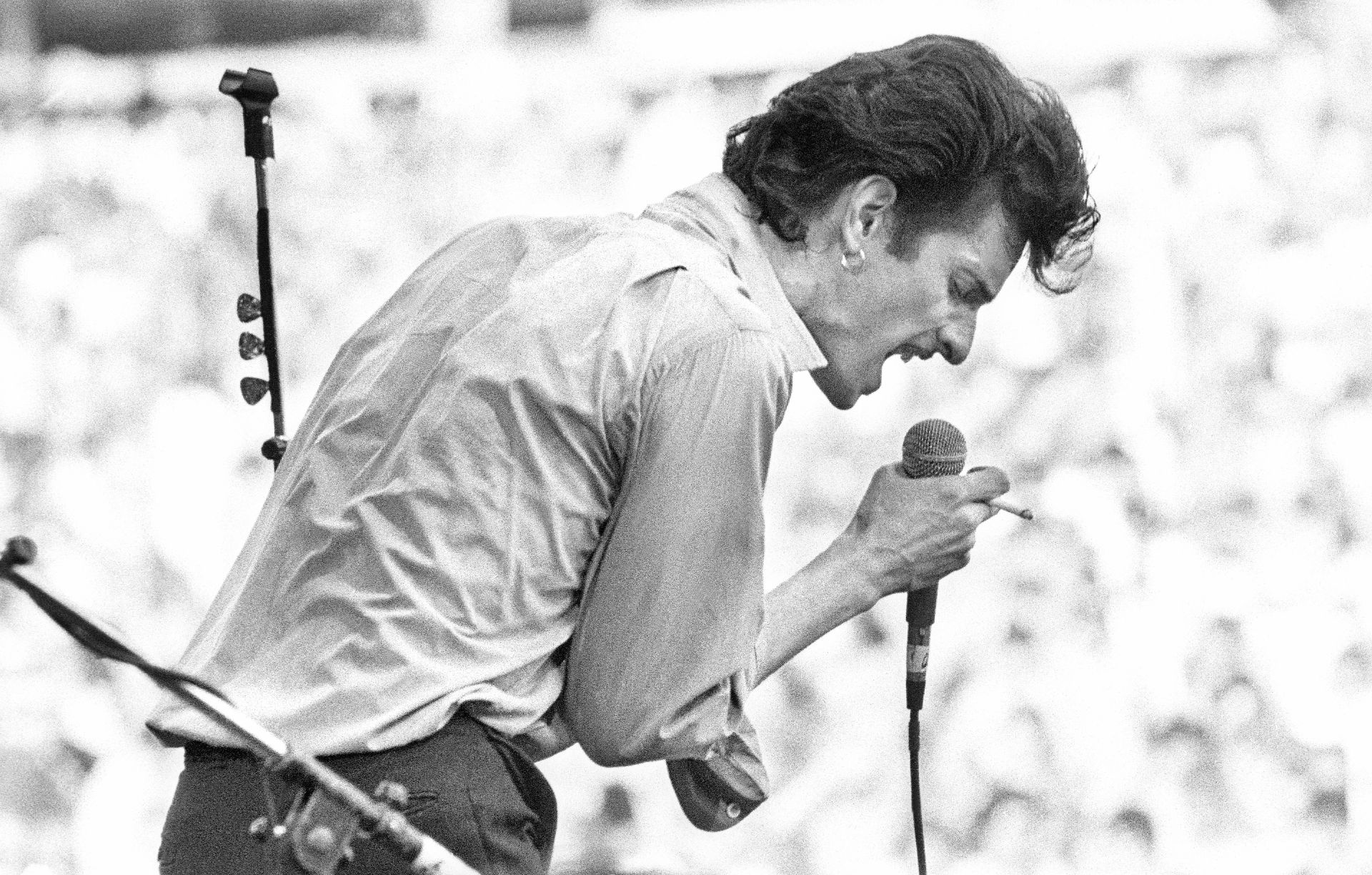
Cabretta (1977) remains the foundational statement, an album that takes doo-wop, urban soul and sidewalk rhythm & blues and plays them as if they were punk – without manifestos, without irony, without nostalgia, but with the hunger of someone needing to express a street-level urgency. Return to Magenta (1978) pushes the oblique identity of Mink DeVille even further, while Le Chat Bleu (1980) – recorded after DeVille relocated to Paris – already signals clear divergence. Inside lies Paris, European melodrama, a romanticism that during the 1980s would come to be treated almost as a guilty pleasure.
After Coup de Grâce (1981), Where Angels Fear to Tread (1983), and Sportin’ Life (1985), the transformation from Mink DeVille into Willy DeVille became complete with Miracle (1987). Here he sang like a man fully aware that love was a trap, yet willing to enter it anyway without any expectation of emerging victorious.
Albums such as Victory Mixture (1990) and Backstreets of Desire (1992) function as acts of cultural resistance before they even become records. These covers of soul, blues and African American rhythm & blues were approached not as exercises in scholarship but through emotional kinship. DeVille never appropriated those musics. He could not. He was a white working-class man whose gypsy-dandy appearance emerged from influences absorbed through records, encounters and the street itself. Willy did not stand above those musics. He stood beside them. It is an enormous distinction and one frequently misunderstood, particularly by critics of the time.
This is where comparison with Tav Falco becomes illuminating. The two shared little stylistically, yet they occupied the same position. Falco brought rockabilly, Southern blues and theatrical freak-show aesthetics into a deliberately anti-commercial language. He too sang of a nocturnal, borderline America made of motels, obsessions and displaced bodies. But where Falco radicalised performance, DeVille radicalised emotion.
What they shared was a refusal of career as progress. They were true outsiders, not “cursed” figures manufactured by glossy magazines. They asked for nothing except acceptance of the loser’s role because they understood something rock often forgets – and today has almost entirely forgotten: losing can itself become a form of freedom.
They were not alone in that territory. There was Lux Interior, frontman of The Cramps, with his love of trash culture and primitive, sexual rock ritual, though Willy remained more seductive and less grotesque. There was Jeffrey Lee Pierce, founder of The Gun Club, sharing the same sense of the blues as curse. And then there was Alex Chilton, perhaps the definitive loser of that generation. They were all structural outsiders, people who instinctively rejected the dogmas of the societies around them.
In his final years, when Willy’s body began presenting its bill and his voice darkened further, there was never any trace of self-pity. Albums such as Big Easy Fantasy, Loup Garou (both released in 1995), and Crow Jane Alley (2004) feel suspended outside time, like films produced too late to become classics yet too sincere ever to disappear. Singing ceased to be professional duty and became necessity.
Willy DeVille was ageing, though not like a rock star. He was ageing like a soul singer who loses brilliance while gaining depth.
The “loser” in DeVille was never an aesthetic posture but an existential one. He was not the man who loses and complains; he was the man who chooses not to compete. In this sense, among all the losers, Tav Falco was perhaps the figure closest to him. Born Gustavo Antonio Falco in Philadelphia, Falco and his Panther Burns left a profound mark on underground American rock. Today he is also an acclaimed filmmaker. Like Willy DeVille, he inhabited a lateral America filled with dirty traditions, bastard musics and hybrid identities. Both rejected the notion of “rock as eternal youth,” accepting decay as part of the narrative. Above all, both sang for those who never recognised themselves among the winners.
Listened to today, Willy DeVille’s discography feels irregular, full of shadows yet alive. It does not sound like the story of someone who “made it.” It sounds like the story of someone who remained faithful to himself and paid the price completely. Perhaps this is why Willy DeVille remains contemporary: listening to him today means not searching for a hero or an idol, but for someone capable of reminding you that living on the margins is not always defeat.
For Willy DeVille, time was never linear. It resembled instead an irregular circle, a spiral endlessly returning to the same themes with a different voice – perhaps more tired, darker, but never domesticated. By the 1990s and 2000s, the world around him had largely archived romanticism as an embarrassing vice from the past. Rock had become establishment, another product to sell. Willy chose to remain outside all that, as if time itself no longer belonged to him.
When his body began demanding payment for years of excess, he never hid his fragility – a fragility that became increasingly evident during the last years of his life. Yet there was never any self-pity, only an ancient dignity, almost blues-like, in the way he occupied the stage.
His cult status was celebrated in the documentary Heaven Stood Still: The Incarnations of Willy DeVille, directed by Larry Locke and still unfortunately unreleased in Italy.
I saw DeVille only once, during the final phase of his career, at the Time Zones Festival in Piazza Matteotti in Ruvo di Puglia, on 12 July 2008. It was not a large stage, nor was there any celebratory aura surrounding the evening. It was one of those nights when music arrives quietly, almost on tiptoe, and precisely for that reason remains with you forever.
Willy DeVille looked tired. Not theatrically fragile, not “damned” in the way some later described him. Truly tired. His body carried the marks of a life lived without reserve, and his voice no longer possessed the elasticity of his younger years. Yet the moment he began singing it became obvious to everyone present that he was not there to defend his past. He simply wanted to inhabit that moment, on that stage.
He sang slowly, as though every word first needed to locate its place before emerging. He forced nothing. He searched for no dramatic effect. His voice had grown darker, lower, yet remained astonishingly present. He was an ageing rocker still in love with blues and soul, continuing to do his part.
At that moment one fundamental thing became clear – at least to me: Willy DeVille was not a survivor. He was a resistor, a weary old warrior not celebrating a career but completing a journey.
Every song felt addressed to someone specific rather than to an anonymous crowd. The concert resembled a private conversation accidentally enlarged. That was what made it beautiful. It promised nothing and demanded nothing. It was simply a man singing as far as he could go, and that limit itself became part of the truth.
And it was not sad. It was lucid. Conscious.
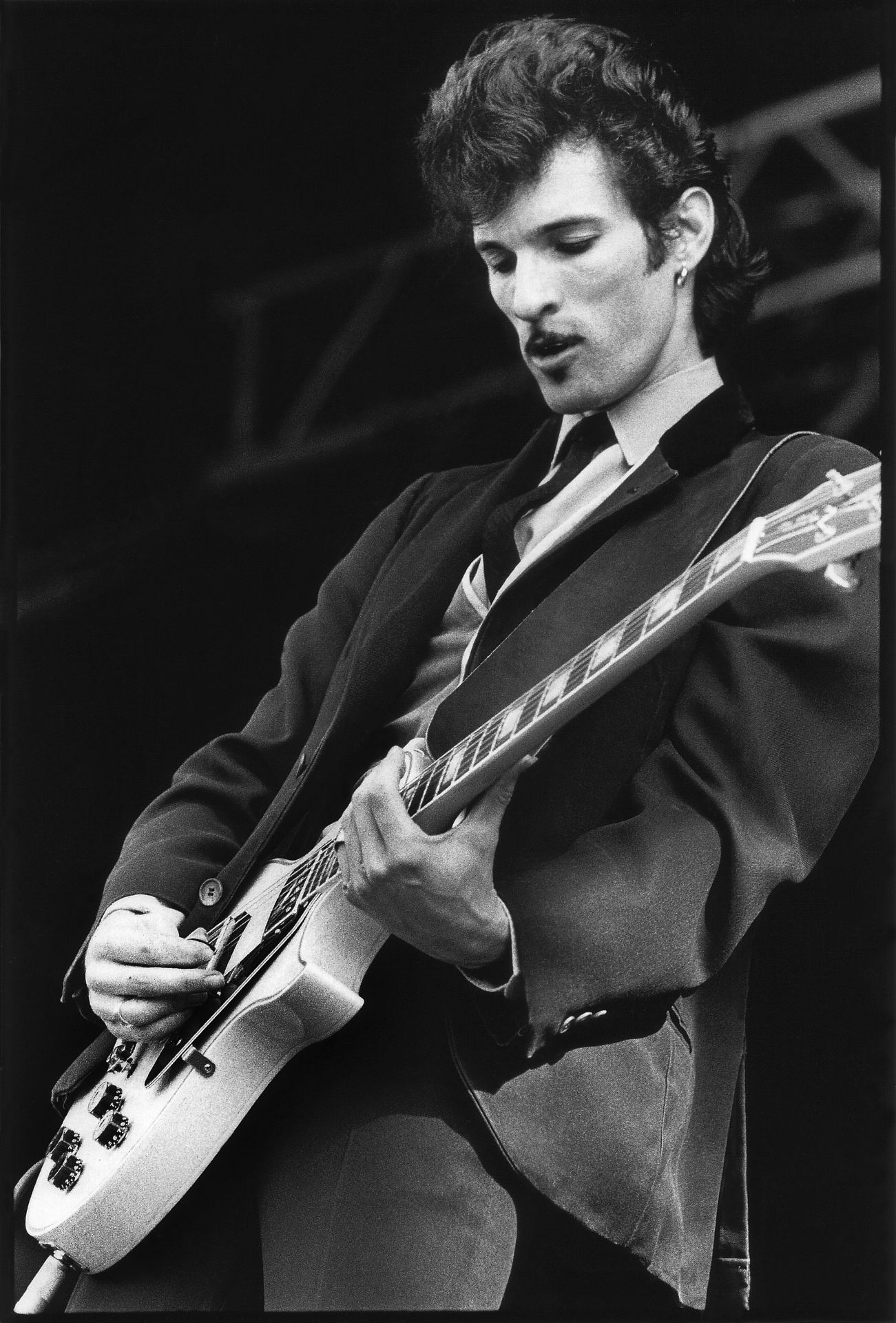
When the concert ended, I did not feel as though I had witnessed an “event.” I felt I had crossed paths with a presence – one that does not remain as noisy memory but as echo. He truly was the last of the romantics, one of those figures who return years later, when you finally understand what you had actually been witnessing.
A year later he died. On 6 August 2009, at the age of fifty-eight, in New York City. Three weeks later he would have turned fifty-nine. Born on 25 August 1950 in Stamford as William Paul Borsey Jr., he had been diagnosed with pancreatic cancer in 2008 – the same year I saw him live – and ultimately died from complications related to the disease. Unfortunately, by the time it was discovered, the illness was already advanced.
He spent the final period of his life continuing, whenever possible, to work and think about music, never transforming his condition into public spectacle. There were no dramatic gestures. Willy slipped away quietly, without clamour, consistent with the entirety of his artistic life, leaving behind more songs – some extraordinary – than explanations.
Shortly before dying, he married – a detail revealing much about him – as if placing a final punctuation mark on a life always lived close to the bottom.
His death was not a media event. And that was fitting. Willy DeVille was never a cover-story figure. He was a presence whose voice emerged precisely when the surrounding noise diminished.
What remains is an extraordinarily powerful lesson: one can pass through music without trying to possess it. One can sing about love without turning it into heroism. And above all, one can remain faithful to tradition without transforming it into museum culture.
Willy loved Black and Latin music not as repertoire but as an adopted mother tongue. He respected it because he lived it rather than studied it.
Listening today to songs such as “Mixed Up, Shook Up Girl”, “This Must Be the Night”, “Savoir Faire”, “Maybe Tomorrow”, the Spanish-language version of Jimi Hendrix’s “Hey Joe”, or his reading of Bryan Ferry’s “Slave to Love”, alongside albums such as Pistola – his testament – one is struck by their resistance to time. They do not sound dated because they were never “new” even when first released. They already existed outside the calendar of fashion, immersed in an emotional dimension untouched by seasons.
Willy sang for those who arrive later, for those who seek not anthems but travelling companions. In the end, his greatness lies entirely there: in having chosen the night without turning it into spectacle. In having walked the margins.
You hear his voice when the world slows down, when the lights dim, when you need someone not to tell you that everything will be fine, but simply to remain beside you while nothing is fine at all.
Willy DeVille taught us how to be alone without feeling lost. And that remains, even now, a lesson that sounds painfully true.
