
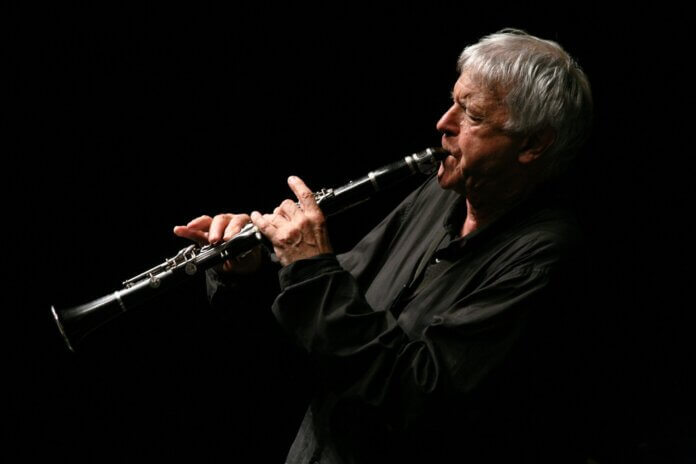


I began to love Michel Portal even before I had actually heard his music. A paradox, certainly, but that is exactly how things happened. I was still in high school, yet I was already fascinated by this musician I had read about in Musica Jazz — I remember a report from Châteauvallon — described as someone utterly unafraid of taking risks, someone who was giving free jazz a distinctly European identity shaped as much by folk echoes as by the classical aesthetic from which he emerged. And then there were the photographs: this young man — though in reality he was already nearing forty, but as Francesco Guccini reminds us, “heroes are always young and beautiful” — with his vaguely pageboy haircut, playing a clarinet split in two, or stripped of its barrel, or fitted with a saxophone mouthpiece, or conversely a sax equipped with a clarinet mouthpiece.
For a teenager who had himself been struggling with reeds for some time, these were powerful, iconic and deeply evocative images. Reaching his music directly, however, was more complicated. The internet still lay far in the future, so the only way to hear him was to find his records, which in truth never really made their way to Italy. One had to go to France, as I eventually did a few years later, in order to get hold of what still remains Portal’s masterpiece — or at least the most emblematic album in his far from vast discography. We are speaking of Dejarme Solo! from 1979: as the title suggests, a work of complete solitude, half an hour of dense music with an almost bulimic use of overdubbing — Portal moves across more than a dozen instruments — mapping out the coordinates of a voracious, untamed yet razor-sharp creativity, capable of striking directly at the target through galloping sequences and a pronounced rhythmic sense that never forgets melody or song, however transfigured. A manifesto-record into which Portal poured, once and for all, the totality of his longings and appetites, none of them modest. Creative voracity was always one of the cornerstones of Portal’s poetics, as we have already noted.
To understand him better, one had to remain on his trail. And so, during my second trip to Paris in 1982, I tried to seek him out and meet him. But it was August and, if you dialled his phone number — which I somehow managed to obtain — the inevitable answering machine informed you that the man was not at home, indeed very definitely out of town. Try again at the end of the month, when by then I had already returned to Italy.
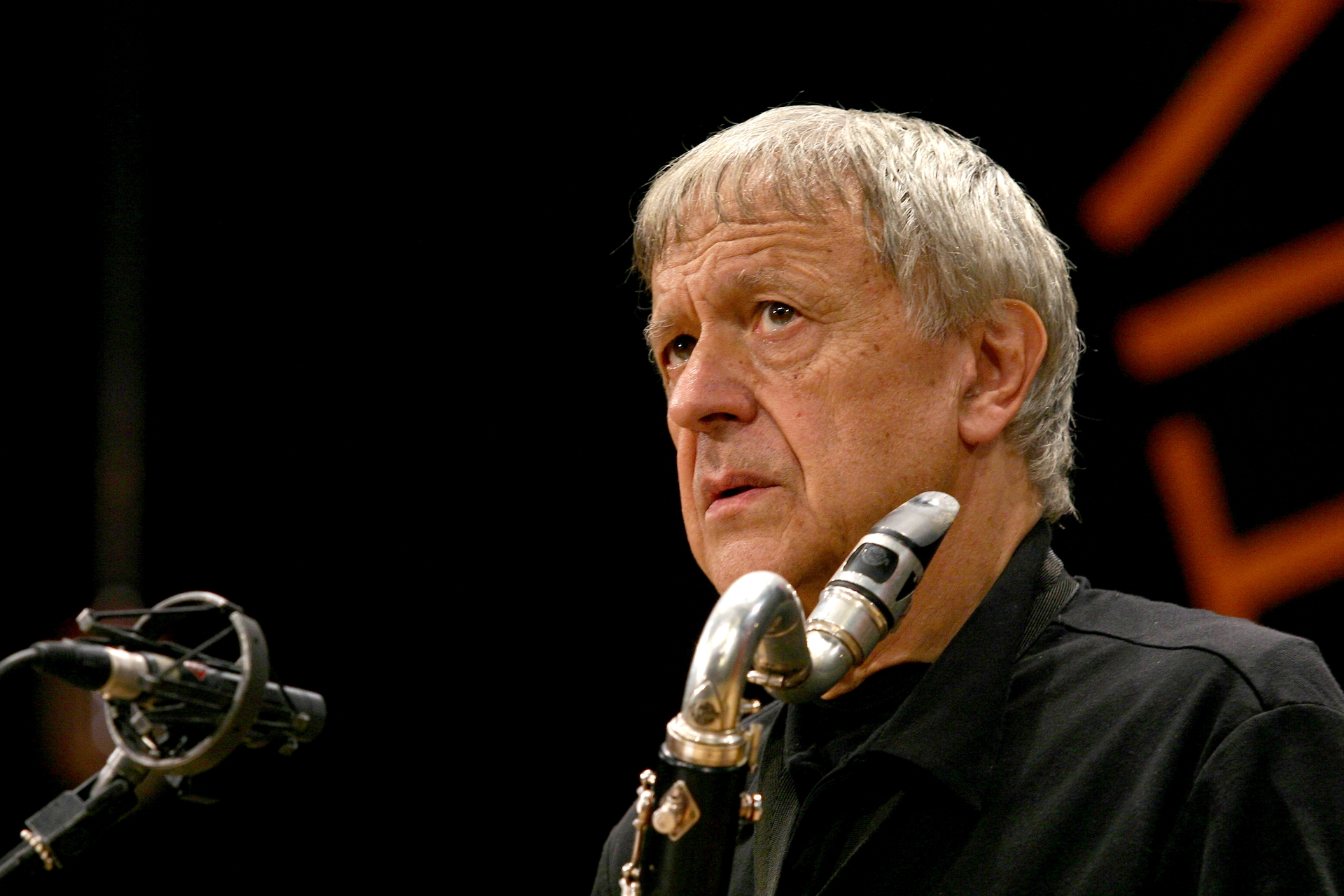
The best thing to do, therefore, was to track down a few more of his albums: specifically the live recording from Châteauvallon (1972, though the edition connected to that report was probably later), No, No But It May Be, credited to the Michel Portal Unit with Bernard Vitet, Léon Francioli, Pierre Favre and Tamia on vocals — an album of feverish creativity and genius, at times almost dishevelled and overcrowded, yet irresistibly alive, vital and undeniable. Then there was an even earlier record, Alors!!! (1970), created collectively with John Surman — then the very summit of European multi-instrumentalism — alongside Barre Phillips, Stu Martin and Jean-Pierre Drouet. A remarkable quantity of beautiful ideas in the making, and shared.
Yet one essential piece was still missing: the first live encounter. By then I already had several more albums in my pocket — Turbulence (1986), another magnificent self-portrait, though no longer solitary, six pieces performed by exquisitely chosen line-ups and deservedly reissued in 2015 by this magazine; and two collective recordings, Men’s Land from the following year, perhaps not entirely focused yet still full of compelling ideas, featuring Dave Liebman, Jack DeJohnette, JF and others, and 9.11 pm Town Hall from 1988, a more cohesive affair with JF once again alongside Daniel Humair, Marc Ducret, Martial Solal and Joachim Kühn — when finally, in 1989, the opportunity arrived in Reggio Emilia. Once again it was a kind of “collective-capital” group, with Charlie Haden, Egberto Gismonti on piano, and Nené.
The occasion was irresistible, and I could not let it slip away. So after the concert I sneaked backstage to ask Monsieur Portal for an interview. He accepted immediately, though suggesting that we conduct it in the lobby of his hotel. “Ce sera plus agréable,” he told me. Yet while walking towards the hotel he began speaking so rapidly and intensely that I could not afford to lose a word, and so I promptly switched on the recorder, creating what I believe remains the only walking interview I have ever conducted — at quite a brisk pace, too. By the time we reached the hotel, the interview was almost over. A couple more questions, then back towards the Teatro Cavallerizza, where Gianni Coscia had waited for me — we had travelled together to Emilia, something far from unusual in those years.
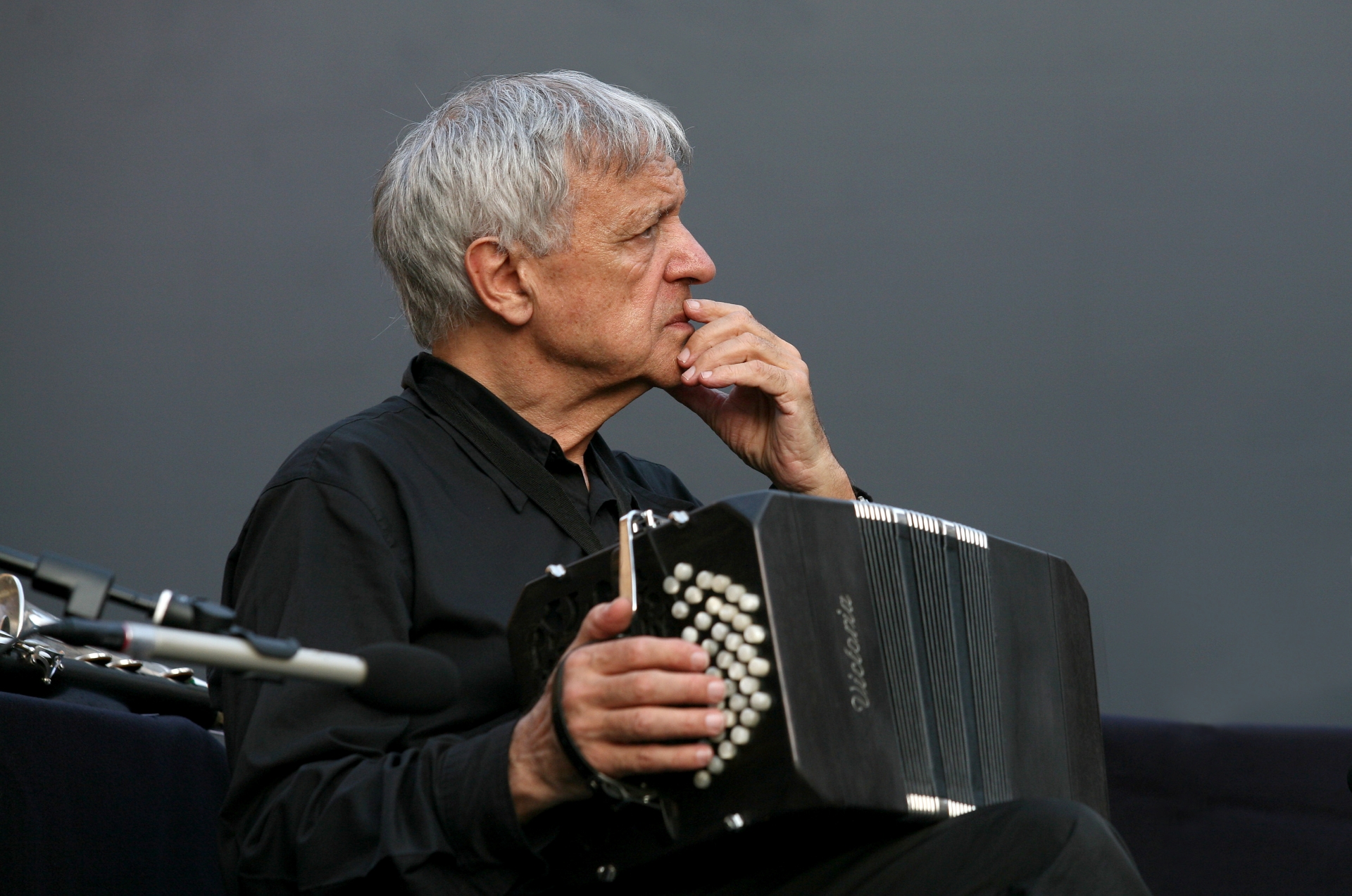
Two aspects of that conversation struck me deeply — in the sense that they genuinely surprised me. The first was the bitterness mixed with disillusionment that emerged from the following sentence, which I have retrieved from the original transcript: “I must admit, with a certain regret, that this is the first major tour of my admittedly long career.” Portal — whom I had already considered a giant for many years — was then approaching fifty-four. “And besides, had I appeared with my own French musicians, nobody would have paid much attention. But here there are Charlie Haden and Egberto Gismonti, so…”
The second was his answer to my question concerning the two musicians who, at that precise historical moment, seemed to me the leading figures of the jazz world, albeit on very different planes: Miles Davis and Steve Lacy. I remember his words being gentle towards the former and rather scathing towards the latter, whereas I might have expected precisely the opposite. His answer was this: “What if I spoke well of one and badly of the other?” “As you wish,” I replied — we were still addressing one another formally, of course. “I find what Miles Davis is doing extremely interesting, his search for a fusion of styles. He understood that young people love the sound of the guitar, and he wanted to take them by the hand, trying to understand and penetrate a music that historically was not his own. Steve Lacy, on the other hand, continues endlessly dissecting what was born in him during his partnership with Monk: silence and repetition. I do not sense any openness towards what is to come. Steve is a loner; Miles is not. That, to me, is the principal difference between them.”
I was not entirely convinced, but so be it: one does not challenge a musician merely because he expresses opinions one does not share.
And thus we arrive at the second interview: Clusone, 1995. In between had come other records, above all the then recent Musiques de Cinémas, released, like nearly all Portal albums of those years, by Label Bleu, one of the labels that did the most for French and European jazz as a whole. The CD gathered together a substantial body of the multi-instrumentalist’s film music — cinema and theatre absorbed no small portion of his talents — alongside a large group of friends, among them our own Paolo Fresu. But the occasion was another: Monsieur Portal was about to turn sixty, and together with Musica Jazz I had planned an extensive feature on him, halfway between dossier and interview. When I explained the reason for our latest conversation, he burst out laughing with an amused “C’est terrible!” — obviously referring to the impending milestone — accompanied by one of those thunderous laughs of his, tinged with something faintly luciferian.
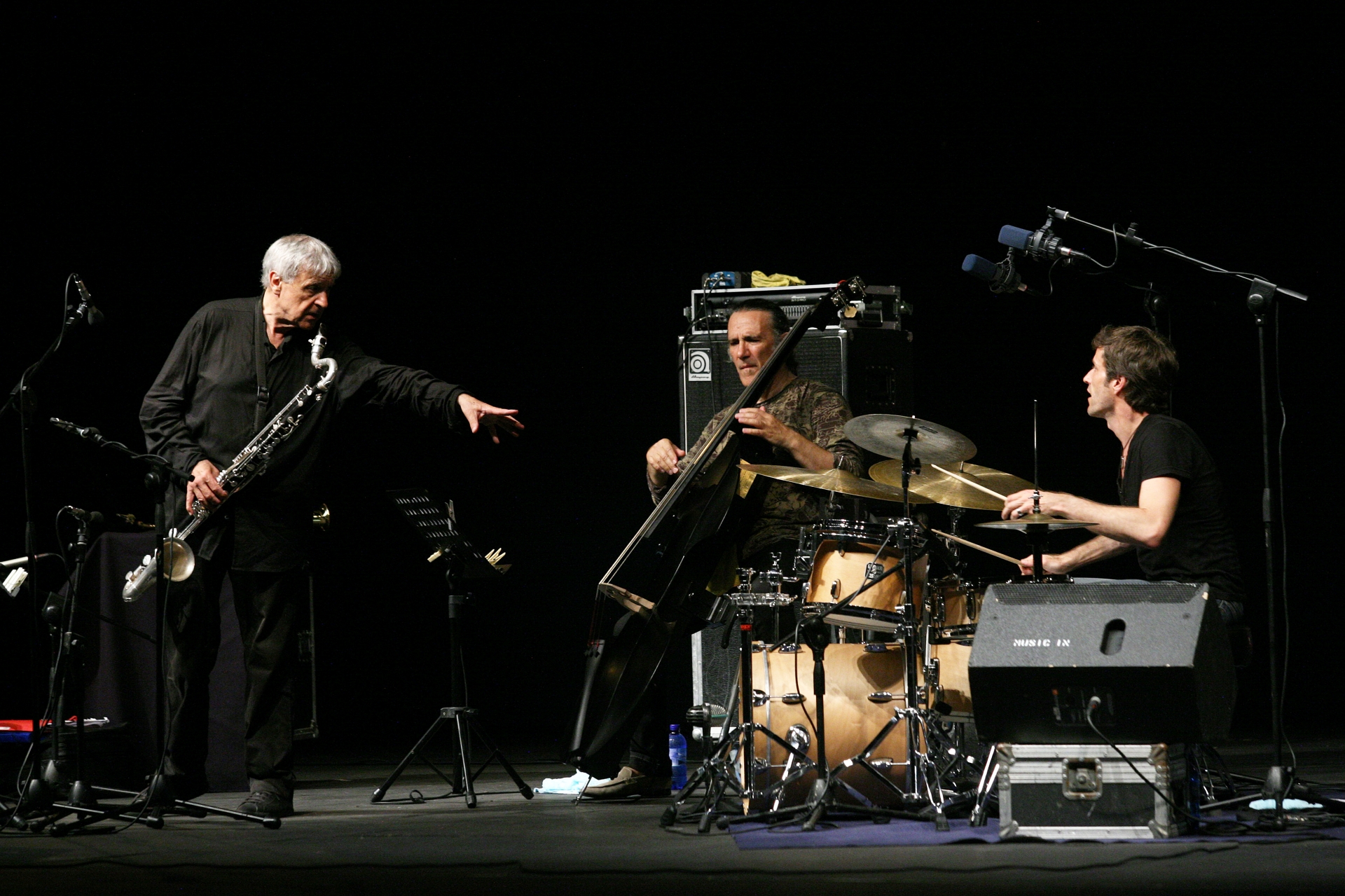
We began talking and, once again, several passages from that much longer conversation deserve to be recalled. “For me, music has always been a faith, and at the same time a continuous discovery, ever since I was a boy, approached with the same attitude that someone in a monastery has towards religion. Of course, I am not a priest, but music has always reached me through this faith. Playing, for me, has always resembled acting for the performers of the commedia dell’arte: life, a vocation, yet a joyful and playful one, whereas around me I perceive boredom, oppression, anxiety and worry. In this sense music is a miracle, an abstraction, an escape from whatever oppresses us in life. That is how I see it, because I love life. Perhaps it does not appear so from the outside, because maybe I am somewhat introverted, but in reality I am always searching for stimuli, even in tiny fragments of everyday existence.”
And later: “The musician is a little like a tightrope walker: perpetually suspended, always risking a fall. Learning and training must never cease. And the older one becomes, the sharper one grows. Knowledge and sensitivity refine themselves. People tend to believe that creativity marches hand in hand with vitality, and that therefore there exists a narrow window beyond which one merely repeats oneself. Personally, I feel rather like an old matador who may well be gored because, at the crucial moment, he no longer possesses the reflexes he had at twenty. Yet he may still manage to make the bull pass once more beyond the red cloth, and so he keeps trying. That is precisely the vocation of which I was speaking.”
On his relationship with cinema, he said: “It arrived late, too late. At first it was almost a game, because I did not consider myself a composer in the strict sense of the word. But it attracted and amused me, because I have always had the instinct to associate a sound, in my mind, with an image. Once again, it was above all a matter of curiosity, something that in me has always been almost excessive. For example, I also tried composing songs, but I realised it was not my skin. I wrote the music for a couple of songs by Claude Nougaro and Barbara, but nothing extraordinary, so I abandoned the idea.”
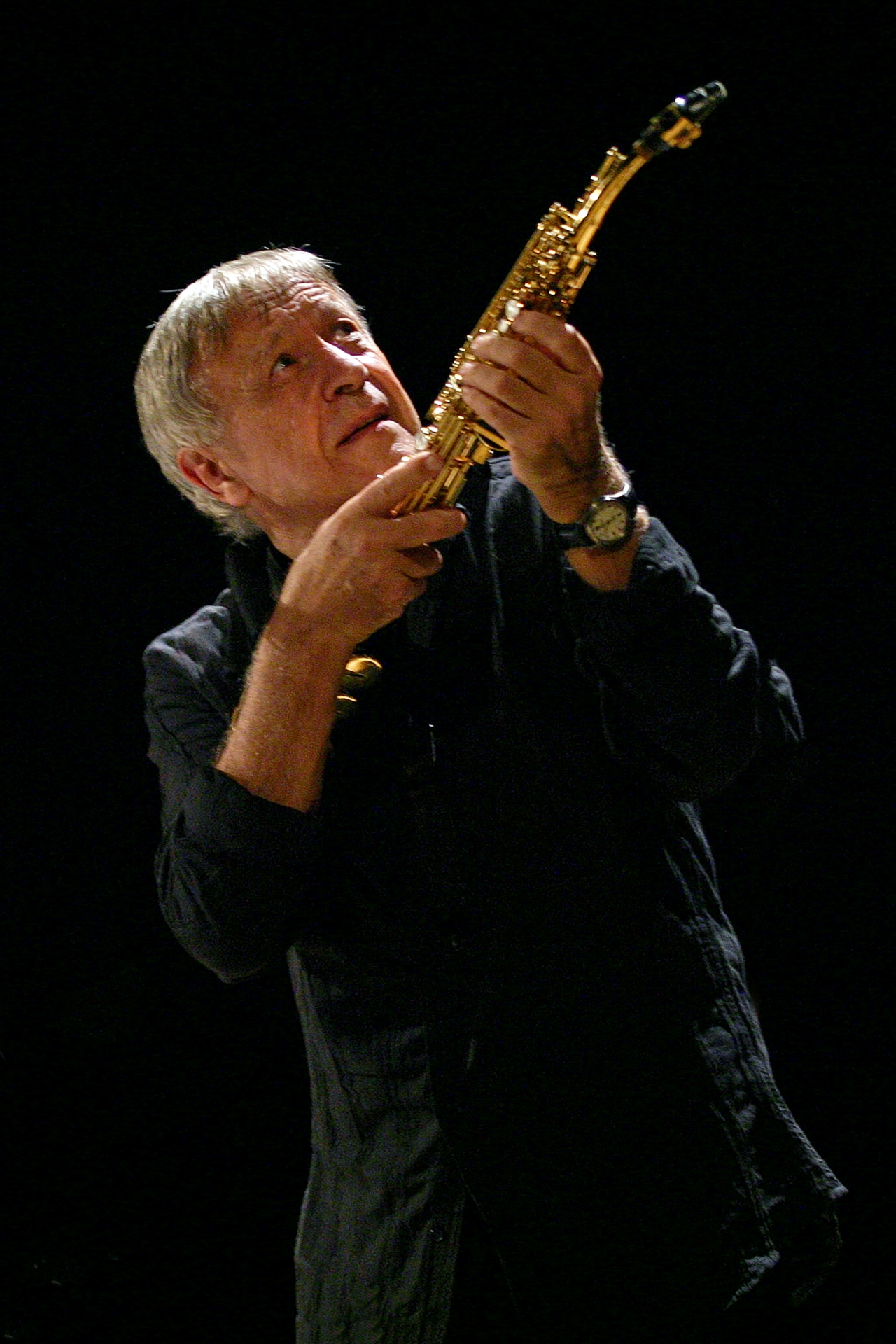
And again: “There is a great deal of musical racism around, a great deal of conformism. It horrifies me to think there exists an audience that expects musicians to play things that are decades old simply to feel reassured, because they listen to music solely to relax and do not want to be disturbed, do not want to be confronted with problems. Which, evidently, is exactly what I always do!”
We also touched upon his instrumental choices — for instance, why the bandoneón rather than the accordion, despite the latter’s strong French tradition. His answer was this: “The bandoneón and the saxophone entered my life practically at the same time, around the age of fifteen — though after the clarinet — because of a personal curiosity to discover Argentina through music. I loved South American music, tango above all, perhaps because of my partly Spanish origins. At fourteen or fifteen I already knew great tango composers such as Discepolo and Troilo. I feel there is in my music this strength, this lyrical side, which may express itself violently yet remains lyrical all the same. Every theme I have written could be translated into tango. Deep down, I am certainly more Latin than Anglo-Saxon. I was born in Bayonne, between the Pyrenees and the Atlantic Ocean, so within me there exists this mixture of ethnic elements, though with a strong Spanish component linked to dance, to the lyrical-fantastic and the wild. But there are also impulses of an entirely different nature — much classical music, Mozart, Brahms, and contemporary music as well — which give depth and richness to the whole. At the moment I am passing through what I would define as a phase of recapitulation. We shall see about the future. In any case, playing and experimenting are always magnificent ways of exorcising death!”
Death, fortunately, still seemed far away. The great epiphany, at least in terms of public image, was much closer. It arrived with the birth of the duo alongside Richard Galliano: perfect alchemy and complementarity, Galliano’s virtuoso logic against Portal’s impertinent genius. Between them stood a shared “Latinity”, meaning tango but not only that, together with a profound love of song, though expressed differently: more opulent in the former, more sorrowful in the latter. The two recorded a first album, a live-in-the-studio session, full and magnificent. It was titled Blow Up, after the film by Michelangelo Antonioni, and it would become Album of the Year in our 1997 Top Jazz poll.
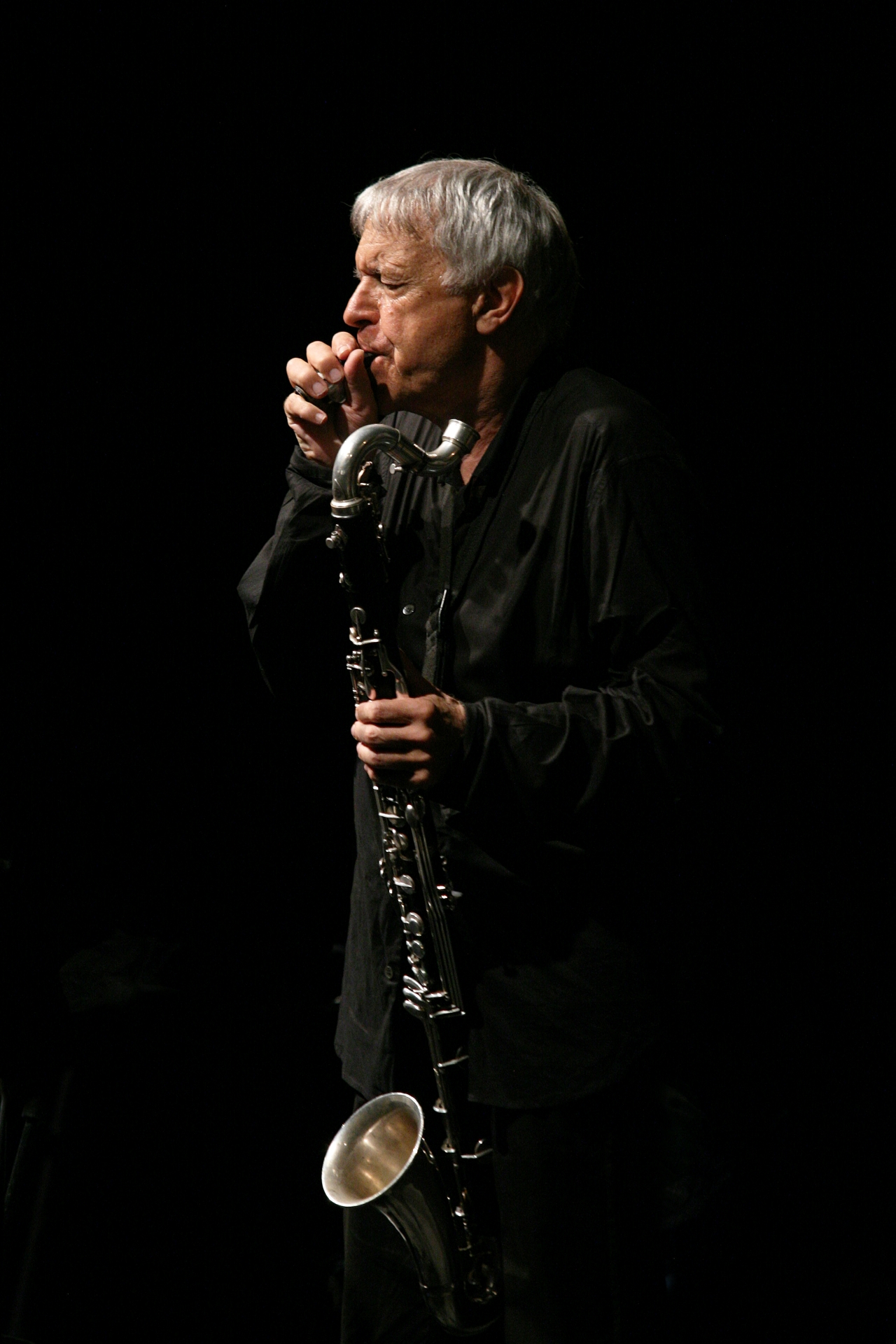
A generous tour followed — generous like the tête-à-têtes that formed its bricks, its grains, its links. They also passed through Bolzano for Jazz Summer 1998, one of the most moving concerts I can remember. One of those evenings when, as you sit quietly in a restaurant and the musicians walk in, applause erupts instinctively. A perfect alchemy indeed. Their rendition of “Libertango”, before it became overused in advertisements and jingles, was spine-tingling; the intertwining of the two bellows a long-desired miracle finally made tangible and real.
The duo continued for several years, producing another couple of live albums — their final dates took place at the Arcimboldi in Milan in May 2003 — while each simultaneously pursued his own path. From the mid-1990s into the early 2000s we heard Portal live many more times in varied settings: a pair of quartets, one with Django Bates, JF and Daniel Humair, another alongside Louis Sclavis, his natural heir — though in reality Yves Robert, close collaborator of both men, once described them to us as almost opposite personalities: “Louis loves working with the same musicians, in friendship, towards a common and shared direction, whereas Michel seems to need perpetual conflict among the musicians in his groups, because that struggle exists inside himself.” There were also piano duos with Bojan Z and Joachim Kühn, beside whom Portal dusted off the alto saxophone, as well as several trios.
After that, everything became concentrated in the albums: rare and perhaps precisely for that reason always highly focused, never banal. A handful remain particularly vivid: Minneapolis (2000), as disorienting as it was courageous, featuring the rhythm section of Prince — with a sequel two years later; Bailador (2010), more overtly jazz-oriented yet still tinged with funk, featuring Bojan Z, Scott Colley, DeJohnette, as well as Lionel Loueke and the emerging Ambrose Akinmusire; Eternal Stories (2017), a new proving ground with the Quatuor Ebène, suspended between tango, chamber music and beyond; and MP85 (2020), with Bruno Chevillon, companion through countless mature-period battles, Bojan Z once more, Nils Wogram on trombone and Lander Gyselinck on drums, with the leader mostly on bass clarinet, the instrument that perhaps best translated — and simultaneously directed — the inner conflicts of which Yves Robert spoke.
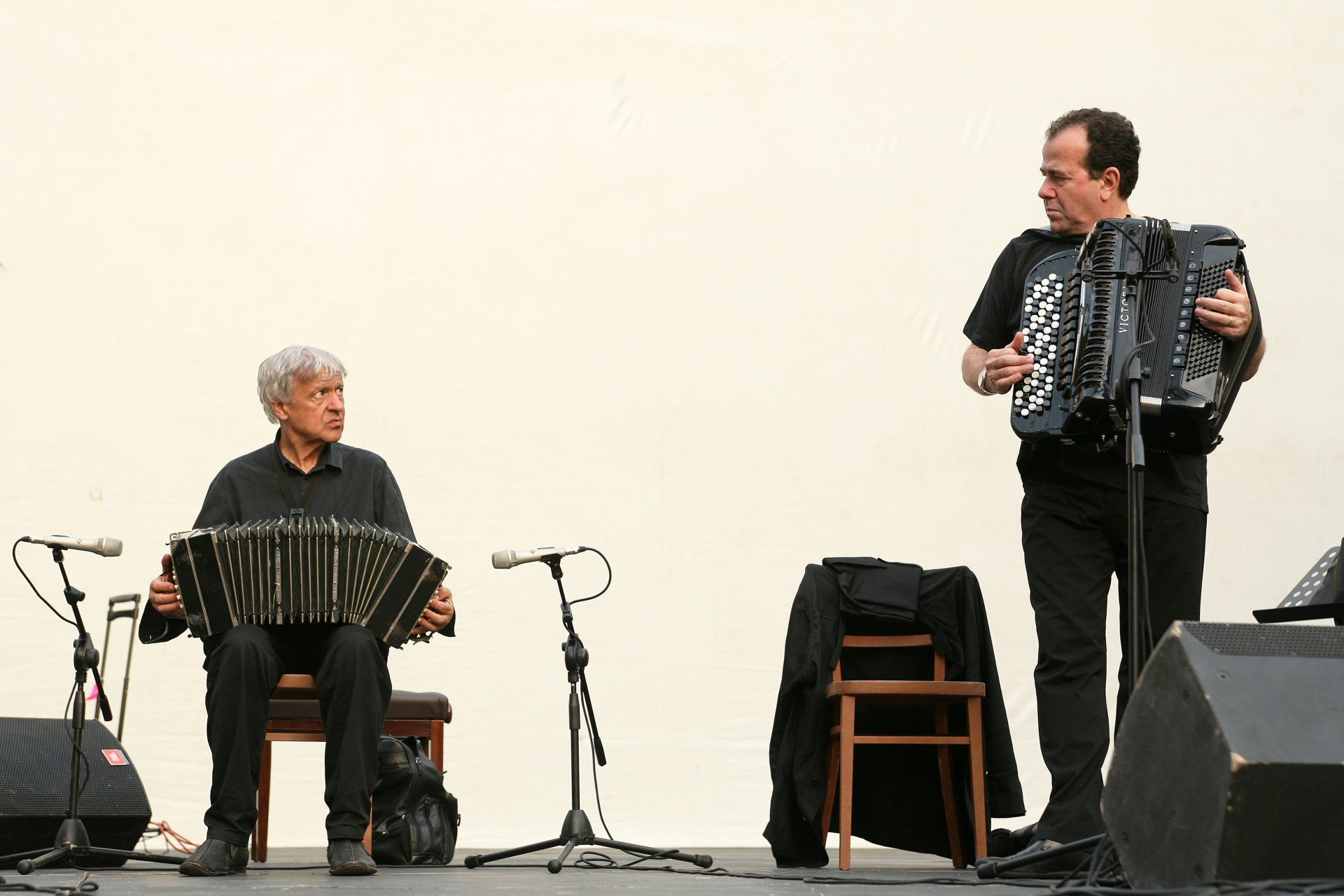
Because Michel Portal never appeared to us a man or artist satisfied with himself. If you sought him out after a concert, the very first thing he would inevitably ask was whether you had liked it. He needed continual reassurance. And, deep down, complicity too, even though he undoubtedly knew how to recognise his own greatness and the specific weight of his talent. Arrigo Polillo, who held him in great esteem, once described him as “mercurial”. Others were considerably harsher — about the man rather than the musician. Having known him reasonably well, and while not doubting the basis of a certain reputation for being existentially hypochondriac, perhaps moody and capricious, I cannot say I ever witnessed episodes — or even attitudes — that confirmed such an image.
Perhaps here too it was a question of alchemy. What matters is that I felt affection for Michel Portal from the very beginning. He left us on 12 February, only a few months after reaching the age of ninety on 27 November 2025, and after a prolonged period of inactivity. As a musician he was unquestionably among the towering figures of European jazz — albeit in a wholly sui generis manner, which is only another badge of honour — but also as a person, an individual: frank, outspoken, with very little inclination towards diplomacy. Never banal. Exactly like his music.
