
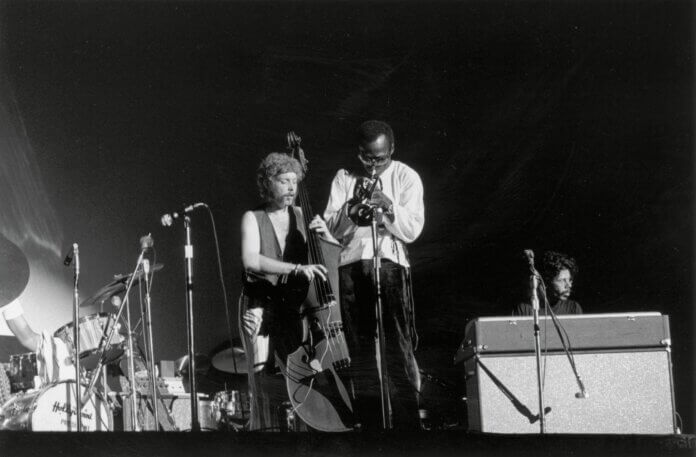


On 19 August 2021, while walking through Central Park, I was handed a little memoir written by a certain Green Gostard who, apparently, in a previous life had been known as Krazy Kat. The booklet, accompanied by rather meagre historical notes, claimed to reproduce faithfully a notebook dated 1989–1990, which had itself been found in the inner garden of a brownstone house in Manhattan, at 312 W 77th Street, a few hundred metres from the Hudson and not far from our hotel in Times Square.
In a state of considerable mental excitement, I read, fascinated, the incredible story of Betty, a young woman who had arrived in the city from Pennsylvania in search of fortune. I became so absorbed in it that I almost immediately drafted a translation in my Portobello notebook, on whose pages it is such a pleasure to write when the pen is soft. We decided to go looking for Betty, since in six hours we would be somewhere near Pittsburgh.
We also decided to spend the night in a small hotel just a few dozen steps from the Susquehanna River. A few hours later, however, my travelling partnership came to an abrupt end, and the person I was travelling with disappeared, taking Green Gostard’s memoir with them. It was not done out of malice, but because of the disordered and abrupt way in which our relationship had ended. I was left with my Portobello notebook, with the translations written in my own hand, and with a great emptiness in my heart. A few months later, once I had arrived in London, I decided to pursue my research further, in order to verify the reliability of the few passages I had managed to transcribe and translate.
I immediately consulted a few excellent journalists, such as the dear and unforgettable Roger J. Thomas of ’Round Media, but it soon became clear that this heretical rereading of those events had no currency among those in the know. I began to consider the possibility that what had fallen into my hands was a forgery.
By then, Green Gostard’s memoir was irretrievable, or at least I did not dare ask for it back from the person who had taken it from me. All that remained were my notes, and even I was beginning to doubt them.
After a careful rereading, however, I concluded that those stories were too closely interwoven with events that had now become historical to be automatically dismissed as dystopian or implausible, even if the whole matter remained inevitably wrapped in undefined mysteries, beginning with the author’s true identity.
As for the period in which the events described take place, we are between June 1968 and the end of the following year, with a few digressions extending as far as 1972. When the author actually wrote is uncertain. He describes himself as a newcomer to the urban jungle of the city that never sleeps, beginning in 1944, and implies that he is now tired and battered, ready to embark on the long journey well before the arrival of the new century. We may therefore conjecture that the manuscript was drafted towards the end of the 1980s.
In the end, it was decided that by publishing the seven connected stories I had managed to transcribe and translate in the pages of my Portobello notebook, we would at least partly lift the veil that so often separates reality from fiction. These are seven stories that we will publish, one a month, from now until September.
Read them with the right curiosity, without necessarily taking everything at face value. As always, in the end, time will tell. And those who see, in the end, will not be able to avoid listening to what the wind whispers.
And so, LISTEN (*)
(*) For those who may not remember, I should add that this exhortation belongs alongside the peremptory invitation “LISTEN” that opens the autobiography of a well-known, highly self-assured trumpeter who, in a parallel world, might for a time have been master of the world. He was born exactly one hundred years ago in Alton, Illinois.
The usual trap: making weather forecasts in England is by now an unavoidable ritual, just as unavoidable as having to backtrack shortly afterwards.
In June 1968, with the creaking sounds of the Paris student demonstrations only partly echoed by the students of the London School of Economics, temperatures had incredibly reached 33 degrees.
Madness, if one listened to the ineffable subjects of the young Queen Elizabeth II. She, too, had been born in 1926, one month before Miles Davis. Both had enjoyed remarkable careers. She had become queen at only 25; he had quickly become the star the jazz world needed if it was not to be swallowed up by the new musical genres that were growing before everyone’s eyes.
London taxi drivers said it was all the fault of Saharan sand, carried by the wind and settling everywhere. But then that very hot air had mixed with an icy disturbance arriving from the Atlantic, and the dance of rain-heavy clouds was not long in coming. Buckets of rain and temperatures in free fall. Umbrellas always at the ready.
Rain or no rain, for modern jazz enthusiasts living in and around London, and also for those merely passing through the city, it was essential to take advantage of a full four-week engagement by the Bill Evans Trio at Ronnie Scott’s. Just under thirty evenings, beginning on 24 June. Every night started at 8.30 p.m. and went on until 3 in the morning, so that nothing would be missing.
In keeping with a custom that the musicians’ union considered non-negotiable, the celebrated American trio alternated, on Ronnie Scott’s capacious stage, with a local quartet featuring the fine singer Elaine Delmar, accompanied by the Scottish pianist Pat Smythe, also an excellent arranger, the young bassist Dave Holland, not yet 22, and the 27-year-old drummer John Marshall, who in later years would establish himself with Ian Carr’s Nucleus and Mike Ratledge’s Soft Machine.
Bill Evans was in excellent form, stimulated in just the right way by the imaginative bassist Eddie Gomez, aged 24, and above all forced out of his comfort zone by the quicksilver drummer Jack DeJohnette, aged 26. The English journalist Brian Priestley, then 28, wrote in his first review as London correspondent for the American magazine DownBeat: “When Bill Evans is in town, one goes not to listen so much as to worship.”
Ronnie Scott’s was London’s best-known jazz club. Three years earlier it had moved from its original premises in Gerrard Street, Soho, to the larger space where it remains today, at 47 Frith Street. On Tuesday 9 July, the evening was already well under way when Miles Davis and Philly Joe Jones entered the club. Miles was on holiday in Europe; Philly Joe had been living in the English capital for several years and that evening was happy to act as guide to the trumpeter who had also been his employer in the second half of the 1950s. At that moment, the English group was on stage.
Although he was on holiday, the trumpeter still had in mind a problem he needed to confront and resolve as soon as possible. A couple of months earlier, the bassist Ron Carter, after six years in the Miles Davis Quintet, had announced his decision to leave the group, partly for logistical reasons, since he no longer enjoyed touring the world, but also because he understood that Miles wanted, indeed needed, to move in a direction that required new rhythmic lifeblood if he was to remain up there, on the highest step.
As soon as he entered Ronnie Scott’s, Miles was struck by the very blond young bassist in the support group. They were playing “Good Citizen Swallow,” a Gary Burton piece released only a few months earlier. He immediately asked Jack DeJohnette, who was preparing to go on stage, for information. Philly Joe Jones knew Dave Holland and offered to speak to him. Miles added: “Tell him that if he wants, I’ll hire him as bassist in my quintet.” At the end of the set, Philly Joe took the young bassist aside and passed on the message. Knowing Philly Joe’s verve, Holland at first thought it was a joke and looked around to see whether anyone was chuckling. There was no sign of Miles. He asked at the bar and was told that Mr Davis had just left. But he had left word that Holland should come by the hotel the following morning.
The next morning, Holland went to look for Miles at the hotel, but, as in a set of Chinese boxes directed by Alfred Hitchcock, he was told that Davis had just checked out and gone to the airport to return to New York. He had left word that someone would get in touch.
The days passed and nothing happened. All of London, at least the part of it that cared about music, knew that Dave Holland had been chosen by Miles Davis to join the quintet in Ron Carter’s place. Even the newspapers were talking about it. Everyone asked Dave whether there was any news. Dave did not know what to say, since nobody had been in touch.
On 19 August, Joe Henderson began a long residency at Ronnie Scott’s. Dave Holland, by then convinced that the American dream signed Miles Davis had vanished, had accepted the engagement as bassist. Returning home around 3 in the morning after that first night with Joe Henderson, Holland was about to turn off the light and go to sleep. The telephone rang. A call was coming in from New York.
From the other side of the Atlantic came the voice of Jack Whitmore, Miles Davis’s lawyer and manager. Miles’s agent confirmed that the trumpeter wanted him in the band. The plane ticket was ready to be issued; all that was missing was Dave Holland’s OK. Time was extremely tight. The engagement at Count Basie’s in Harlem was due to begin on the evening of Friday 23 August. The American lawyer asked Dave whether he thought he could make it, and the bassist said yes. He had two days to obtain a passport, sort out the logistics, and say goodbye to family and friends. On Thursday 22 August he boarded the plane and managed, without too many problems, to check in his double bass as well.
Jack DeJohnette, with whom Holland had remained in contact, was waiting for him at the airport to take him into the city. That same evening, a visit had been arranged to Herbie Hancock’s house, where Herbie had been asked to give Dave a few pointers on the repertoire and arrangements. Herbie was somewhat distracted, partly because he was about to marry Gudrun Heixner, known as Gigi, and then leave for their honeymoon in Brazil. That journey would turn into a waking nightmare, because of food poisoning and, above all, because of an imaginative Brazilian doctor who forced him to prolong his stay in Rio by two weeks, inventing non-existent complications in order to charge a considerable fee for his professional services.
On 23 August, the day of his first concert as bassist with the Miles Davis Quintet, Holland arrived a little early at Count Basie’s and placed his acoustic bass on stage. The other musicians arrived as well: Miles Davis, Wayne Shorter, Herbie Hancock and Tony Williams. No one said anything. After a few seconds, Miles approached the microphone, raised his trumpet and launched into a rather fast version of “Agitation.” It was a piece Dave knew, but taken at that tempo it became an obstacle course. In any case, he got through it and, little by little, took full possession of the role.
Many years later, chatting at the hotel bar after a concert by the quartet that, besides the two of them, also featured Jack DeJohnette and Pat Metheny, the English bassist asked Herbie Hancock how he and the other musicians in Miles Davis’s quintet had experienced those very first nights at Count Basie’s with a very young English bassist none of them had ever heard of before.
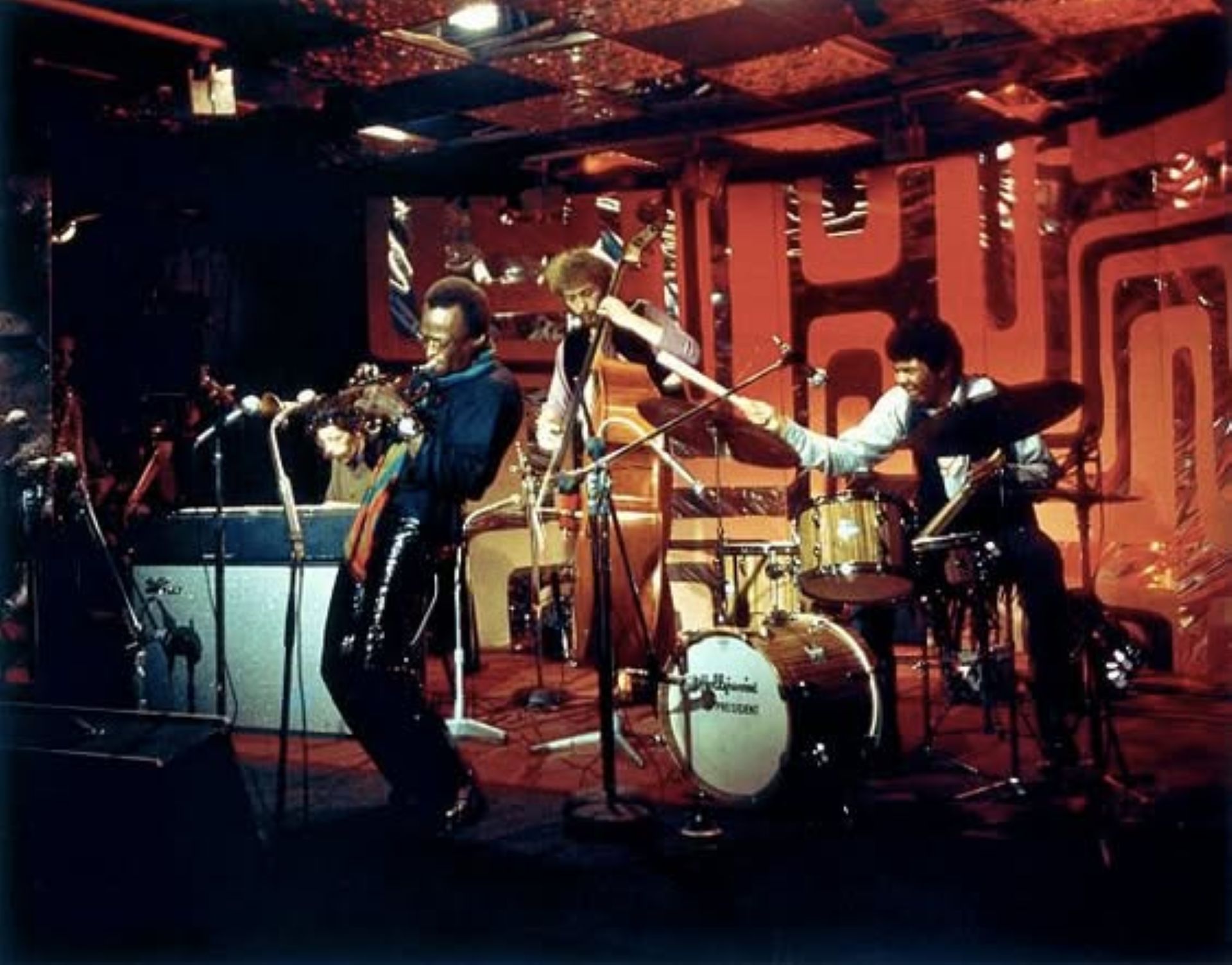
Hancock replied that, in the preceding weeks, before arriving at Dave Holland, Miles had tried out several other bassists, with results that were not exactly encouraging. The rest of the quintet had patiently waited for the definitive replacement. Bringing this brief confidential exchange to a close, Hancock added: “At least you were trying to play, whereas some of the bassists we had used before you thought it a good idea simply to pretend to play while waiting to understand better how to enter the music of the quintet.”
Once the couple of weeks at Count Basie’s had come to an end, Chick Corea arrived in place of Herbie Hancock, who was still stranded in Brazil. Corea was an excellent young pianist who, compared to Hancock, brought a more percussive and driving approach. The new quintet was immediately called upon to give its best during a recording session held on 24 September 1968 at Columbia’s 30th Street studio in New York. The two pieces recorded that day, “Mademoiselle Mabry” and “Frelon Brun,” were used to complete the album Filles de Kilimanjaro, released in the early months of 1969. Earlier, on 19, 20 and 21 June 1968, before the quintet’s personnel had changed, “Tout de Suite,” “Petits Machins (Eleven)” and “Filles de Kilimanjaro” had already been recorded. In these pieces, Herbie Hancock had used electric piano exclusively, but the imperative jolt Miles was looking for was still missing.
If we jump back three and a half years, we can identify in the shifting tempos of “Eighty-One,” a composition by Ron Carter, the first sign of an interest in rhythms that until then had belonged more to rhythm ’n’ blues and, consequently, to rock. The piece was recorded on 21 January 1965 and appeared on the magnificent album E.S.P., which definitively marked the beginning of Miles Davis’s new quintet, with Wayne Shorter on saxophone replacing George Coleman.
The latter had been abruptly dismissed by Miles at the end of May 1964 after being caught practising in the dressing room. Miles had always opposed that habit and constantly asked his musicians to “experiment” on stage, during concerts, leaving their comfort zones behind and venturing into the unknown in search of musical creativity. Genius.
After making major contributions to two albums greatly admired throughout the jazz world, Four & More and My Funny Valentine, Coleman’s fate was nevertheless sealed, since Miles absolutely wanted Wayne Shorter as the saxophonist in his quintet. Wayne was still committed to Art Blakey’s group, but it was known that he would become available by the end of the summer of 1964.
While waiting for Shorter’s arrival, and with a Japanese tour already scheduled for July, the saxophonist Sam Rivers was temporarily brought in, largely at Tony Williams’s insistence, since Williams held him in high regard and had played with him in Boston when the drummer was only thirteen years old. Davis’s quintet with Sam Rivers on saxophone can be heard on the album Live in Tokyo, initially released only in Japan. The first release featuring Wayne Shorter fully established in the quintet came with the live album Miles in Berlin, recorded at the end of September 1964. Curiously, this album was also not released in the United States, since it was intended exclusively for the European market.
As previously mentioned, the first three studio sessions of 1965, on 20, 21 and 22 January, represented the official debut of what is commonly referred to as the Second Miles Davis Quintet. The material from those three days was released on the outstanding album E.S.P., which confirmed the renewed group as the summit of modern jazz on an international level. That status was further reinforced by the albums Miles Smiles (1966), Sorcerer (1967), Nefertiti (1967), Miles in the Sky (1968) and Filles de Kilimanjaro (1968). Masterpieces that still provide immense pleasure today.
Beginning in the summer of 1967, numerous recording sessions had been organised in order to develop new ideas and compositions for the quintet’s repertoire. The material was more experimental, with details that still seemed not entirely in focus. These tracks were not considered for immediate release, although almost all the music recorded during that period would eventually appear many years later.
The very long piece “Circle in the Round,” recorded on 4 December 1967, represented a further step towards the future. Herbie Hancock played a celesta whose sound resembled that of a music box. The quintet was expanded through the addition of Joe Beck on electric guitar, and no fewer than thirty-five takes were recorded of Miles’s composition: elegant, evocative, perhaps slightly austere and inconclusive.
Twelve years later, in the midst of the long and problematic period created by Miles Davis’s extended hiatus due to health issues connected to drug addiction, the record company released a double LP entitled Circle in the Round, containing a 26-minute-and-20-second version of the title track edited by sound engineer Stan Tonkel. It was one of those transitional albums assembled from previously unused material that helped keep attention focused on Miles even during his absence.
To conclude the story of “Circle in the Round,” another eighteen years later, in 1997, Columbia released the box set containing all the material recorded by the Second Quintet. On that occasion, instead of the version edited by Tonkel in 1979, the producers used an earlier version prepared by Teo Macero shortly after the December 1967 session. Macero’s version of “Circle in the Round” runs for an impressive 33 minutes and 29 seconds. In 1979, Teo Macero’s version had been considered too long for inclusion on the double LP then being assembled, and for that reason Tonkel had been asked to prepare a shorter edit. By contrast, the 1997 box-set edition of the Second Quintet’s complete recordings offered the opportunity to retrieve the longer Teo Macero version from the vaults.
That 4 December 1967 recording session was followed by similar experiments that found no place on the official albums covering the 1965–1968 period. These tracks would later appear on albums assembled from unreleased Columbia archive material and, once again, in the 1997 box set already mentioned. On many occasions, guitarists either close to Miles Davis’s own generation, such as Bucky Pizzarelli, or closer to the age of the younger quintet members, such as George Benson and the already mentioned Joe Beck, were brought into the sessions. Truly unusual choices, most likely encouraged by Macero. None of them proved entirely suitable. The trumpeter’s celebrated ability to identify the best young musicians for his groups seemed not to function in the same way with guitarists. Perhaps because what he truly needed was another Jimi Hendrix. And there were none around then, just as there are none now.
Then, during the recording session of 18 February 1969, a solution finally emerged that suddenly put all the pieces of the puzzle into place. Remarkably, that solution arrived from the Old Continent, and more specifically from Swinging London. A solution bearing the signature of Johnny Mac.
(To be continued)
Maurizio Comandini
