
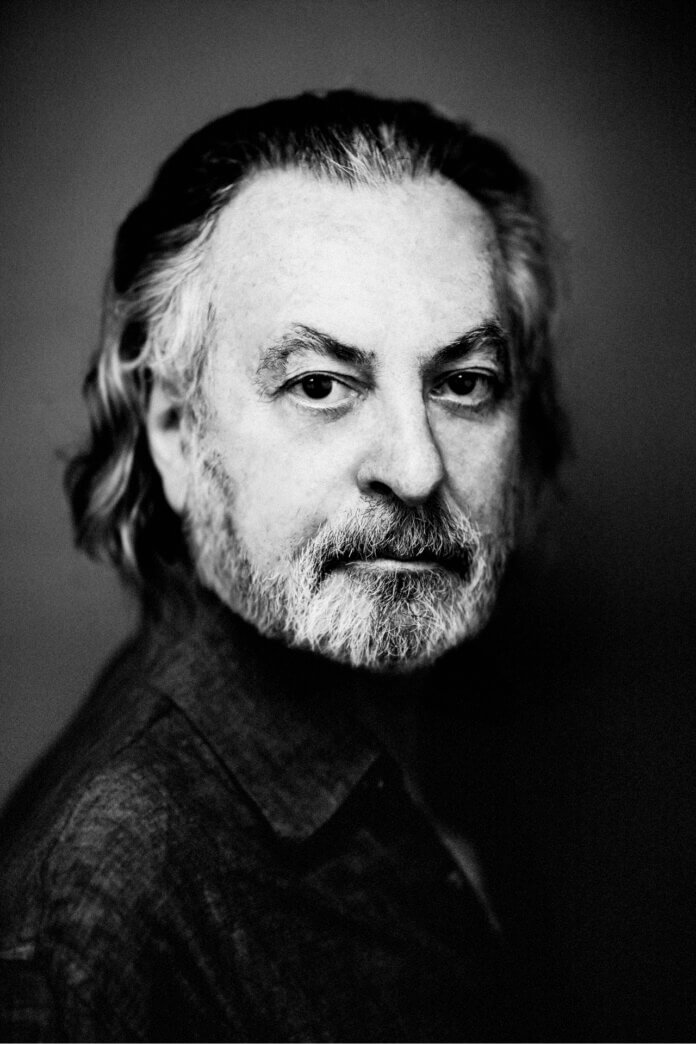
When we reach him via video call, Marco Glaviano immediately asks to see the cover of the January 2026 issue of Musica Jazz. “Is it out yet?” he says. We explain that it is indeed available online. He smiles: “Normally they ruin them completely. But not this time – they did a good job and didn’t ruin it.” Then, almost without preamble, we go way back.
“I’d already been in Musica Jazz. As a musician.”
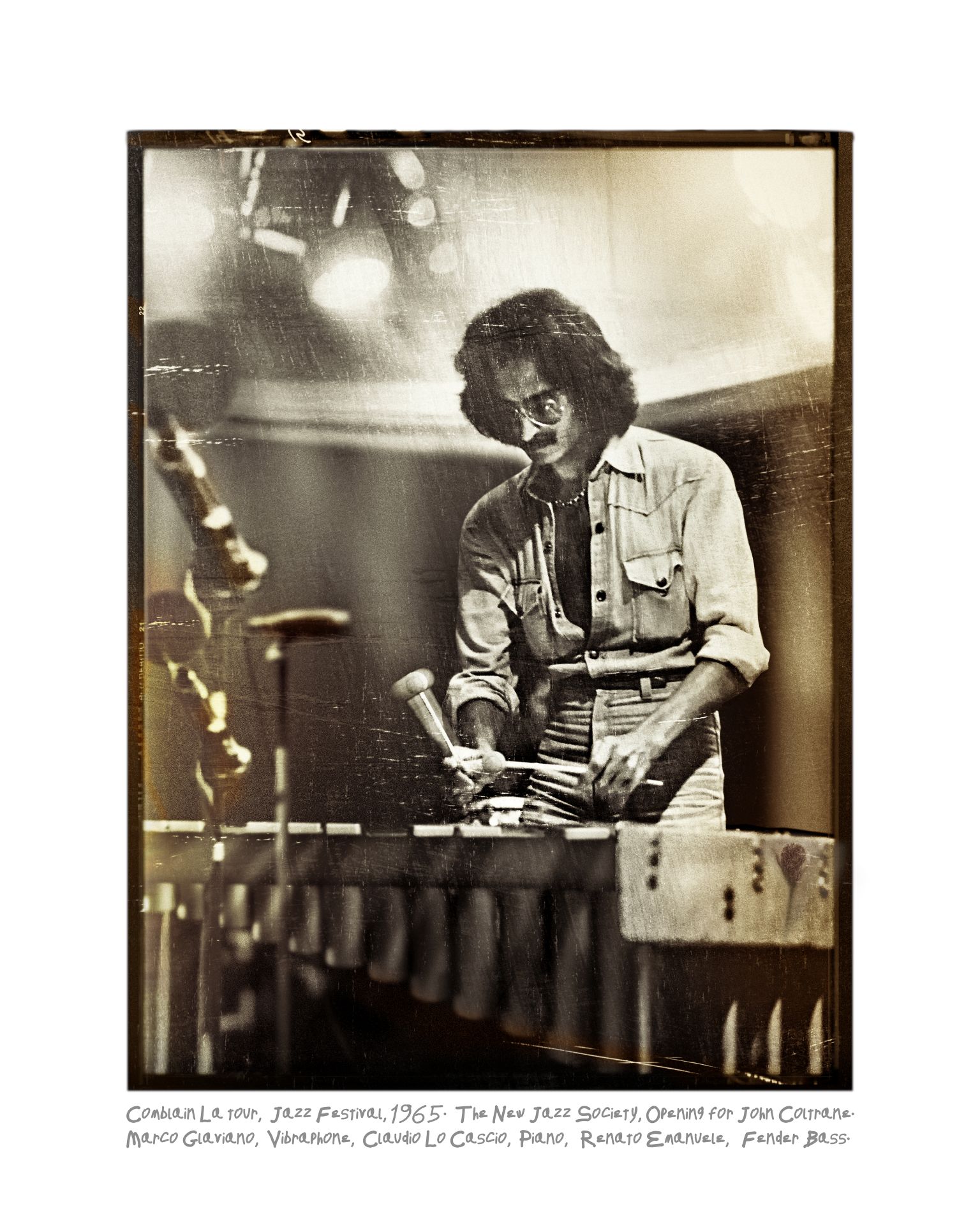
Glaviano points out a little-known detail: before there was photography, there was music. “I’d already been in Musica Jazz as a musician in the late 1950s. I played the vibraphone.” In fact, he recalls that the magazine had written about him. “They did an article on the trio… I don’t know where it ended up.”
The Encounter with Dexter Gordon: Comblain-la-Tour and Montmartre
For Glaviano, Dexter Gordon isn’t just a photographic subject – he’s someone he encountered in real life. “Dexter was a friend.” They first met when Gordon played in a trio with Claudio Lo Cascio in Sicily and toured European festivals. “After the Comblain-la-Tour festival – a sort of Woodstock of jazz with fifty thousand people – we went to Copenhagen.”
It was there that the legendary club Montmartre comes into the picture: “Dexter was playing at the Montmartre, and that’s where I met him. He was a great guy.” It’s not just a musical memory: he recalls the Montmartre as a vibrant place. “It was fun… There were lots of beautiful girls. I wonder if it’s still like that. The world has changed…”
Then comes a typically “Glaviano-style” digression, halfway between social commentary and anthropology: Scandinavia, he says, had its own dynamics. “Everyone thinks the Swedes are liberated, but they’re not at all – they’re still terribly repressed. The Danes aren’t. They all used to come to Montmartre from Malmö on the ferry to party. Dexter was very happy.”
Regarding the photograph on the cover, he explains that it isn’t from their first meeting: “We stayed in touch, more or less… Then he came to my studio in New York.” The date varies in conversation – he himself tries to piece it together on the spot: was it 1978 or 1973? But the point is another: in those years, Dexter had chosen Europe. “He stayed in Copenhagen and married a Danish woman. He was wildly successful. In America, Black people were treated badly – there, it was paradise.”
Jazz before photography
When asked the crucial question – jazz or photography? – Glaviano has no doubts: “For me, jazz comes first.” Photography comes later, but it becomes a passport to a community and an era. “Everyone passed through my studio in New York.” He mentions his closest ties: Milt Jackson, who would pick him up from the airport every time he visited New York; Percy Heath, with whom he went fishing; and Dizzy Gillespie. He recounts an episode with pride:
“Milt Jackson let me play his vibraphone. He told me, ‘You’re the only white guy I’ll let play it.’”
It’s not just New York, though. Glaviano also sheds light on the often-overlooked Italian jazz scene: “I’m from Palermo. There was a thriving jazz scene there. Everyone came.”
Grappelli at home: “He played the piano beautifully.”
One of his most surprising friendships was with Stéphane Grappelli. “He spent three summers at my house in Palermo. He played the piano wonderfully, but he didn’t let anyone know. He’d tell me, ‘Everyone plays the piano. Only I play the violin.’”
Jazz and fashion: “I managed to get photos of jazz musicians published in Harper’s Bazaar.”
The conversation shifts to a rare but important topic: the dialogue between jazz and “high” culture, and between music and the fashion system. Glaviano recounts bringing jazz musicians into contexts they would not normally enter. “I managed to get photos of jazz musicians published in magazines like Harper’s Bazaar and Vogue, which had never before featured jazz musicians.” For the musicians, he says, it was a form of recognition.
“Miles Davis? We had a falling out.”
The harshest – and perhaps most revealing – anecdote comes when discussing missed opportunities. “Miles Davis and I had a falling out. He was a jerk,” he says bluntly, immediately qualifying it: “But I understand him. He was proud. He was a genius. He was angrier than the others.”
The story precisely captures the atmosphere of the era: someone gave Glaviano Miles’s number, he called him and proposed a studio session. “And he tells me: ‘No, I’m not coming to your studio.’ ‘Why?’ Davis replies: ‘Because you’re white.’” Glaviano stiffens. “Accusing me of racism is madness. I was friends with everyone.” He responds instinctively: “Come to my house,” says Miles. I said, “No, I’m not coming to your house.” “Why?” “Because you’re black.” He admits that he would react differently today: “I was younger back then… I wouldn’t do that now.” But he repeats that that phrase hurt him. “It bothered me. It was offensive.”
Free jazz and the “golden age”
Glaviano doesn’t hide his preferences. “My influences are gone… Milt Jackson, Percy Heath, the Modern Jazz Quartet. That was the golden age.” Then a dig: “Before they ruined everything with free jazz.” Once again, the provocation is followed by a clarification: “Actually, I even played it because I didn’t know any better,” he laughs. “It was a protest, of course. But there were excesses.”
An “unofficial club” and music at home
Ultimately, the picture returns to the idea of a shared life above all else. Glaviano recounts that music has continued to flow at his home in Milan over time: “This is a sort of unofficial jazz club. When Americans come through, they often stop by here. I have several instruments available, and every now and then, I join in myself.” One of the memories that surfaces is of the Manhattan Transfer sitting at the table and spontaneously breaking into a cappella singing during dinner. Glaviano cherishes these episodes with evident affection, like fragments of a time when music and everyday life were seamlessly intertwined.
