

Every year in late March, much to the delight of music lovers of every kind, the now-legendary Big Ears Festival returns. Four days of passion and exhaustion in the beautiful city of Knoxville, Tennessee, but worth their weight in gold. Imagine a metropolitan area roughly the size of Parma, with approximately the same population: within that area, packed with theaters and clubs ranging in capacity from 3,000 to 100 seats, around 400 events take place over the course of a long weekend, including concerts, panel discussions, films, and much more.
It may seem crazy, and to some extent it is, to try to follow everything that interests you full-time, but physical exercise, as well as mental exertion, is guaranteed from 11 in the morning until the small hours. In practice, after painstakingly studying the program, prepared by the festival staff with unparalleled care, you move around like a dowser in search of the most accessible venues, harboring the remote hope of keeping pace with a well-trained marathon runner.
We should add, perhaps surprisingly, that the festival is usually sold out several days before it even begins, and this year more emphatically than ever. As our most devoted readers will know, we have been covering Big Ears since 2017, when it was in its fourth edition. Back then, it was much easier to move between concerts without missing almost anything. There were five or six venues; today there are around twenty. A great feast, then, but a refined and often elegant one, with performances ranging from jazz to rock, pop, folk, and contemporary avant-garde music. Nothing is excluded – except mediocrity.
That is why its reputation as “legendary,” after only thirteen editions, is thoroughly deserved. This year’s Big Ears, held from March 26–29, was decidedly sumptuous, not only in the sheer number of events but also in the generally very high artistic quality. A panoramic view of the festival reveals several distinctive features, first and foremost the prominence of guitarists, followed by the focus on John Zorn and Laurie Anderson, who, as artists in residence throughout the festival, had numerous opportunities to perform in a variety of projects.
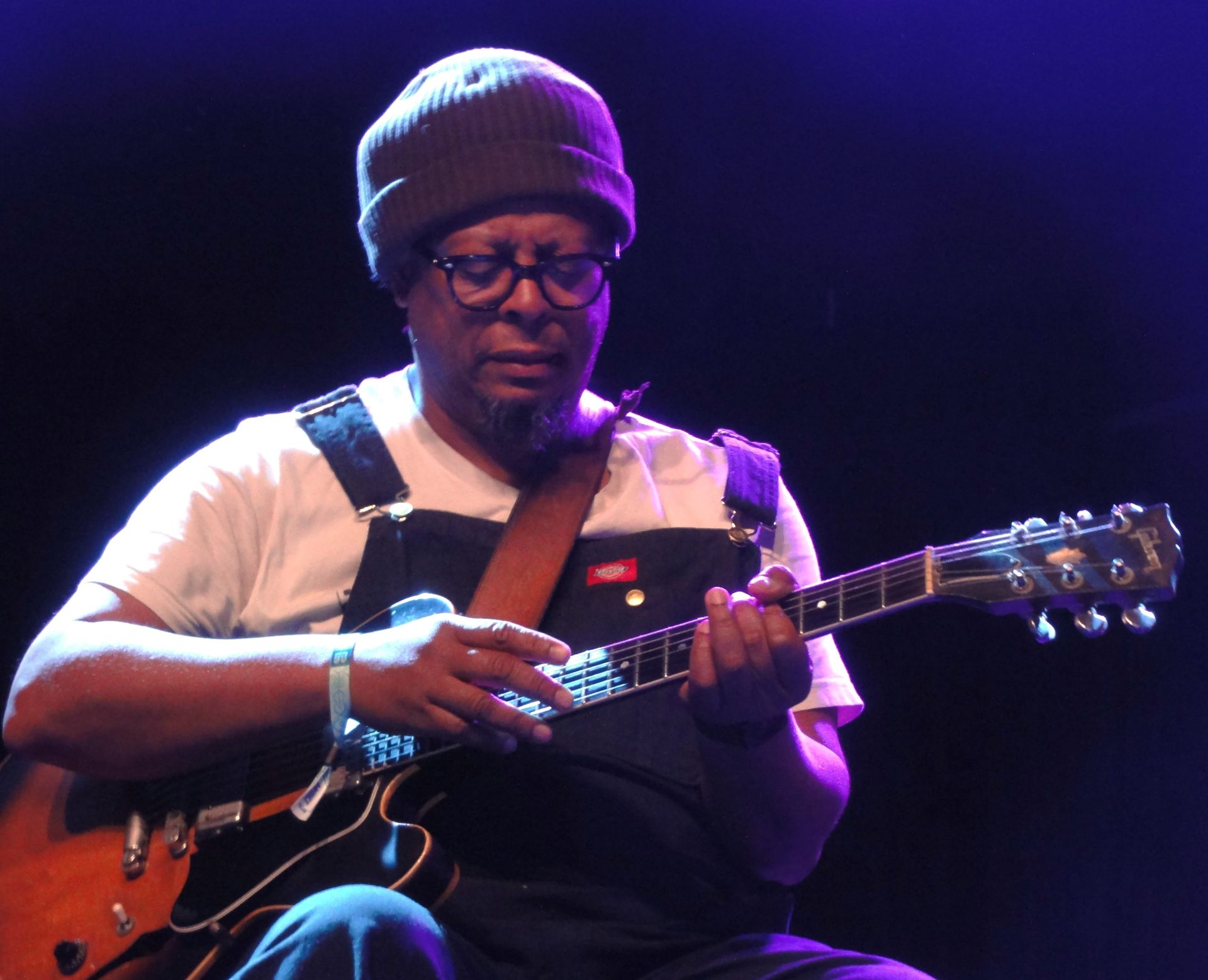
As for the virtuosos of the six-string instrument, a brief list of participants is enough to make the point: Pat Metheny, Julian Lage, John Scofield, Gary Lucas, Jeff Parker, Fred Frith, Bill Orcutt, Gwenifer Raymond, Robert Quine, Mary Halvorson, Marc Ribot, Nels Cline, Miles Okazaki, Gregg Belisle-Chi, Shane Parish, and surely a few others who escaped our notice.
Only Bill Frisell was missing to complete the picture, but he has already been given plenty of space for his projects at Big Ears in recent years, and on those very same days he was busy at Jazz at Lincoln Center in New York celebrating his seventy-fifth birthday. Before looking in greater detail at the enormous mass of concerts, however, priority must be given to the events featuring two giants of rock whose performances cast an even brighter light on this wonderful Tennessee festival: David Byrne and Robert Plant.
Two different stories and two different eras, two artists who have left an indelible mark on the musical art of the past fifty years and more. They are unquestionably living legends, two former members of bands that brought about epochal turning points in the history of rock, Talking Heads and Led Zeppelin, yet both continue their respective careers with extraordinary dedication.
Byrne opened the festival on Thursday evening with a multimedia performance of the highest artistic caliber. The new show is called Who Is the Sky?, also the title of his most recent album, though that fact matters little within the overall architecture of a performance endowed with visionary grandeur and an enveloping sensory impact unlike anything witnessed before.
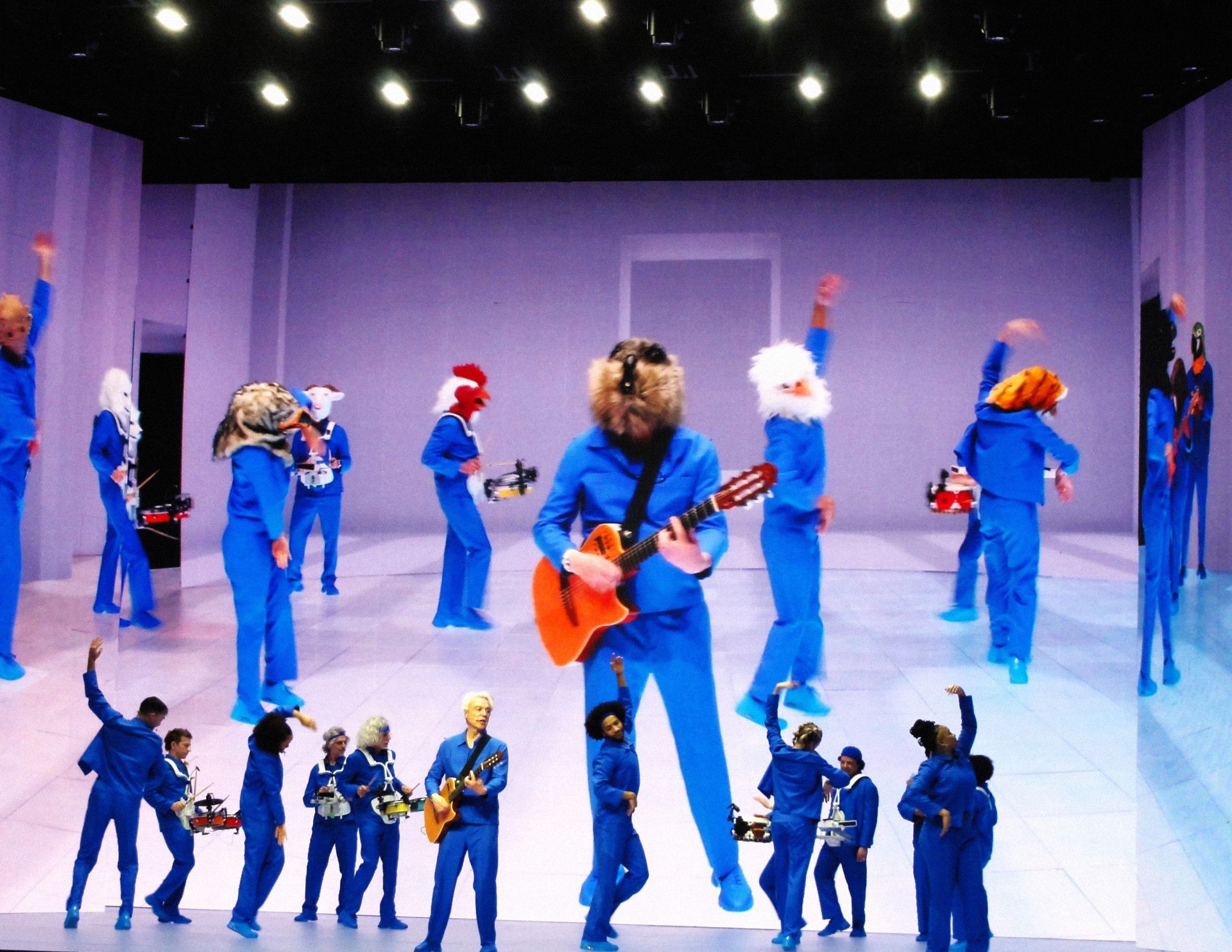
On the large stage of Knoxville’s 3,000-seat Civic Auditorium stood three enormous illuminated panels, around thirty meters high and at least fifteen meters wide, displaying ultra-high-definition images. Their arrangement completely, and almost circularly, covered the entire area behind the musicians. The result was a scene in which the real figures of the performers merged with the virtual surfaces behind them.
Byrne himself introduced each song, while the hyperreal images, both still and moving, reflected the very essence of each piece. We saw and heard just about everything, as though every song possessed a life of its own and a story to tell. In some way, Byrne sought to redesign the stage space, giving it an iridescent perspective with the clear intention of vividly depicting both his own life and that of humanity in general, from the pandemic to the present day.
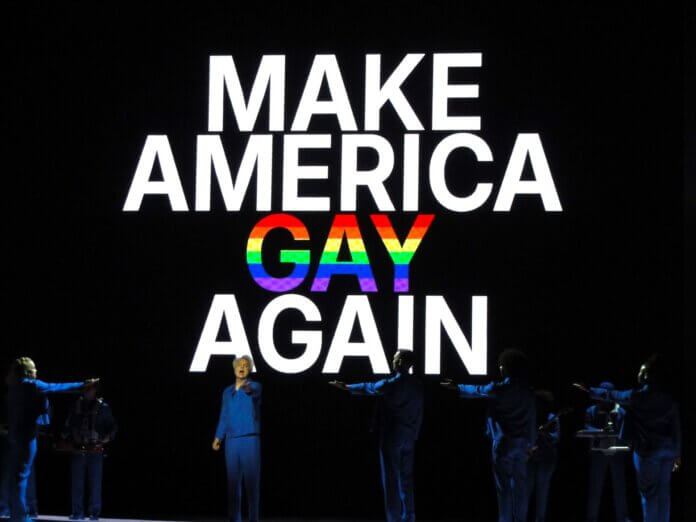
There were also images from Italy showing people singing from their balconies during COVID, a way of staying connected that we all remember well and which caused considerable amazement among the American audience. At another point, the enormous slogan “Make America Gay Again” appeared, greeted by an outpouring of cheers.
Many Talking Heads songs were performed. The show opened, against an image of the Earth seen from space and moving upward, with a splendid “Heaven,” sung in unison. Then came an increasingly insistent funky pulse with “Burning Down the House,” “Once in a Lifetime,” “Air,” and “Psycho Killer,” in wildly original, delirious arrangements, culminating in the explosion of an extraordinarily apt “Life During Wartime,” over which horrifying videos of ICE officers assaulting people flashed rapidly across the illuminated panels.
It was a very powerful political statement in an America more divided than ever. It should be remembered, however, that Knoxville is something of a Democratic enclave within a firmly Republican state. Confronted with those images and that relentless music, I saw people crying and shouting, becoming excited and deeply moved.
Nothing so immersive had ever been seen before on a concert stage: a four-dimensional experience, to the point that Byrne even chose to revisit his youthful adventures with LSD, taking us right inside his Manhattan apartment. There were seven musicians, all outstanding, playing wirelessly connected instruments without microphones. Five dancers performed perfectly synchronized, fluid movements. Everyone, men and women alike, wore identical powder-blue clothes and shoes.
Whatever concerts or shows David Byrne may have created in the past, even the genuinely remarkable American Utopia of a few years ago, have been swept aside by this new multimedia creation, one that will surely go down in history.
Hats off, then, to a brilliant musician who has repeatedly managed to reinvent himself over the years.
By inevitable contrast, the multimedia performance devised by Laurie Anderson to close the festival was nowhere near as exhilarating. With only the most discreet support from trumpeter Steven Bernstein’s band, Sexmob, the American artist, who for decades has filled her performances with images and spoken voices, seems unable to recover the verve she once possessed.
The show, entitled Republic of Love, dissolved into extended chatter, words upon words mechanically delivered by Anderson herself against still images projected at the back of the stage, all accompanied by clumsy poetic and, in some sense, political intentions that ultimately proved rather conventional: love conquers war, and so forth.
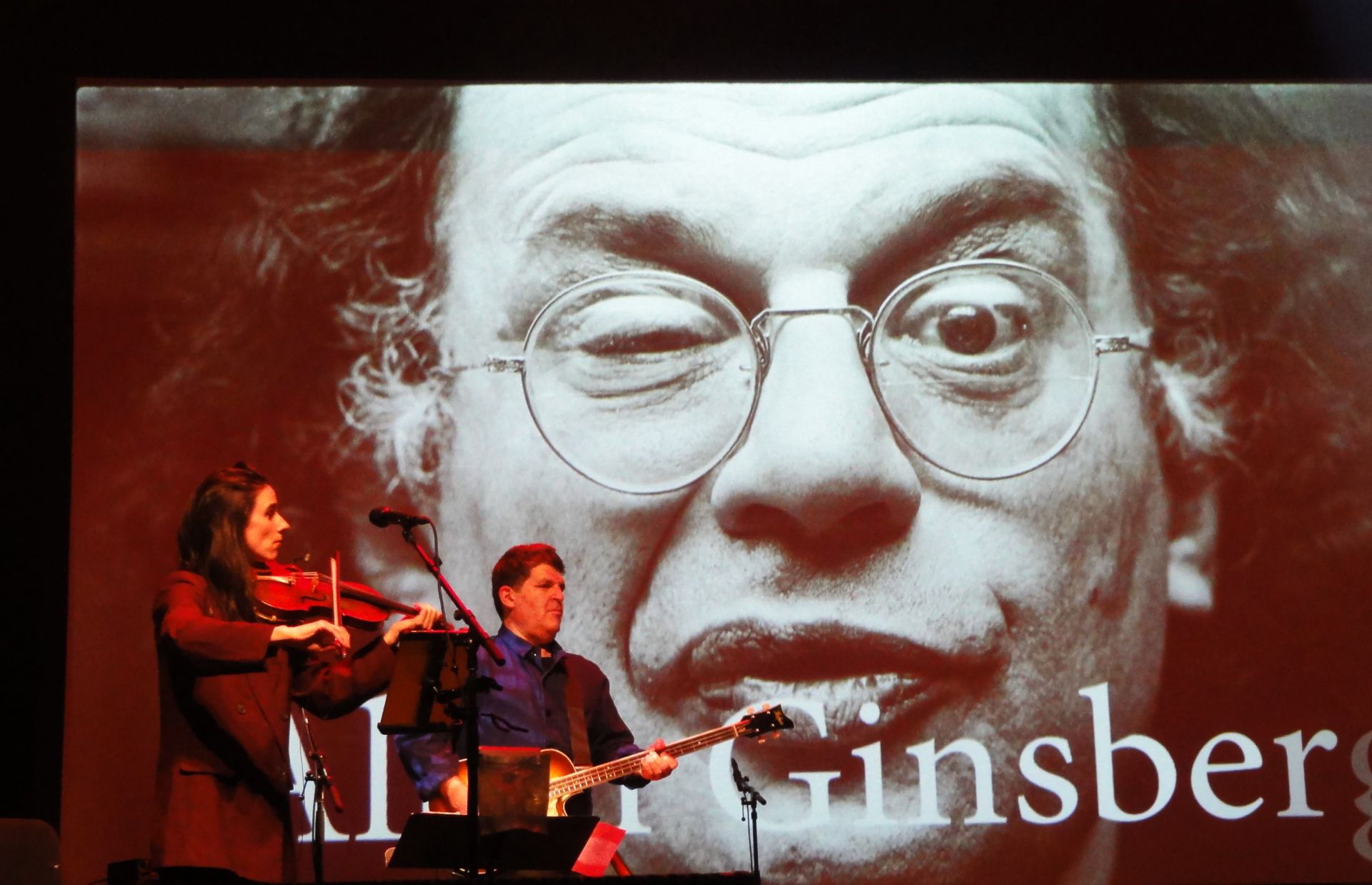
Nor did the other projects Anderson presented during the festival, particularly one with her friend John Zorn, himself in something of a dormant phase, as we shall shortly see, manage to produce anything genuinely stimulating or compelling, let alone anything with a strong original dimension.
Even the installation she created in memory of her late partner, the much-missed Lou Reed, entitled Lou Reed Drones, amounted to little more than a tedious series of guitars made to resonate with one another on a mezzanine. A small, lackluster attempt to evoke Reed’s famous and unconventional 1970s album Metal Machine Music.
But speaking of the Seventies, here instead was a memorable concert by one of that decade’s great protagonists: Robert Plant.
The English singer, born in 1948, who in recent years has distinguished himself with albums devoted to the roots of both American and British folk music alongside singer Alison Krauss, has returned to those same paths with a new partner, and something of a revelation: the young Suzi Dian. The project, already underway in 2019 and entitled Saving Grace, has been enriched by Dian’s formidable voice, allowing Plant to find new creative life in a partnership that may be relatively recent but is rich with promise for the future.
A couple of years short of the fateful eighty, the singer bears on his face, furrowed by deep wrinkles like canyons, the indelible traces of a life fully lived. Yet on stage he demonstrated that his desire to reinvent himself remains undiminished. His voice is still warm, unforgettable, powerful, alive, without a blemish, and stands as the emblem of an inexhaustible artistic quest.
Backed by an absolutely flawless band featuring the excellent Tony Kelsey on guitar, Matt Worley on banjo, Barney Morse-Brown on cello, and Oli Jefferson on drums, the two singers delivered a concert of exquisite nuances that was anything but conventional.
From the dust of bygone eras they breathed new life into songs such as “Chevrolet,” originally by Memphis Minnie and later even rearranged by Donovan, or bluesman Blind Willie Johnson’s “Soul of a Man.” Then came a genuine resurrection from the annals of psychedelic 1960s San Francisco: “It’s a Beautiful Day Today” by Moby Grape, a band that only devoted followers of that dazzling Californian period are likely to remember.
Plant introduced the song by saying, “That’s from Moby Grape, my favorite band from the San Francisco area in the ’60s.”
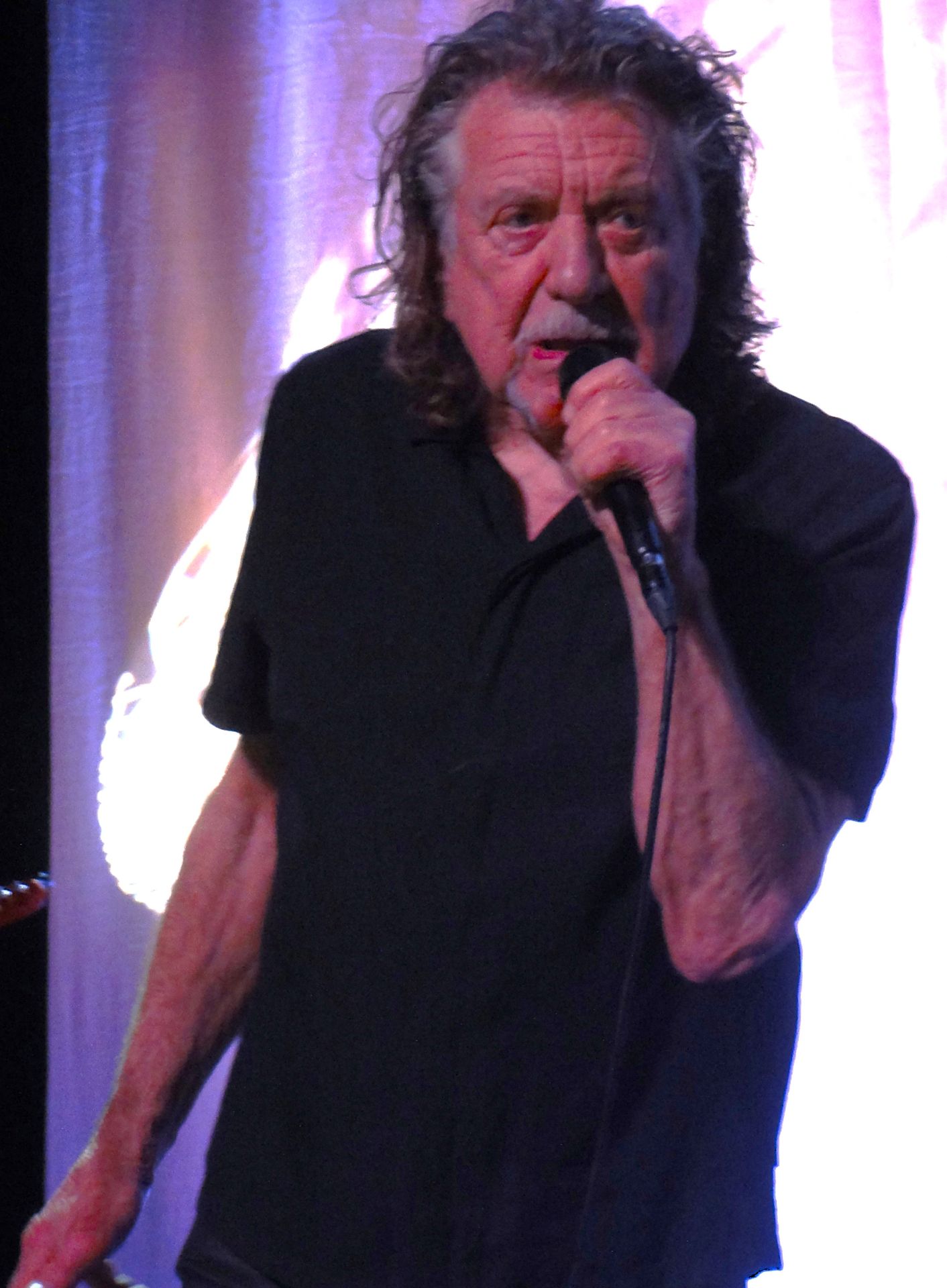
A concert of this caliber could hardly omit at least a couple of songs by the glorious Led Zeppelin, carefully selected from among their less famous but still magnificent repertoire: “Ramble On,” from Led Zeppelin II, and “Friends,” from Led Zeppelin III, literally repainted and restored with fresh, gleaming colors.
In essence, this was an extraordinarily refined concert, often surprising, without a single dull moment or any slavish sense of déjà vu. Robert Plant may appear rough-hewn, but the material is still of the finest quality, proof that although time marches inexorably onward, for some, like him, the passing years offer an opportunity to reconsider the past in a new light while pointing toward a future that still promises fresh surprises.
Along similar lines, though from different perspectives, were several of the guitarists appearing at the festival. Among the younger musicians in particular were Julian Lage, Shane Parish, and the extraordinary Gwenifer Raymond, whom we have already introduced to Italian readers in the January issue of Musica Jazz.
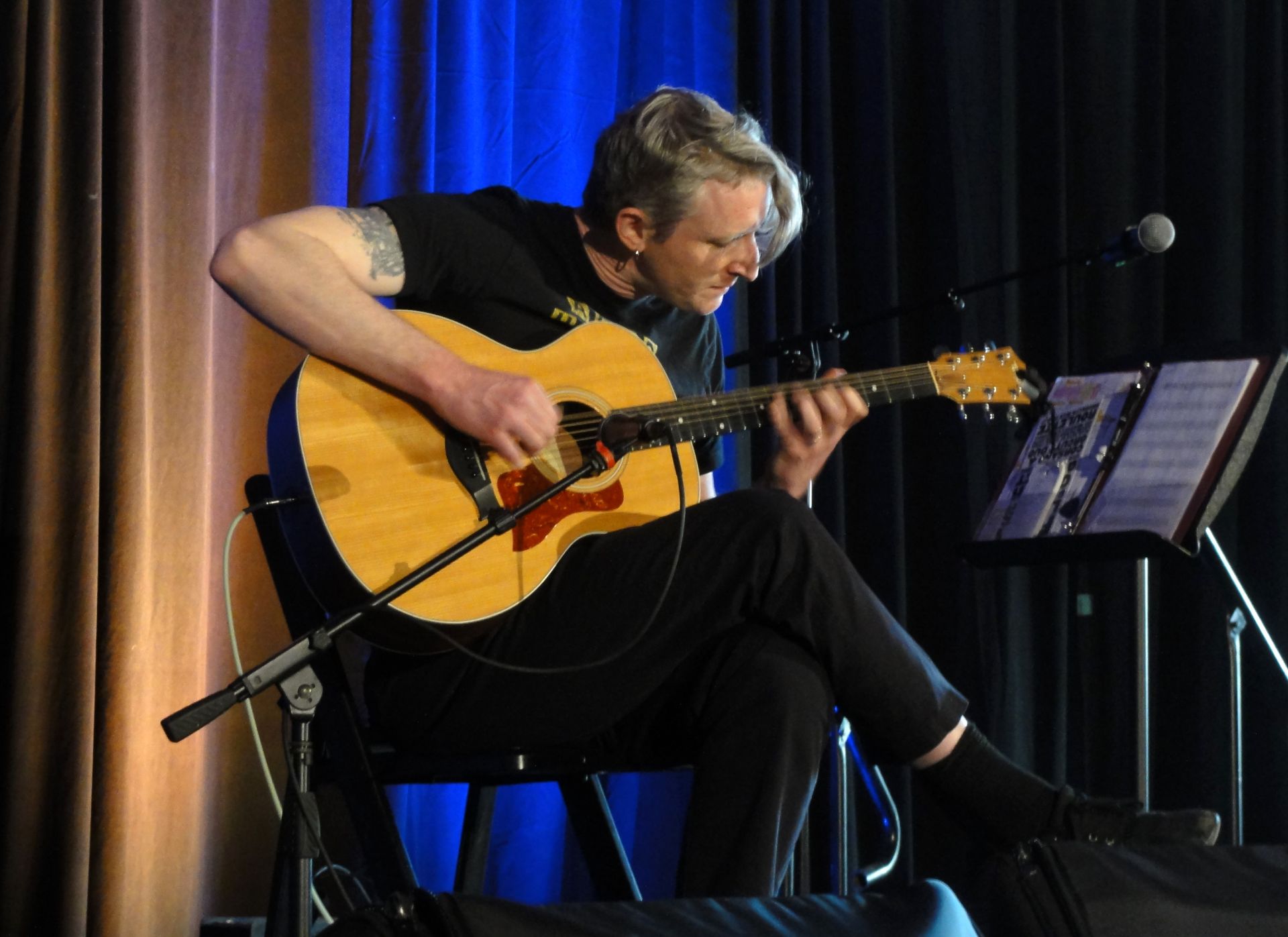
Among the older generation, Marc Ribot can still surprise with his lucidity and inventiveness, especially when playing solo. Then there is Bill Orcutt, still evolving despite his age, with his overflowing electric guitar, and Gary Lucas, remembered from his days alongside Captain Beefheart, who has lost none of the spirit of sonic exploration that characterized his younger years.
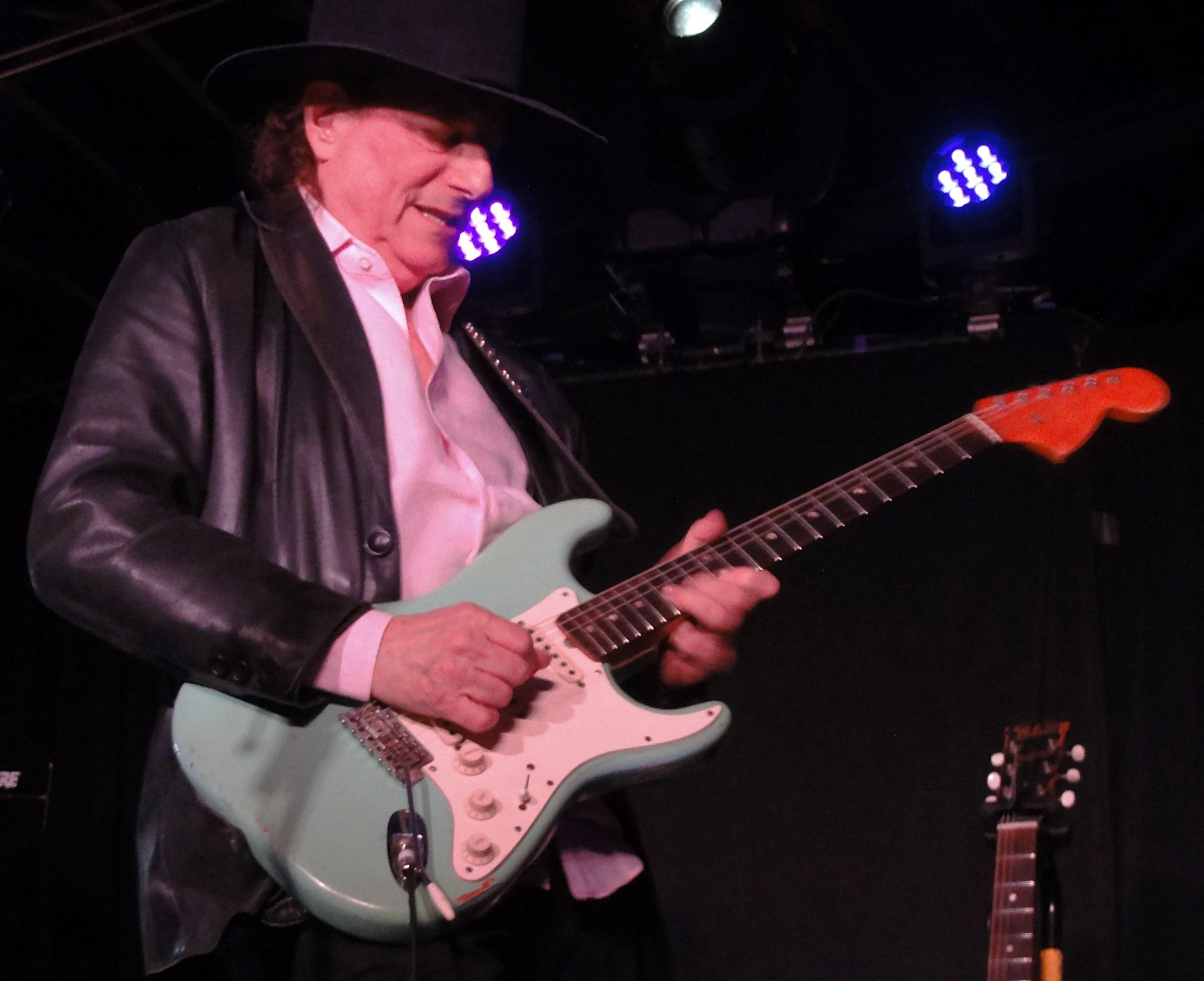
Lucas is still there today with his Stratocaster, a 1964 model, as he made a point of telling us, playing loud and raw, perhaps seeking to extract from the instrument something of what Jimi Hendrix spent his brief and controversial life searching for.
Among the middle generation, meanwhile, Nels Cline, Mary Halvorson, and Miles Okazaki remain indispensable: three masters with a great deal still to say. Okazaki, in particular, astonished those unfamiliar with his work with his “All Monk” undertaking, namely the complete oeuvre of Thelonious Monk as a composer, presented across no fewer than four solo acoustic-guitar performances in a single day: a marathon within the larger Big Ears marathon.
If Pat Metheny and John Scofield did little more than repeat themselves, adding nothing to, nor taking anything away from, their unquestioned technical mastery, John Zorn left us indifferent for different reasons and in a different sphere. Present here with no fewer than ten different projects, he offered what amounted to a résumé of his past, without freshness or any significant new ideas.
Perhaps the time has come for him to stop, reflect, and consider how to face the future without becoming what Americans would call a “has-been,” a relic of the past.
And what can be said about Fred Frith? Perhaps madness is becoming an ever closer companion in his later years. He seems able only to inundate the audience with extreme sounds from his electric guitar and, unfortunately, with a dragged-out vocal delivery that adds very little.
Finally, in the realm of contemporary music, we were spellbound by a composer who had seemed almost lost in decades past: Charlemagne Palestine. His pipe-organ concert at St. John’s Cathedral left us speechless, surrendering to intense, meticulously structured music built from overlapping waves of sound in repeated patterns, in the style so characteristic of the composer as we remembered him from his younger years.
Palestine thus managed to stop time for at least an hour amid the frenetic night of the most exciting festival one can find across the Atlantic, on American soil.
And not only there, we might add with shameless certainty.