
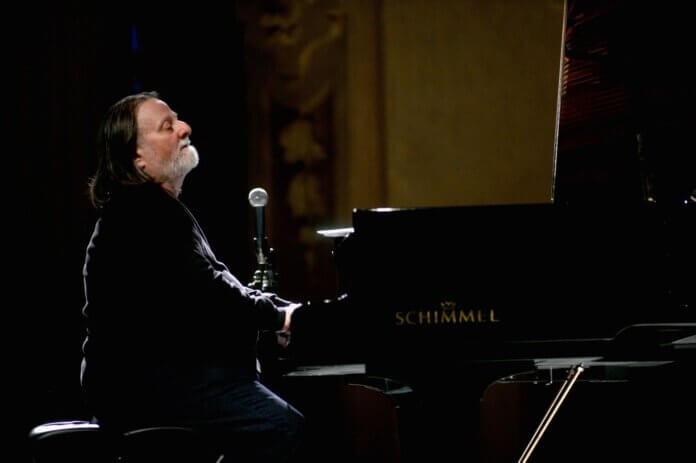


The name – and musical destiny – of Richard Beirach, who died on 26 January at the age of seventy-eight (he was born in New York on 23 May 1947), will remain inseparably linked to that of Dave Liebman, only a few months older than him. Their partnership flourished both in the saxophonist’s two most important groups, Lookout Farm and Quest, and in countless other settings, especially in duo performances. They met when both were around twenty years old and everything, as one imagines at that age, still seemed possible.
By then, Beirach had already accumulated significant musical experience. He began studying classical piano at the age of six and, while still very young, encountered the strange yet fascinating world of jazz and improvisation. While still in high school, he had one of those formative experiences essential to any musician – not only in jazz – studying for a period with Lennie Tristano, the daring and adventurous guru of cool jazz. He also had the opportunity to perform in clubs with Lee Konitz, once Tristano’s favourite pupil.
In 1967, Beirach enrolled at the Berklee College of Music in Boston, during a period when the student body also included, among others, John Abercrombie – with whom Beirach would record three ECM albums between 1978 and 1980 – Miroslav Vitouš and Keith Jarrett. A year later he moved to the Manhattan School of Music, where he studied composition with Ludmila Ulehla, another towering figure in music education.
By this point, his meeting with Liebman had already taken place. The two found themselves side by side during a jam session, immediately connected, and from there their careers would unfold largely in tandem. Their first album together, however, would take a few years to materialise: First Visit (Philips), recorded in Tokyo in June 1973 with Dave Holland and Jack DeJohnette. Four months later, in October, came Lookout Farm (ECM), recorded in New York and destined to give its name to the duo’s first major group. This time they were joined by a veritable multitude of musicians – Abercrombie among them – resulting in a far more varied and conceptual album, not without fusion accents – unsurprising given Liebman’s contemporaneous stint with Miles Davis.
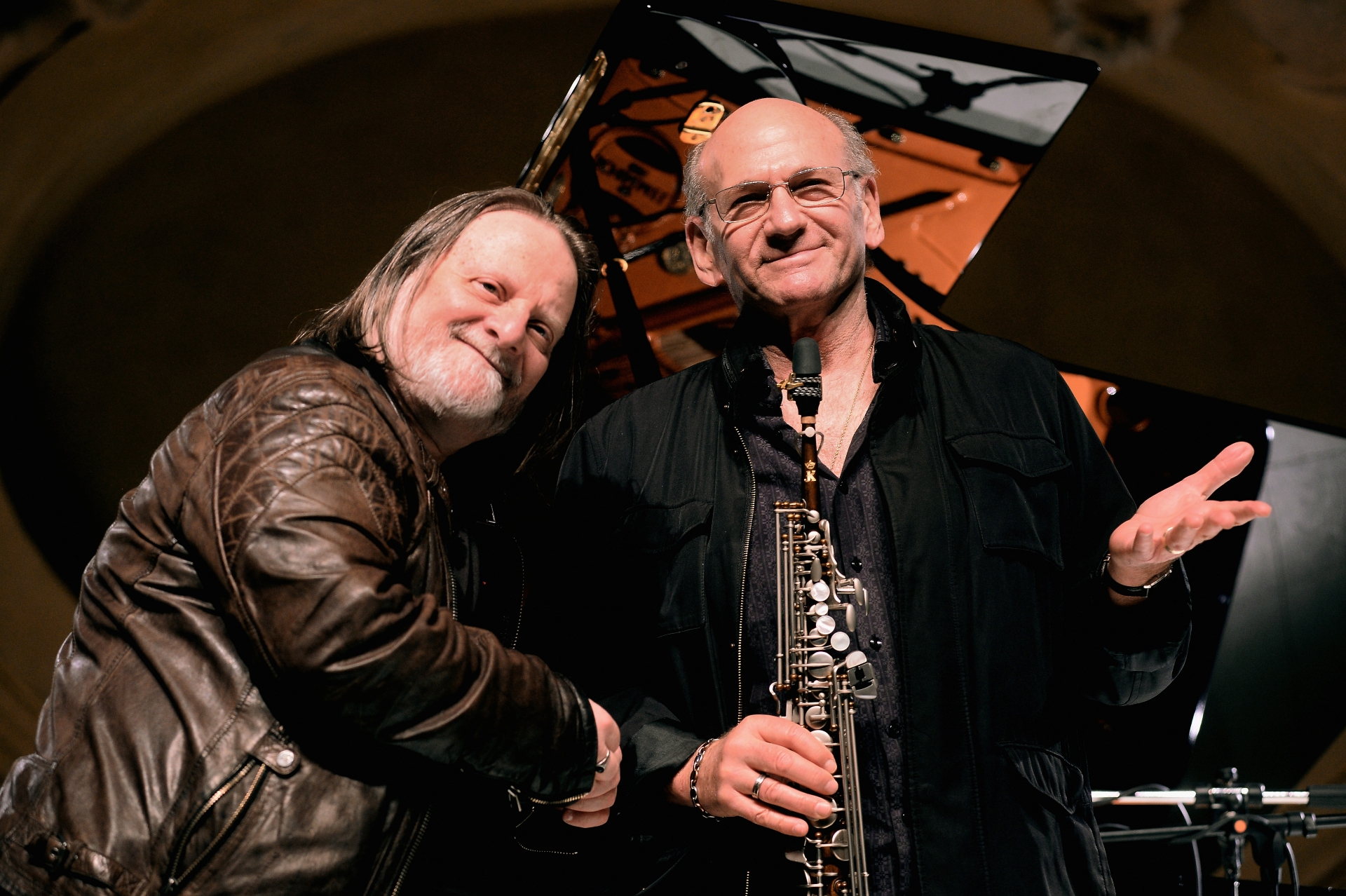
These were particularly fertile years for Beirach. In 1972 he graduated in music theory and composition; with Holland and DeJohnette he toured the world in Stan Getz’s quartet, while in 1977 Chet Baker would also employ him, resulting in two recorded albums.
The partnership with Liebman naturally continued. In 1975 Beirach appeared in the large ensemble that recorded Sweet Hands (A&M Horizon), which pushed even further the poly-idiomatic focus already present in Lookout Farm, though occasionally to excess. He also appeared in the collective recording Father Time (Enja) – alongside Frank Tusa, who composed all the themes, Badal Roy and Jeff Williams – and in the duo album Forgotten Fantasies (A&M Horizon). Then came Pendulum (Artists House) in 1978, whose entire first side was occupied by the title composition written by Beirach himself, marking in many respects a departure from the Lookout Farm aesthetic. The album was entirely acoustic, recorded by a quintet featuring Tusa, Randy Brecker and Al Foster. Quest would arrive in 1981.
At this point, however, we must take a substantial step backwards. As early as 1974, Beirach had recorded his first album as a leader, Eon (ECM), entirely representative of his own style: calm, restrained and utterly disinclined toward excess. Joining him were the ever-present Tusa on bass and Jeff Williams on drums, while Liebman was nowhere to be found. Like many musicians who spent much of their careers beside a partner whose shadow inevitably loomed large, Beirach used his own recordings to assert both his autonomy and his authorship.
With the same partners he recorded Methuselah in 1975, and the duo album Sunday Song with Tusa alone, both for the Japanese Trio label. Soon afterwards the label would also release Zal, co-credited with trumpeter Terumasa Hino and guitarist Yoshiaki Masuo – five duets (the two Japanese musicians never play together) and one solo piano performance – as well as Leaving, a duo recording with flautist Jeremy Steig.
Beirach reaffirmed his preference for intimate musical forms – perfectly aligned with the aesthetic coordinates already outlined – in the solo album Ubris (1977), his second ECM release, where his classical background emerges with striking clarity.
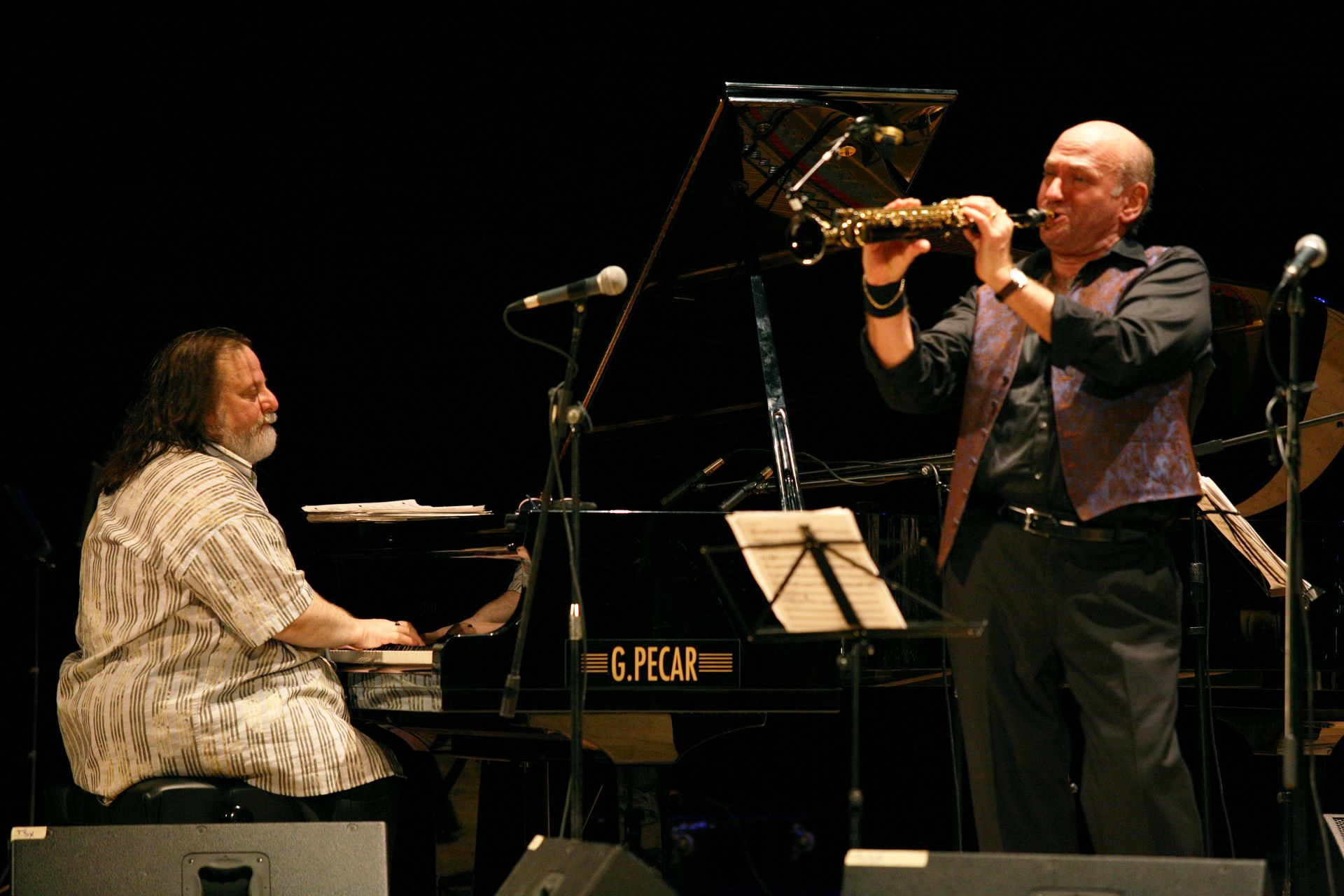
From that point onward, recordings under the RB initials multiplied, with solos and duets particularly abundant. But let us return to Quest, formally co-led by Beirach and Liebman. Between 1981 and 1987 came Quest, Quest II and Quest III – the first on Trio, the latter two on Storyville. The second, a live recording, captured the ensemble in the setting where it perhaps expressed itself best.
The first album featured George Mraz on bass and Al Foster on drums, but by Quest II (1986) the group had settled into its definitive line-up with Ron McClure replacing Mraz and Billy Hart taking over from Foster. Quest III was recorded in April 1987 at Copenhagen’s Club Montmartre, during the same European tour in which we ourselves had the chance to hear the group in Genoa, leaving deeply impressed and even exchanging a few words with Liebman during the interval – back when such intervals still existed.
The most immediate impression was of a band both solid and genuinely moving, with a post-Coltrane language that was at once palpable and highly creative. These were also the years in which Liebman increasingly favoured soprano saxophone over tenor – outside of Quest, often exclusively so – while Beirach’s pianism grew denser, fuller and more assertive, reviving something of a Tyner-esque vein.
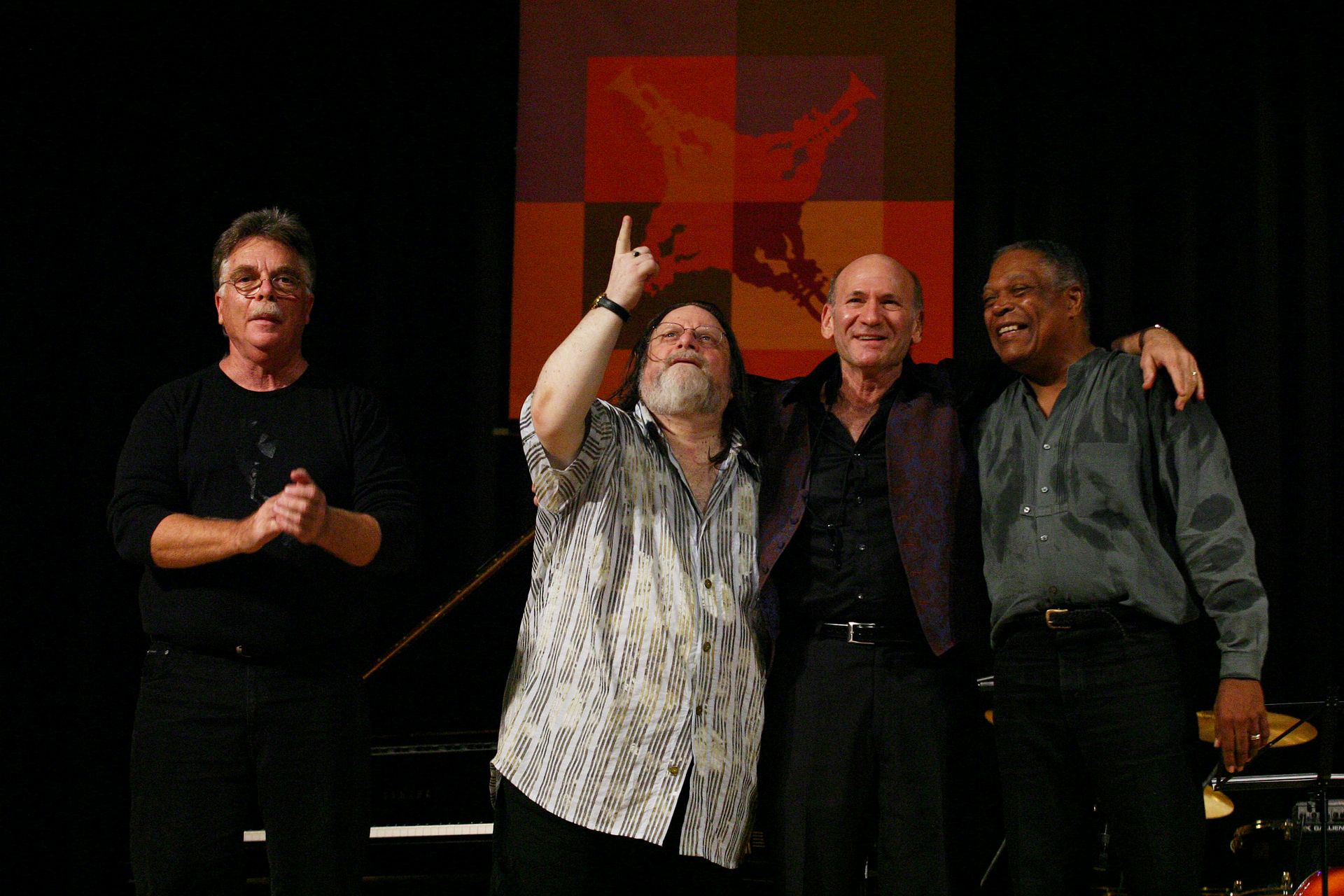
Between 1988 and 2011, Quest released six more albums – at least to our knowledge – interrupted by a long hiatus. Meanwhile, the Liebman/Beirach partnership continued to produce numerous valuable albums and concerts, culminating in Empathy (Jazzline), a monumental five-CD box set gathering recordings made between 2016 and 2020, partly shared with various guests, foremost among them Jack DeJohnette.
For the occasion Liebman employed his entire instrumental arsenal – piano included – while Beirach also played electric piano. In truth, only the first CD, previously released independently in 2018 as Empathy, is a genuine duo recording; the remaining guest-free discs alternate the spotlight between the two musicians. The disc devoted to Beirach, Heart of Darkness – each CD carries its own title – is the most recent, recorded in July 2020, and contains seventy minutes of highly concentrated and economical music.
Among the collaborative performances, the finest moments arrive in the disc featuring DeJohnette, superbly attuned to the music and capable of adding invaluable timbral richness. Perhaps even more compelling is the quartet recording with Florian Van Volxem on synthesiser and Leo Henrichs on timpani and gong: a single fifty-minute piece in which electronics provide a kind of underlying substratum, often operating dialectically – though never abrasively – against Beirach’s keyboards, while simultaneously encouraging Liebman to weave, circle and sometimes soar vertiginously across four different wind instruments.
The entire set spans just under five hours and is best savoured in small doses.
The box was released in 2021. By then Beirach – who had been living in Germany since the beginning of the new millennium, teaching jazz piano at the University of Leipzig between 2001 and 2014 – was already battling serious health problems, most notably lung cancer, which forced him to cease performing in 2023.
In 2025, a GoFundMe campaign was launched to help cover mounting medical expenses, though it did little to postpone the end of a musician who remained discreet, essential and elegant throughout his life, always capable of speaking in his own voice without ever demanding the spotlight of a prima donna.
It would be wise not to forget him too quickly – though that fate all too often befalls even musicians far more deeply embedded in the competitive world of jazz than he ever wished to be.
